

Historical Walks
Explore Bogstadveien on your own.
Tap the stops in the map at the top of the page to learn more along the way, or browse the stops in the text below, where you’ll find more images and additional details.
Bogstadveien
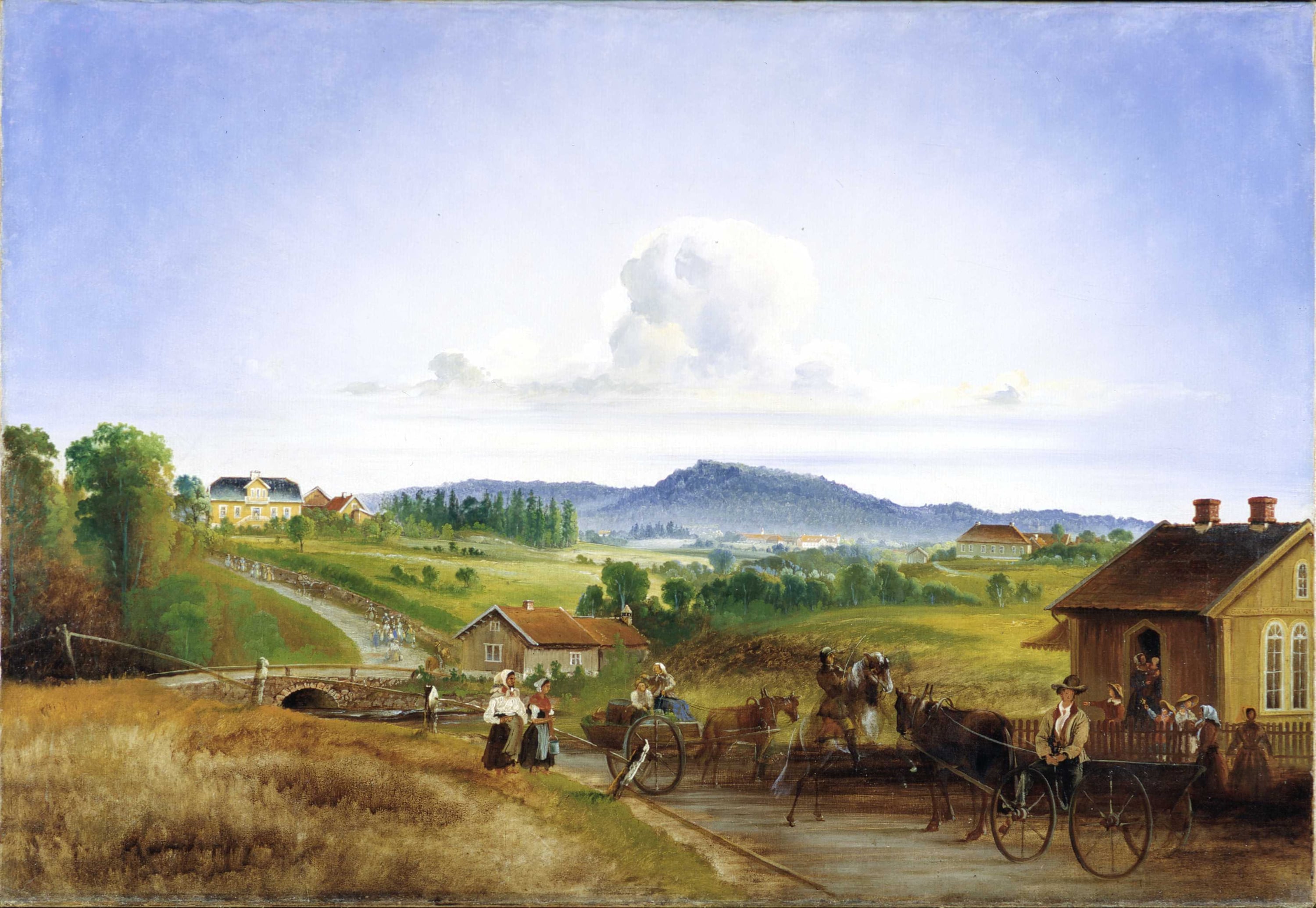
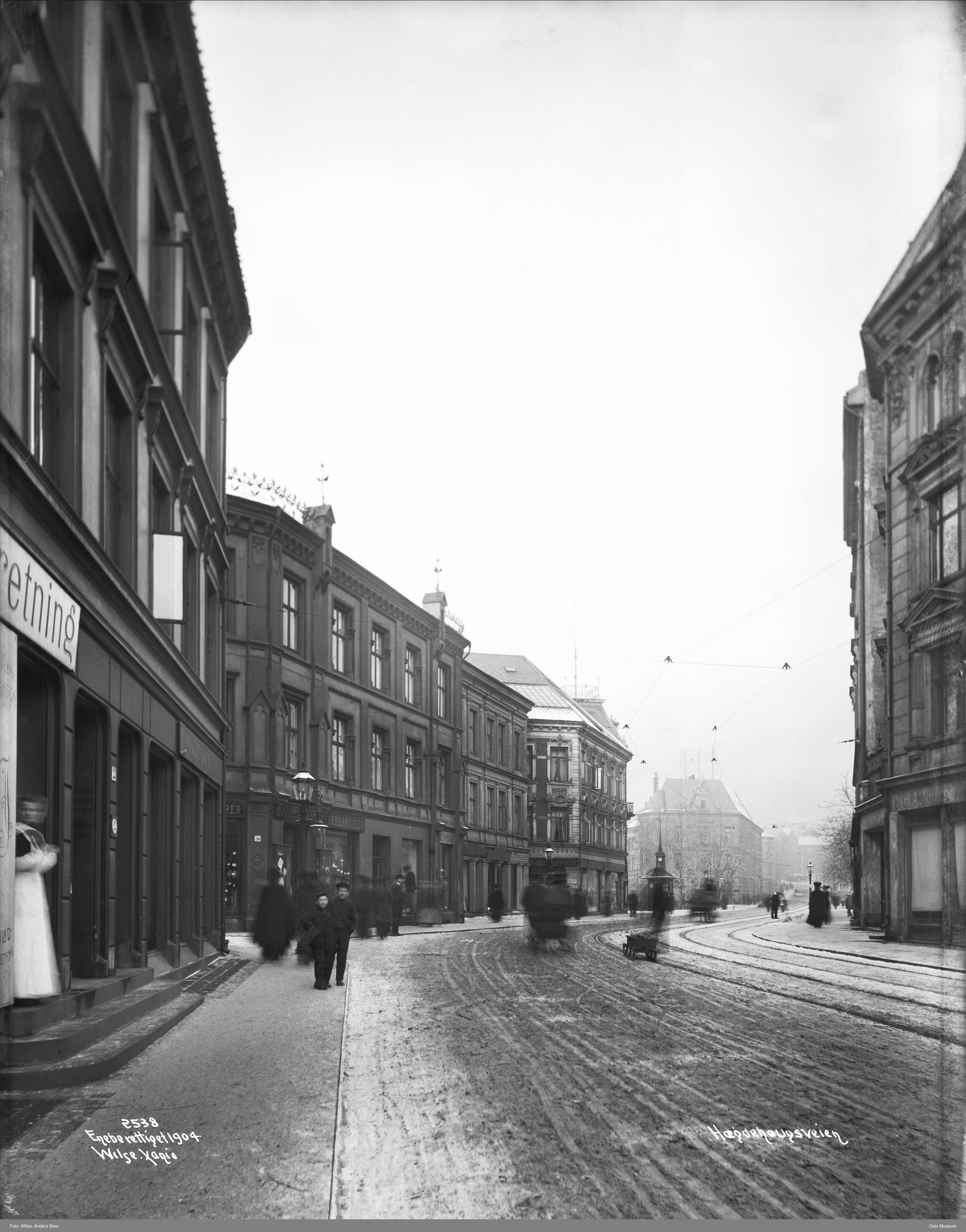
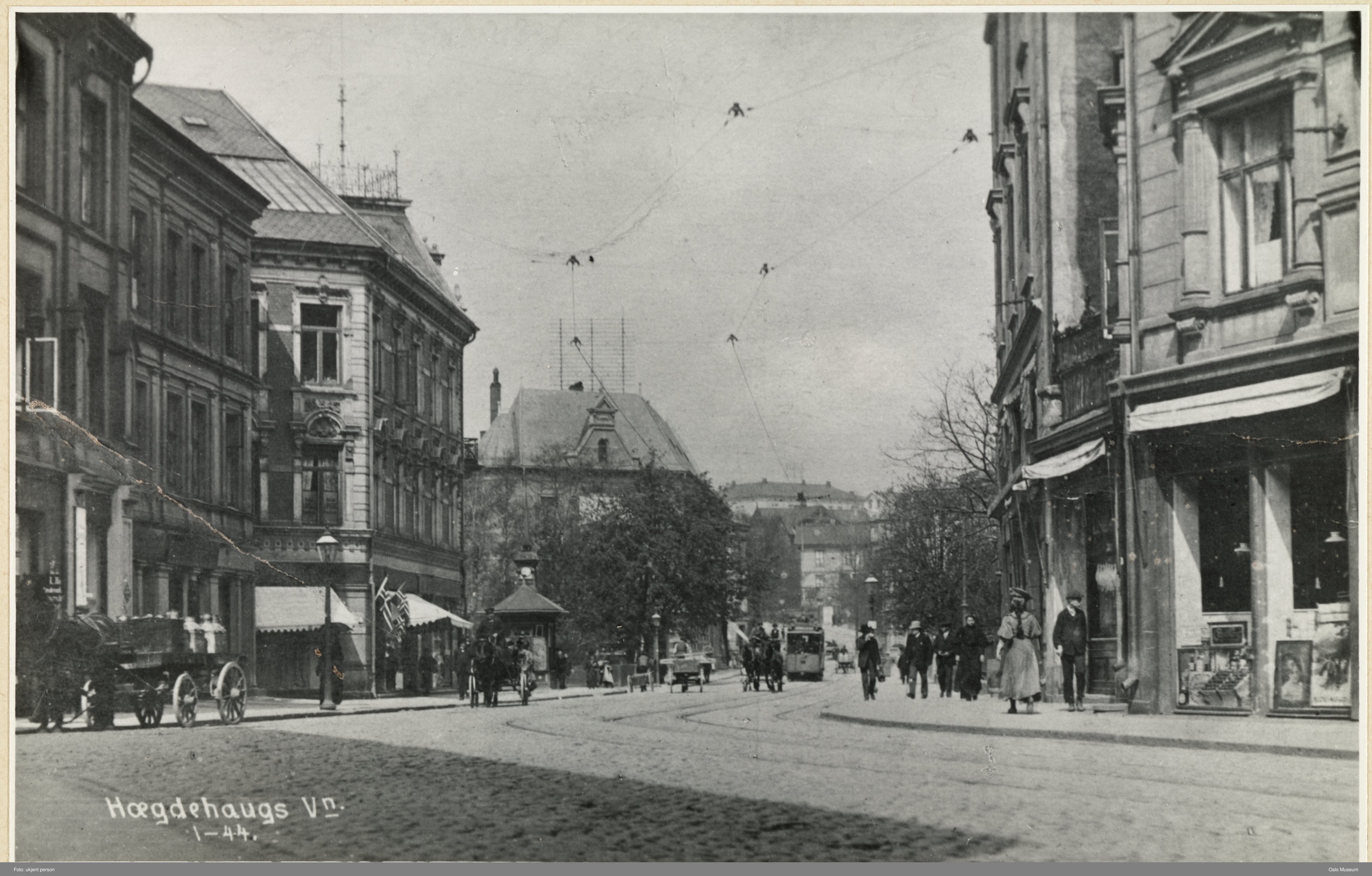
Hegdehaugsveien and nearby Bogstadveien have long been known as the most important shopping streets on Oslo’s west side. But in the early 1800s this route was nothing more than a small country road. It was only after the Royal Palace was completed in the late 1840s that people began settling west of the city.
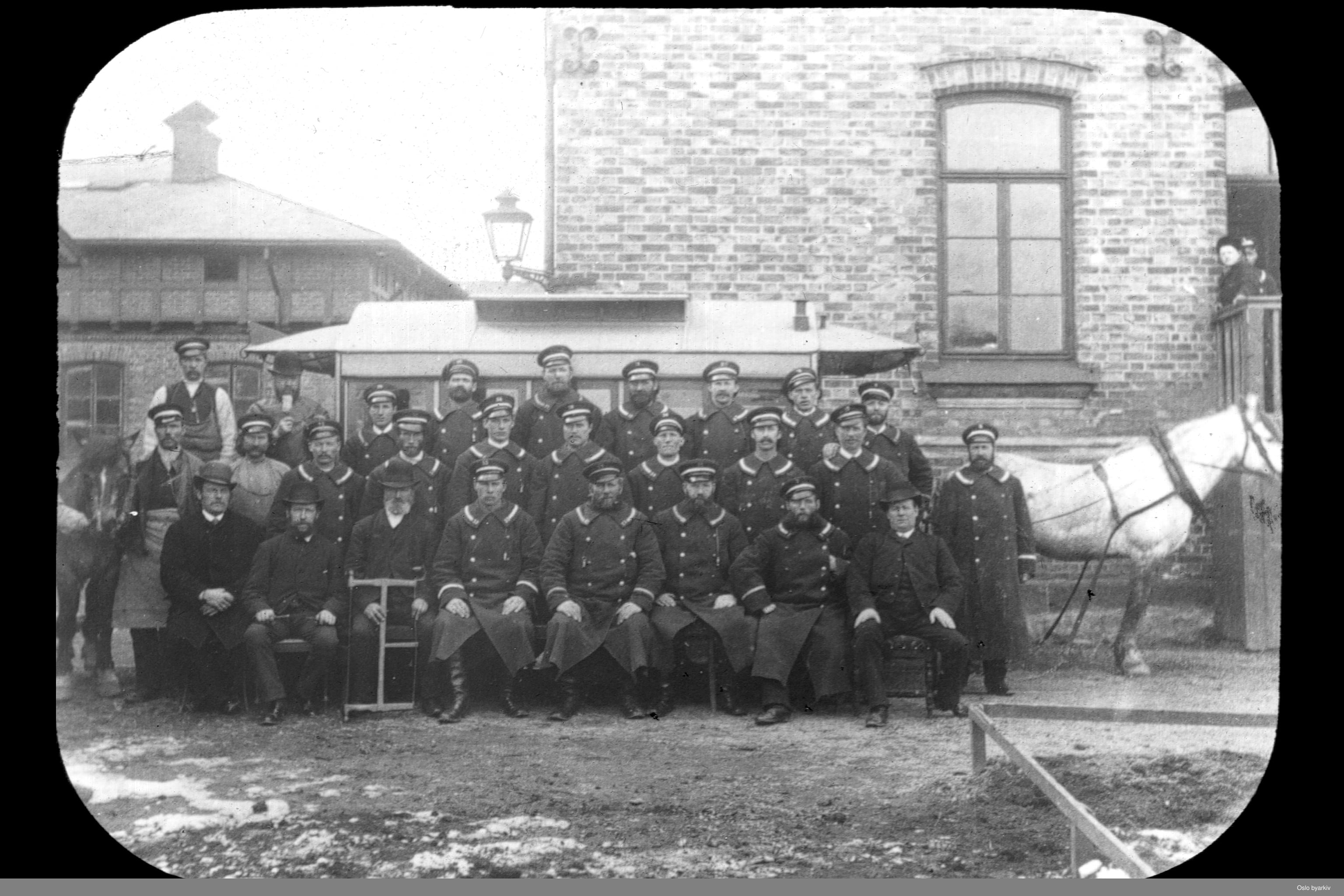
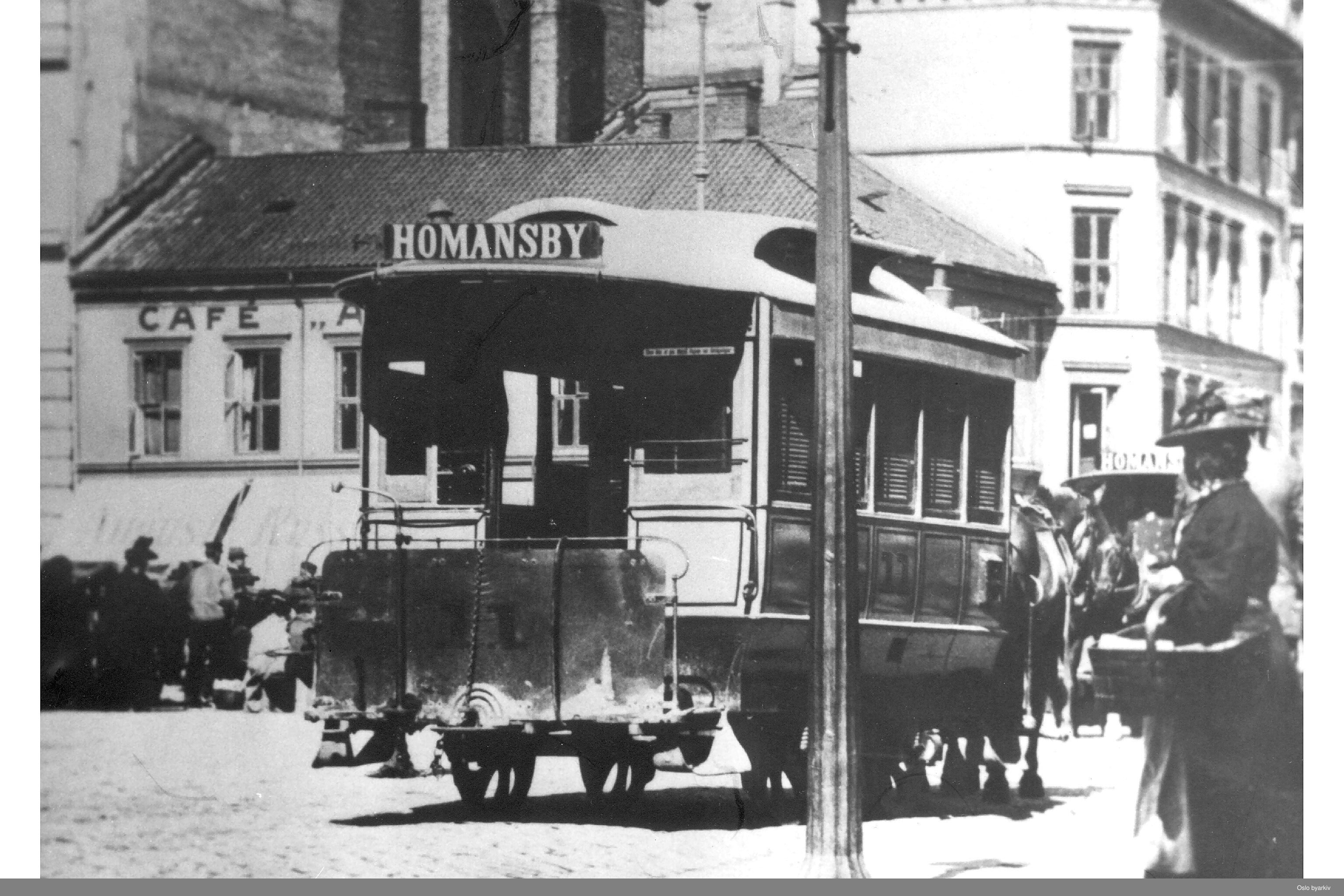
By the 1870s Oslo was growing rapidly, and distances within the city became an increasing challenge. When the horse-drawn tram was introduced in 1875, one of the first lines ran up Hegdehaugsveien. This was no coincidence – the line led to Homansbyen, where many commuters with enough money for tram tickets lived. The trams had no fixed stops; passengers had to wave them down along the street.
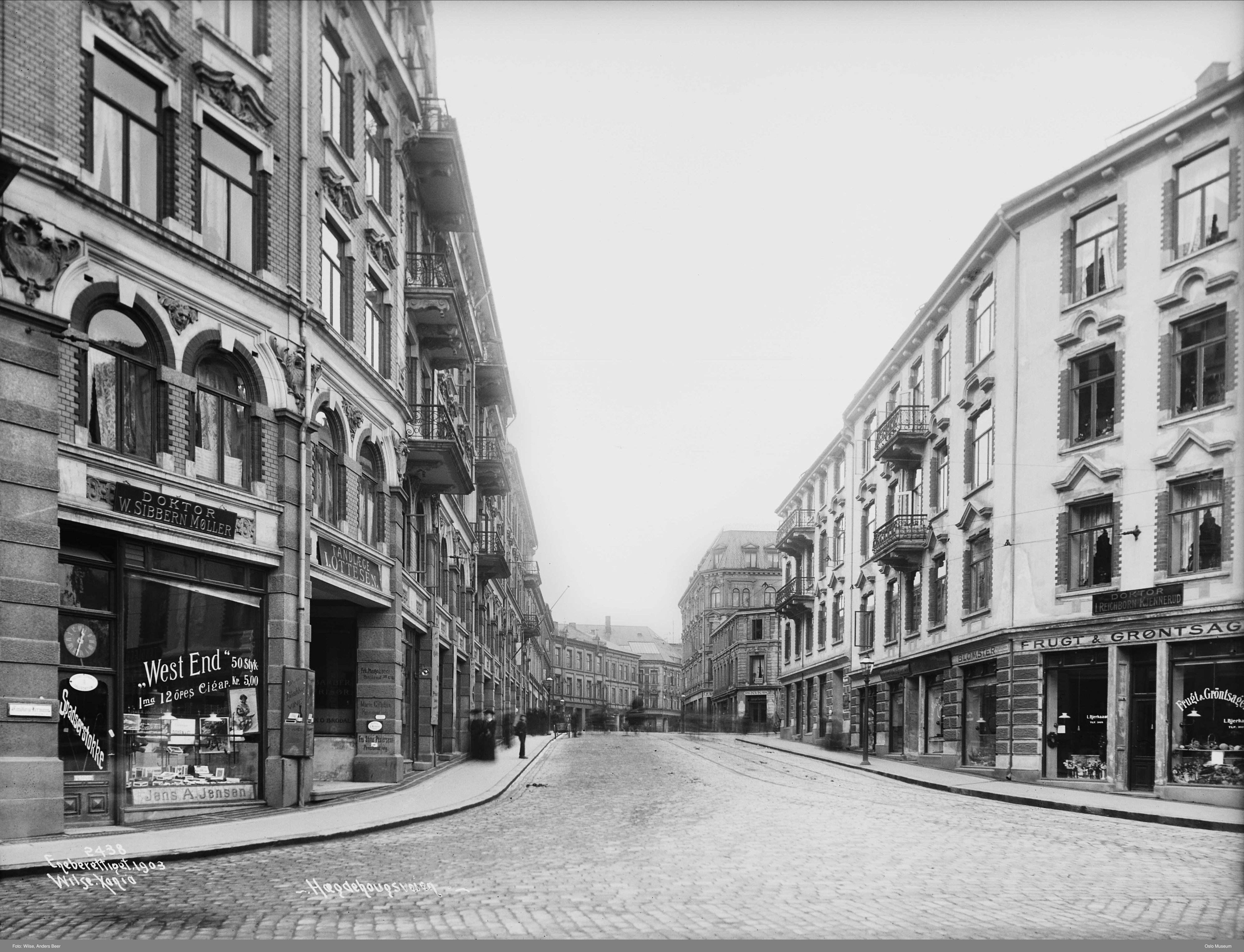
The rows of brick apartment buildings along Hegdehaugsveien are typical of Oslo’s urban architecture. Most of the commercial buildings were constructed between 1870 and 1900 in classical and neo-baroque styles. While the buildings share a similar overall appearance, their façades differ in decorative details and ornamentation.
In 1927 visitors could admire Oslo’s very first Christmas street. Large garlands of spruce with colourful stars were strung between the buildings along Hegdehaugsveien. Two illuminated gateways marked the entrances with the words “Christmas 1927,” and the entire street glittered with festive lights.
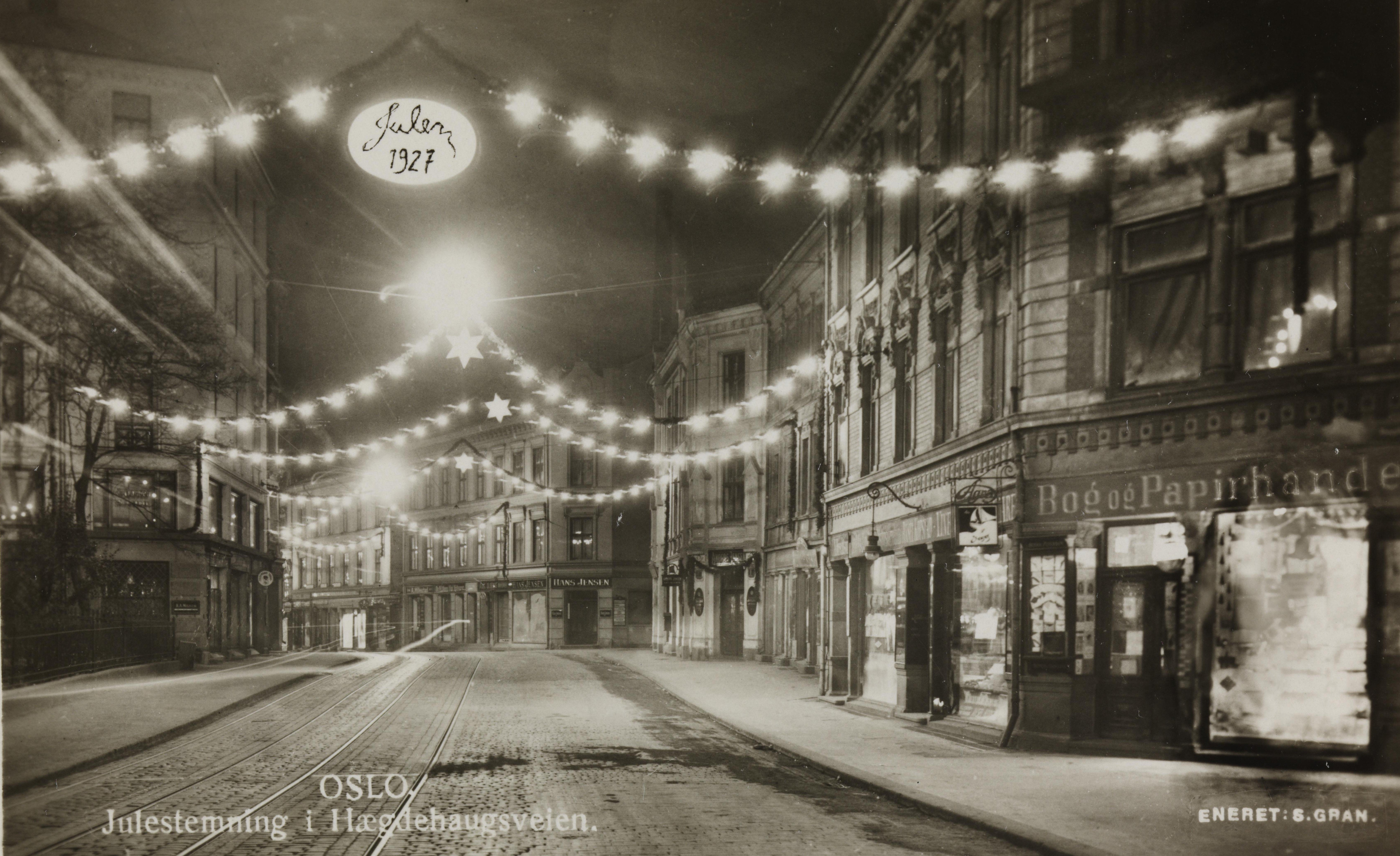
The idea had come the year before, when baker Simon Solberg of Hegdehaugsveien returned from Stockholm inspired to make Oslo a city of Christmas streets. The concept quickly spread to other parts of town, and as one contemporary description put it, “the whole city seemed wrapped in Christmas’ soft silken web.” The tradition faded after a few years, but in 1964 the Majorstuen and Bogstadveien Business Association revived the shared Christmas lighting. Today the illuminated Christmas street stretches from Parkveien all the way up to the Majorstuen intersection.
By the early 2000s the area showed signs of decades of heavy use as a busy shopping street. The century-old pipes and cables beneath the road needed replacement. Between 2011 and 2015, landscape architects from Bjørbekk & Lindheim restored the street with inspiration from its historic character.
The entire street was dug up and rebuilt. Sidewalks were widened, and new streetlights, bicycle racks and waste bins were installed in a unified design. More benches and greenery along the sidewalks have made the street more inviting. The pavements are paved in dark grey granite with built-in heating, and the curb stones are lower with rounded edges.
Twice a year the street hosts car-free market days – one in spring and one in autumn. On these days the area fills with people, turning the street into a lively pedestrian market stretching the length of the neighbourhood.
Sources
«Historisk handlegate med høy bypuls», Aftenposten (12th Dec. 2005)
«Kring Majorstuen 1912», «Byminner» (1958) No. 1
«I 1875 gikk Oslos sporvogner på høy», av Charlotte Karlsen, Aftenposten (6th Oct. 2015)
«Bogstadveien» (2022), by Finn Holden, Dreyers forlag
Hegdehaugsveien 24, Byantikvaren i Oslo
«En julegate», Dagbladet (10th Dec. 1927)
«Julestemningen», Aftenposten (13th Dec. 1932)
The corner building at Hegdehaugsveien 32 was built in 1897 in the Neo-Renaissance style (architect Julius Foseid).
If you look up at the attic floor, you will notice that it has a slightly different style from the rest of the building.
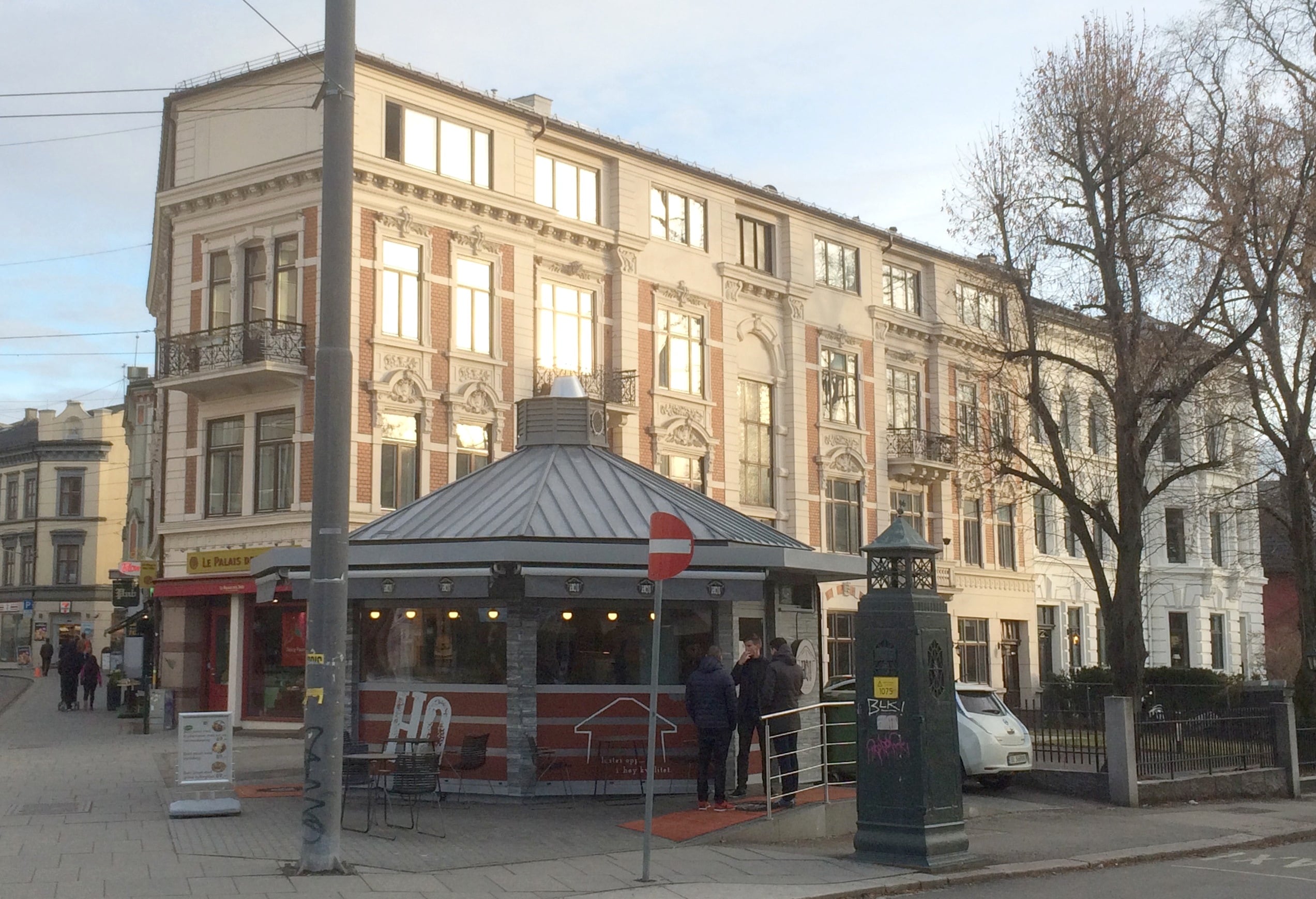
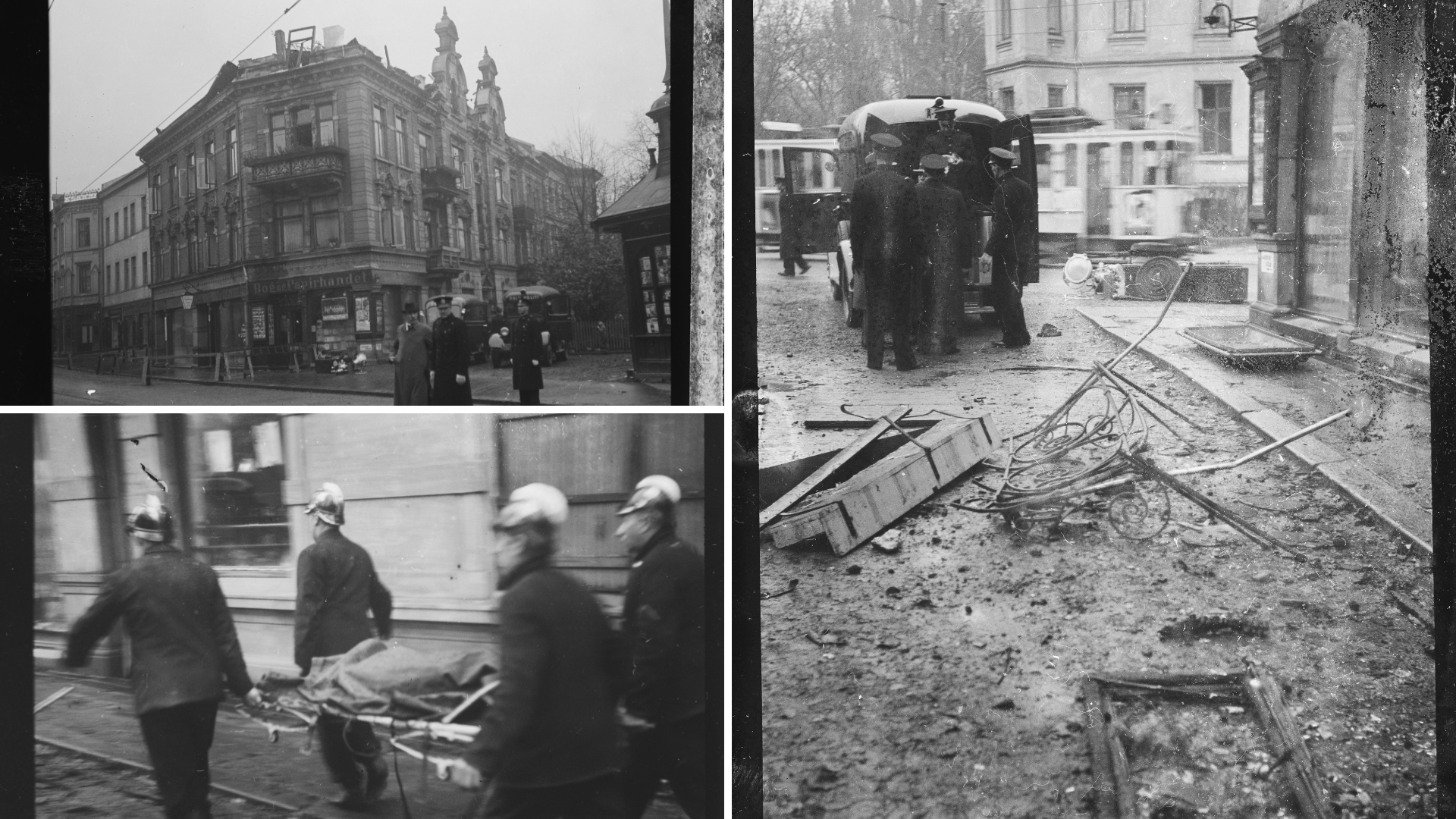
During the night of the 6th of November 1938, police constable Arve P. Haug from Hegdehaugen Police Station was walking down Bogstadveien when he noticed flames coming from the attic of this building. The attic roof was already fully ablaze, and sparks were shooting into the night sky. Haug ran to the nearest fire alarm box, smashed the glass with the hammer and pressed the alarm button.
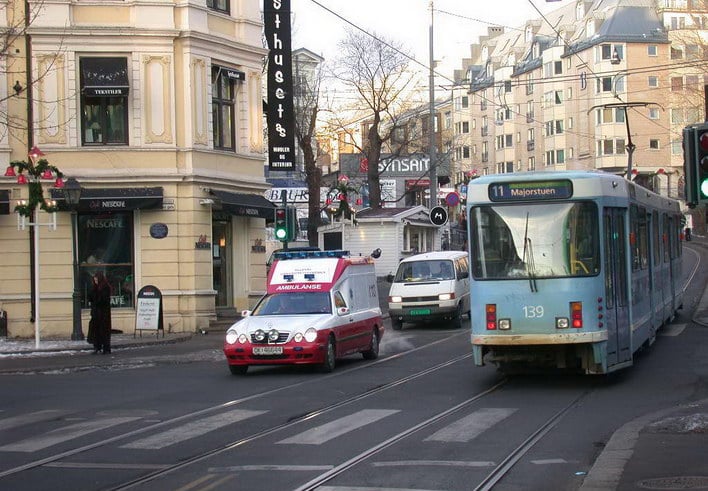
Moments later he witnessed something terrifying: a person jumped from the attic window toward Oscars gate. The figure looked like a human torch. Soon after, another person fell to the ground. Within minutes an ambulance arrived and took away four people. Three died when they hit the pavement. The fourth, a young woman, died in the ambulance.
When the fire brigade arrived—only three minutes after receiving the alarm—the entire attic floor was engulfed in flames, and there was no longer any hope of finding survivors behind the door. The flames could be seen across much of the capital.
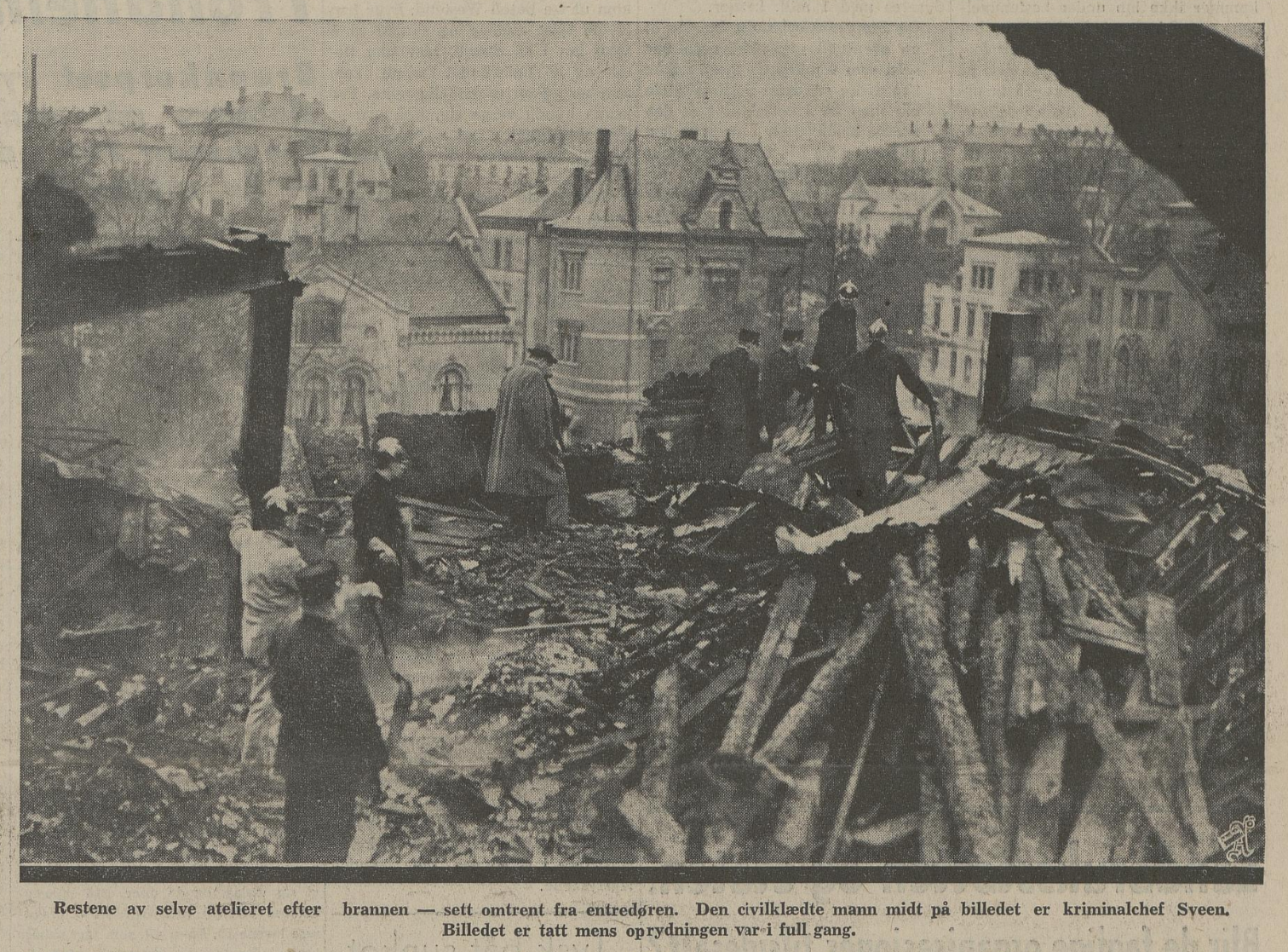
The party in the attic had been organized by the brothers Per and Aage Brandstrup, who had recently taken over the business of court photographer Karl Anderson. It had been 40 years since Anderson started his company, and the “Anderson Photo Studio” in the attic had been decorated for a jubilee celebration. The studio was transformed into a winter landscape under a starry sky. A “snow hut” made of cotton and glitter had been built, and the room was decorated with cotton panels, crepe paper and paper lanterns.
Next to the studio, chemicals and photographic film were stored. When the flames reached them, they exploded. Anderson had also used magnesium flash powder, which may have turned the fire into a devastating blaze. The studio had large skylight windows built into the roof to provide natural light. These likely shattered early in the fire, feeding it with oxygen. All 40,000 photographic plates belonging to the court photographer were destroyed, many of them portraits of the Norwegian royal family.
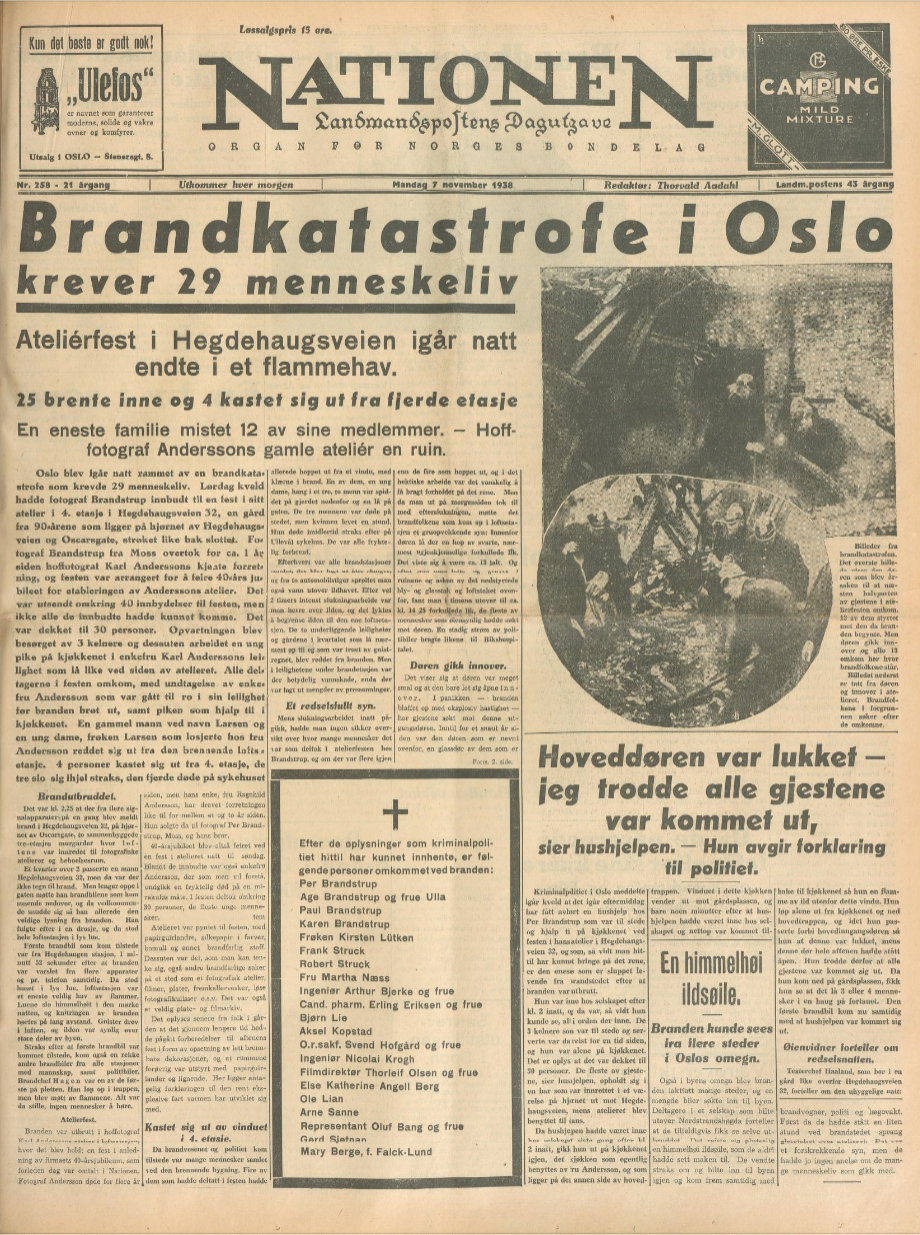
The following day large crowds gathered at the site of the fire, including relatives of the victims. In front of the entrance door lay ten charred bodies in a pile. People watched as stretchers carrying the dead were brought out to waiting ambulances. The four who had jumped from the windows were identified quickly. The others had been burned beyond recognition.
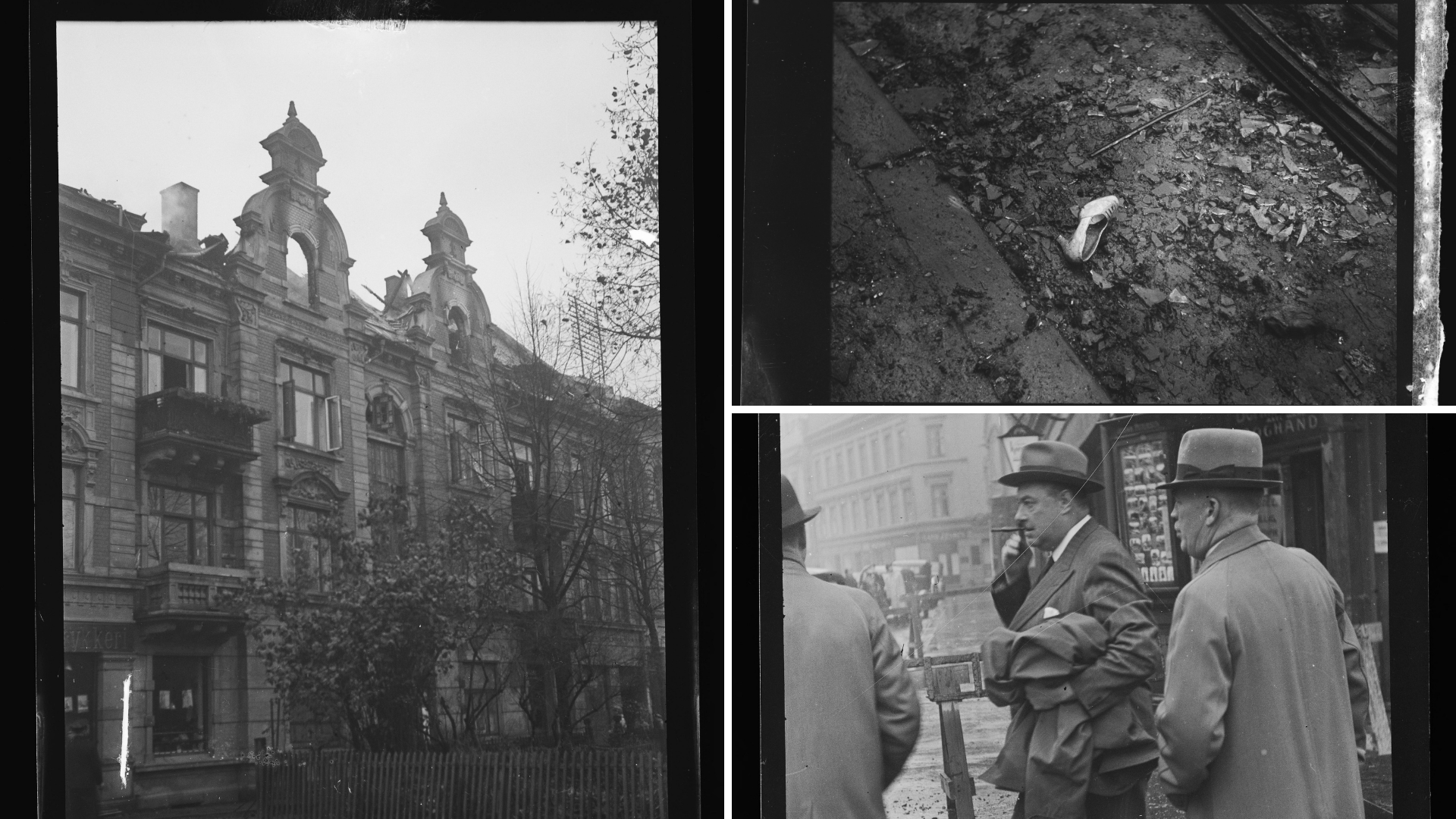
None of the 29 people attending the party survived what became the deadliest fire in Oslo’s history. One family alone lost twelve members. The tragedy left a deep impression on the city. Flags were lowered to half-mast, and the national broadcaster played mourning music. A memorial for the victims was broadcast on the radio at 7 p.m.
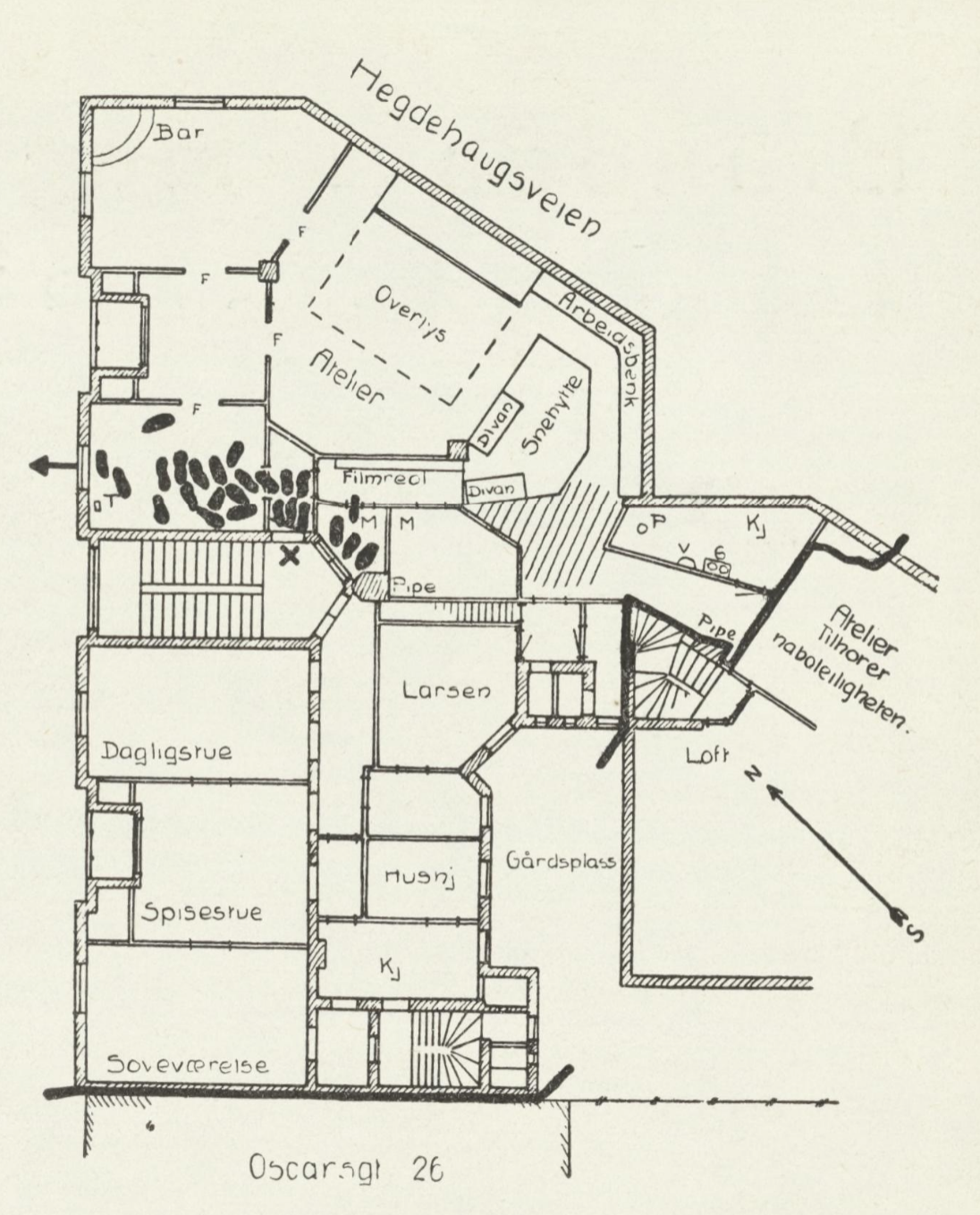
There had been 30 guests invited to the celebration. The thirtieth guest, a young woman, left the party before the fire started. The reason was simple: her escort had been paying a little too much attention to another woman. That small quarrel most likely saved her life.
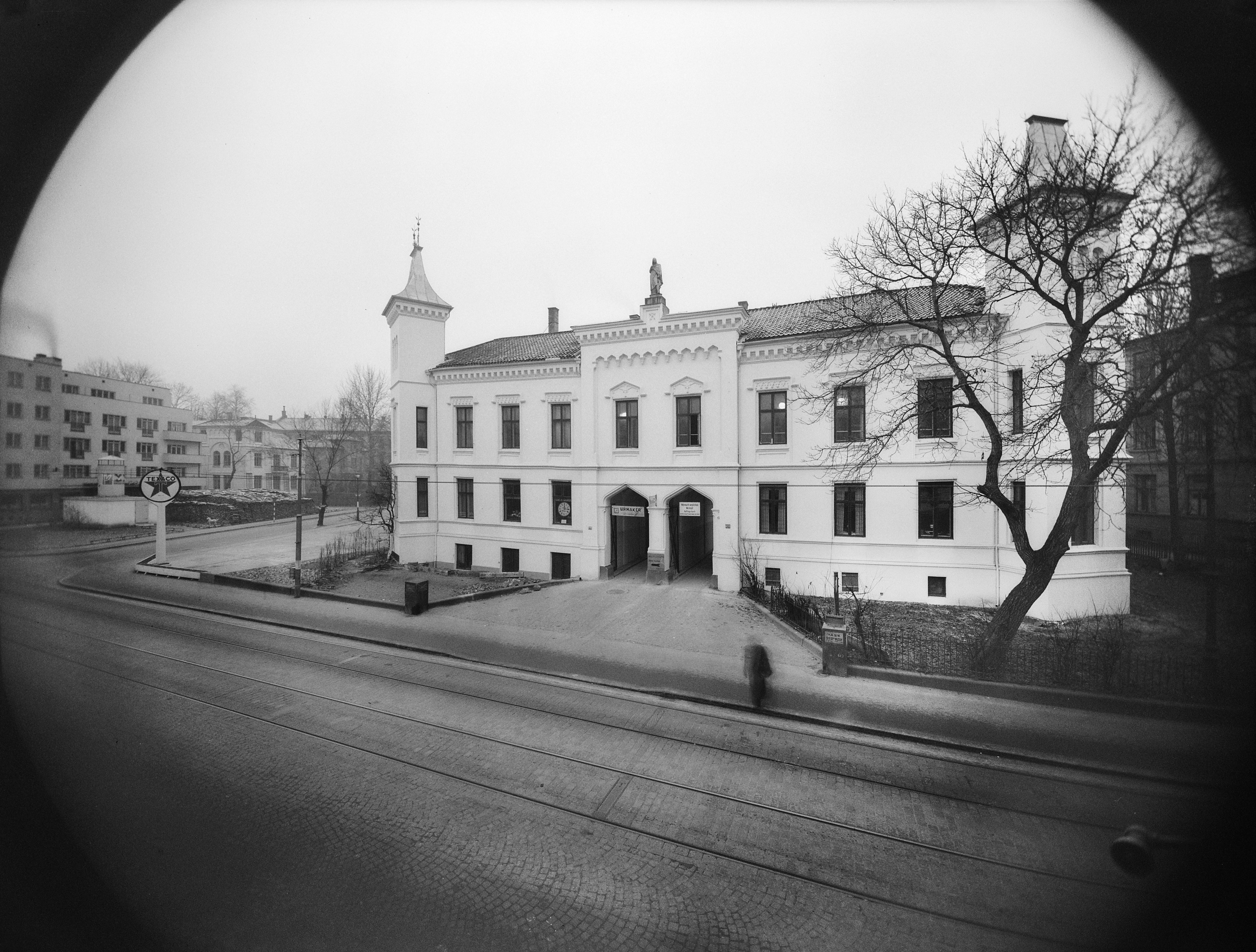
Hegdehaugsveien runs through the heart of the Homansbyen neighborhood. On the corner where it meets Oscars gate once stood the area’s most famous landmark: the impressive Homansslottet, or “Homan House.”
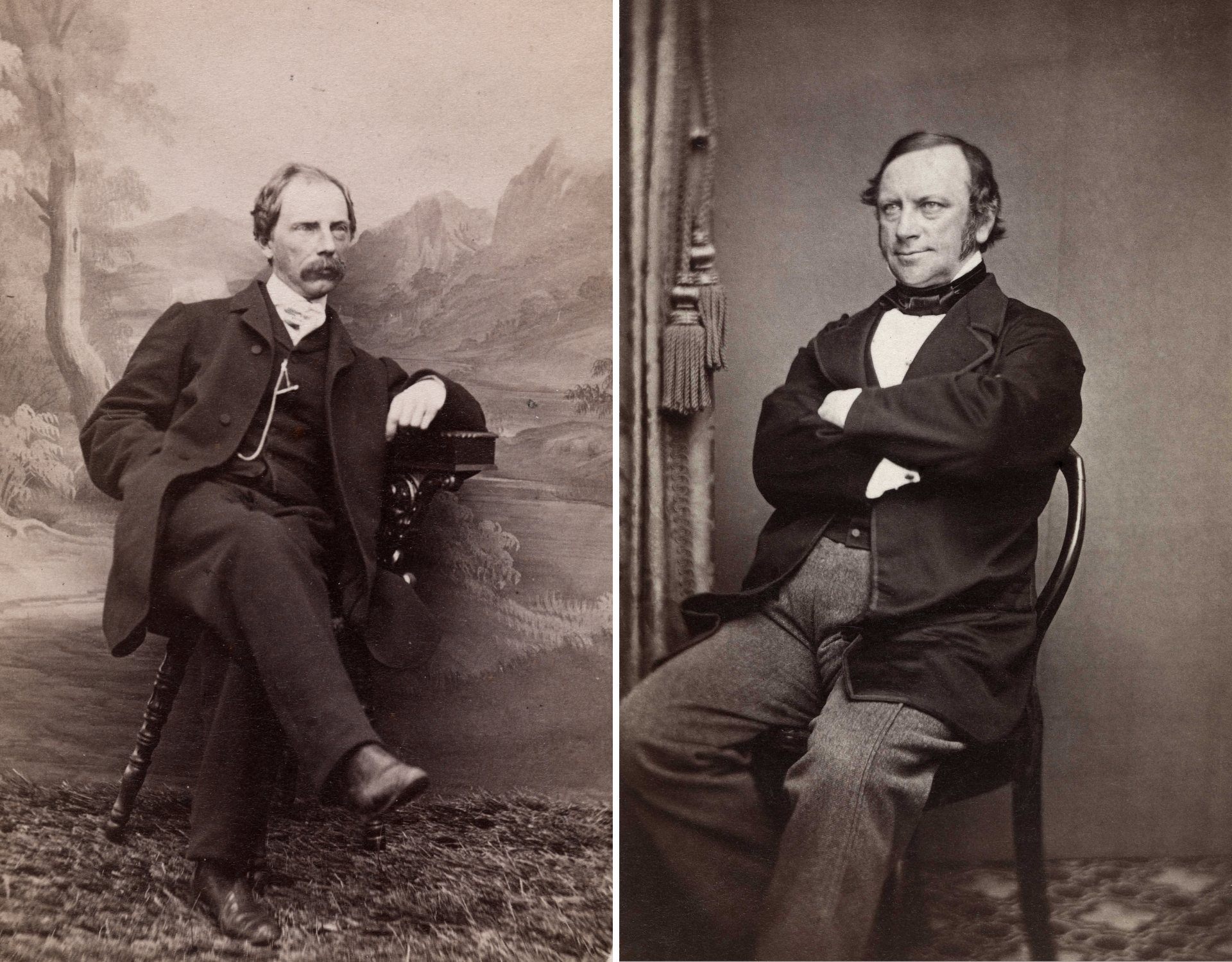
In the 1850s, two brothers – lawyers Peter Jacob Homan (1816–1868) and Henrik Homan (1824–1900) – purchased two large estates just behind the newly completed Royal Palace. Their original idea was to divide the land into plots and let buyers build their own villas, similar to the development around the palace park. However, a period of economic downturn temporarily halted construction in the city.
When a major fire destroyed large parts of Oslo’s city centre in 1858, many wealthy families suddenly needed new homes. The Homan brothers saw their opportunity. They laid out streets, divided the land into plots, and developed the area according to a unified plan inspired by the elegant residential districts around the Royal Palace.
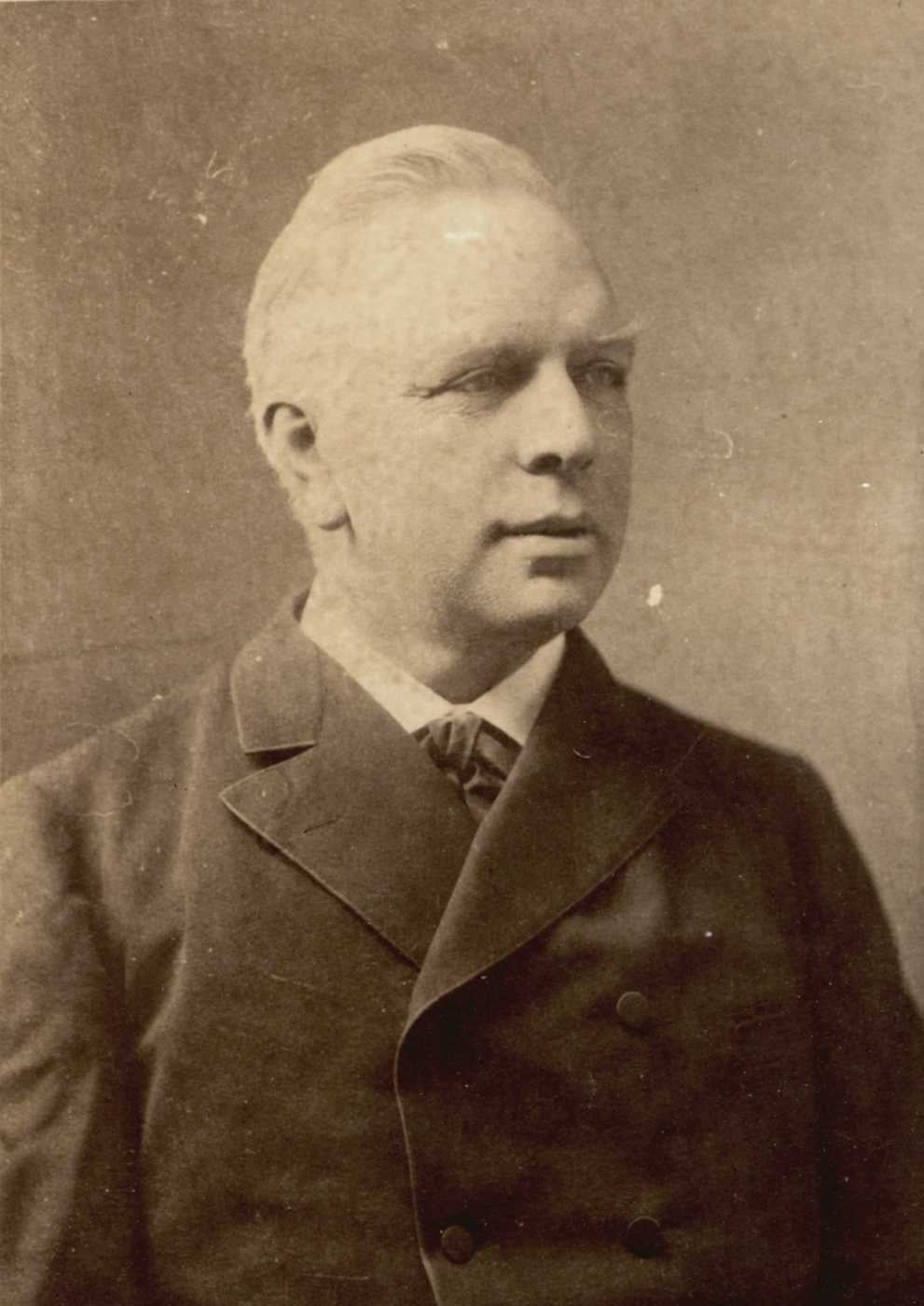
Henrik Homan had spent time in England and was inspired by the modern villa suburbs he had seen there. In these areas, a landowner would often build all the houses – frequently designed by the same architect – before selling them. The young and highly educated architect Georg Andreas Bull (1829–1917) was commissioned to design the villas here.
Construction began in the autumn of 1858, and the new residential area – soon known as Homansbyen – grew rapidly. Most of the villas were purchased by civil servants and members of the city’s professional elite. Professors, court officials, military officers, lawyers and senior government employees formed a distinctive community—what was then considered the intellectual elite of Christiania, the former name of Oslo.
Architect Bull’s final projects in Homansbyen were homes for the Homan brothers themselves. In 1866–1867 he designed the famous Homansslottet. The monumental building was inspired by English Gothic Revival architecture (Tudor style). In the 1870s its towers were topped with pointed spires, giving it an almost exotic appearance. On the roof stood a large sculpture known as “The Herculean Matron.”
Jacob Homan moved into the largest apartment in the building. In 1868, at the age of 52, he married Lucie Bull, the 22-year-old daughter of the famous Norwegian violinist Ole Bull. The marriage was short and unhappy, and Jacob Homan later took his own life. After his death, property developers completed the remaining villas in Homansbyen.
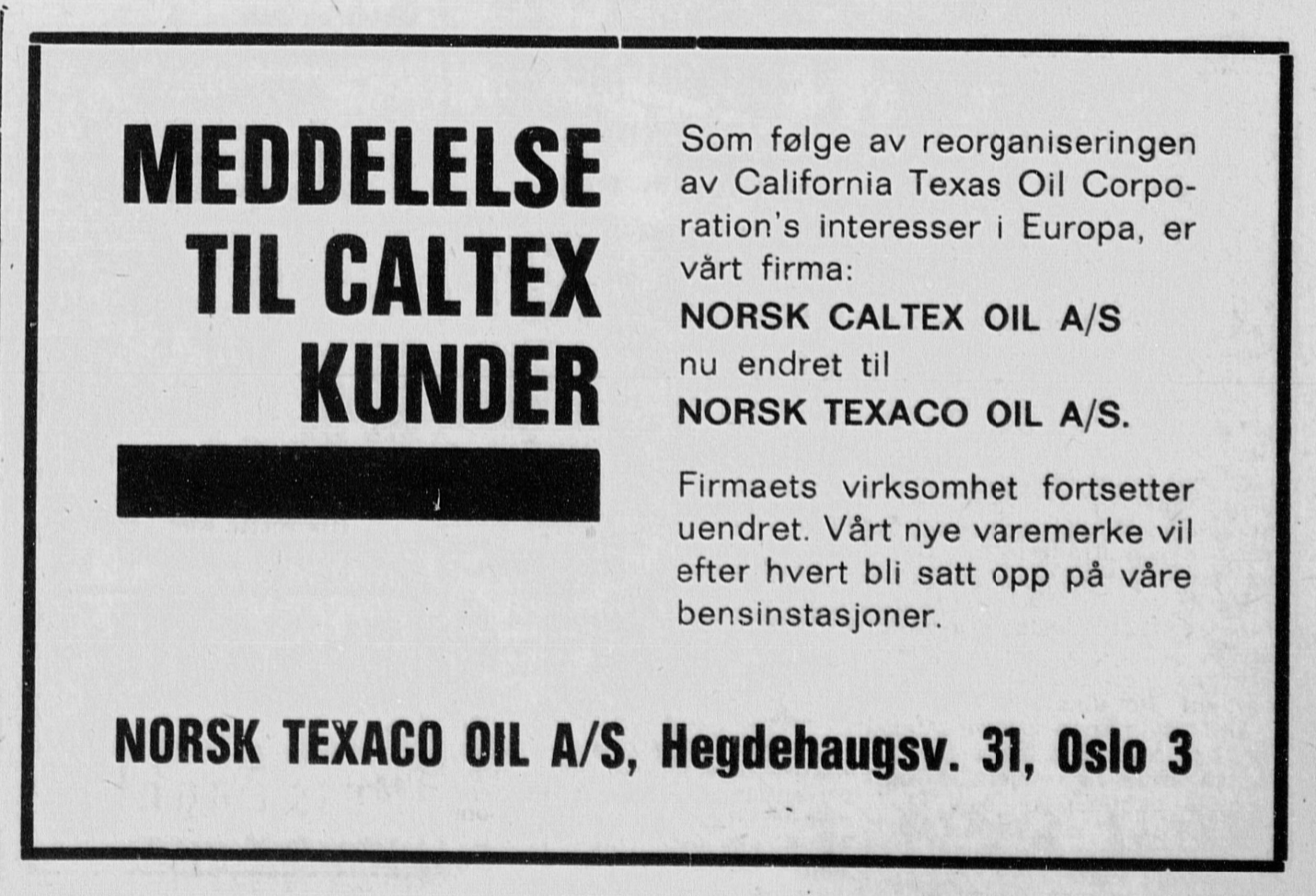
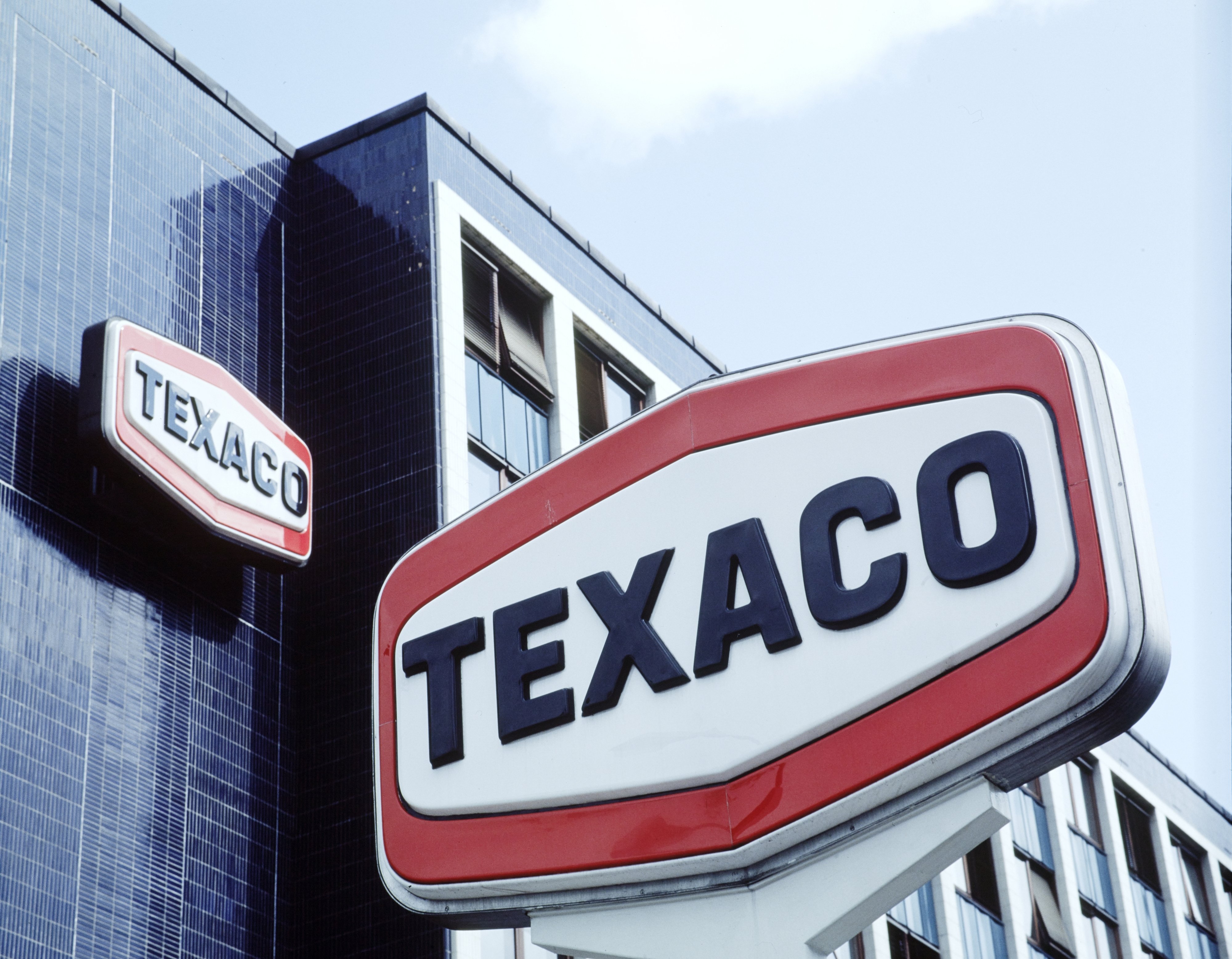
After World War II, city planners increasingly favoured modern high-rise buildings over the older villas. In 1956, Homansslottet was demolished to make way for a modern office building designed by architect Christian Astrup. The oil company Caltex moved into the new building in 1959, and a modern gas station opened on the Oscars gate side. The building also housed a post office facing Hegdehaugsveien.
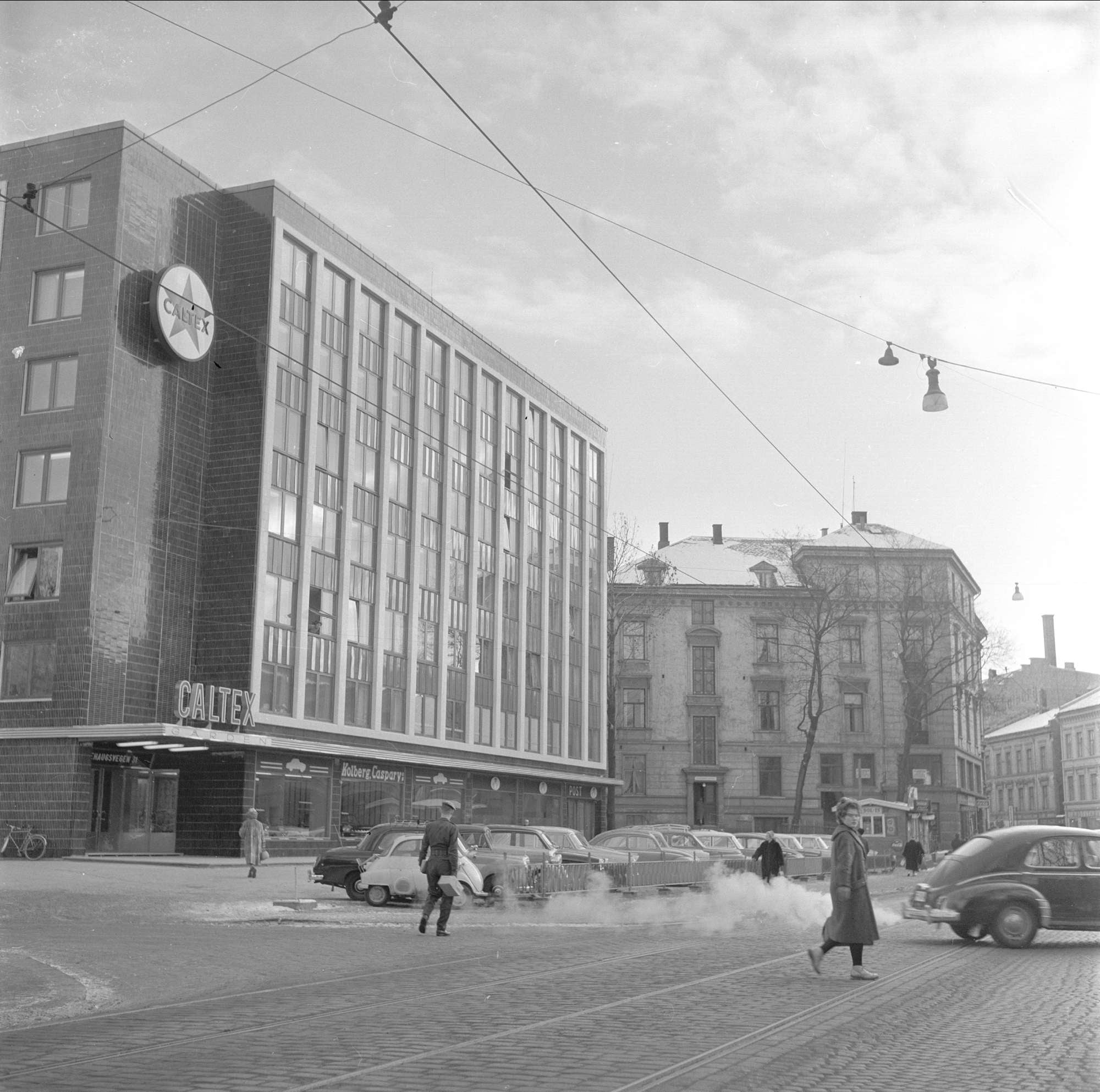
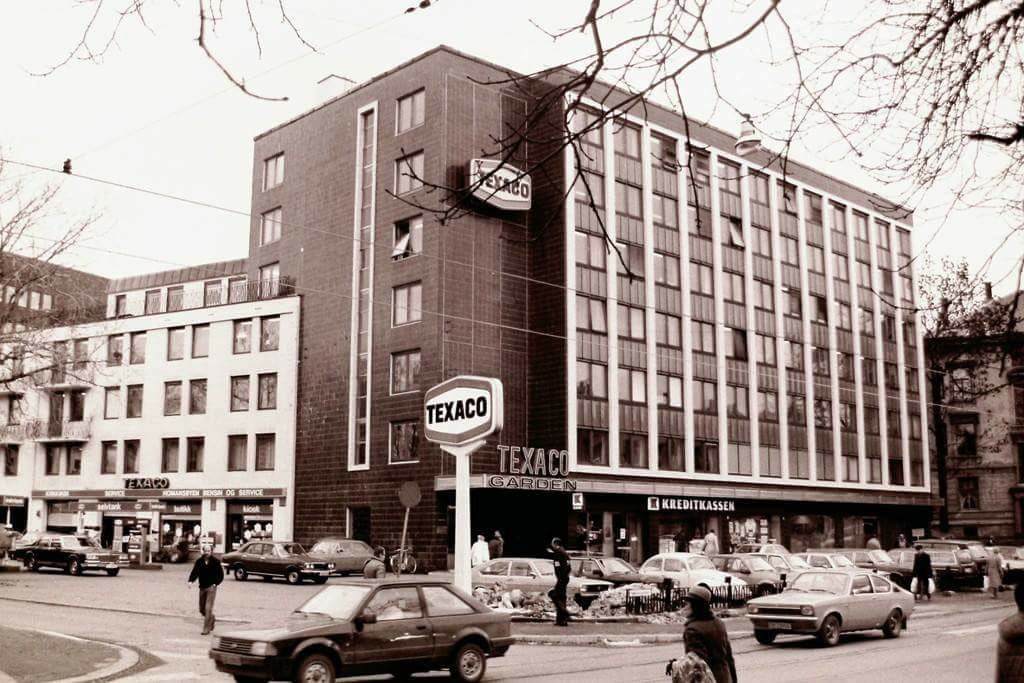
When Homansslottet was demolished, the fire brigade prevented the rooftop sculpture “The Herculean Woman” from crashing down and being destroyed. The statue had likely been placed there by Jacob Homan himself, possibly as a tribute to his young bride. It is a terracotta copy of a Roman marble statue with the same name.
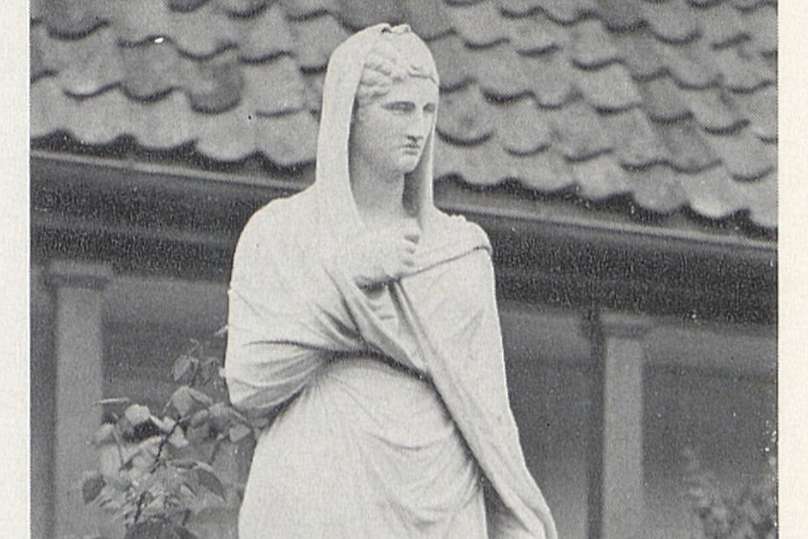
Today, this small but remarkable piece of Oslo’s history can be seen in the courtyard of Frogner Manor, where Oslo Museum is located.
Sources
«Høyesterettsadvokat Peter Jacob Homan», «Byggekunst» (1959) Vol. 41 No. 7
«Guide for Homansbyen» (1990), by Homansbyen Vel og Norsk Arkitekturmuseum
«Den gjenoppståtte bydelen», by Beate Muri, Dagsavisen (2nd Sep. 2020)
«Hegdehaugsveien 31/33», «Oslo før og nå» (1992), by Håkon Bergset, Kunnskapsforl.
At this lively intersection you’ll find a small resting place. Since 1962, a statue of Bokken Lasson – a leading figure of the bohemian cultural scene in old Christiania (Oslo) and one of Norway’s pioneers of cabaret – has stood here holding a lute in her hands. The string instrument became her trademark as a beloved stage performer.
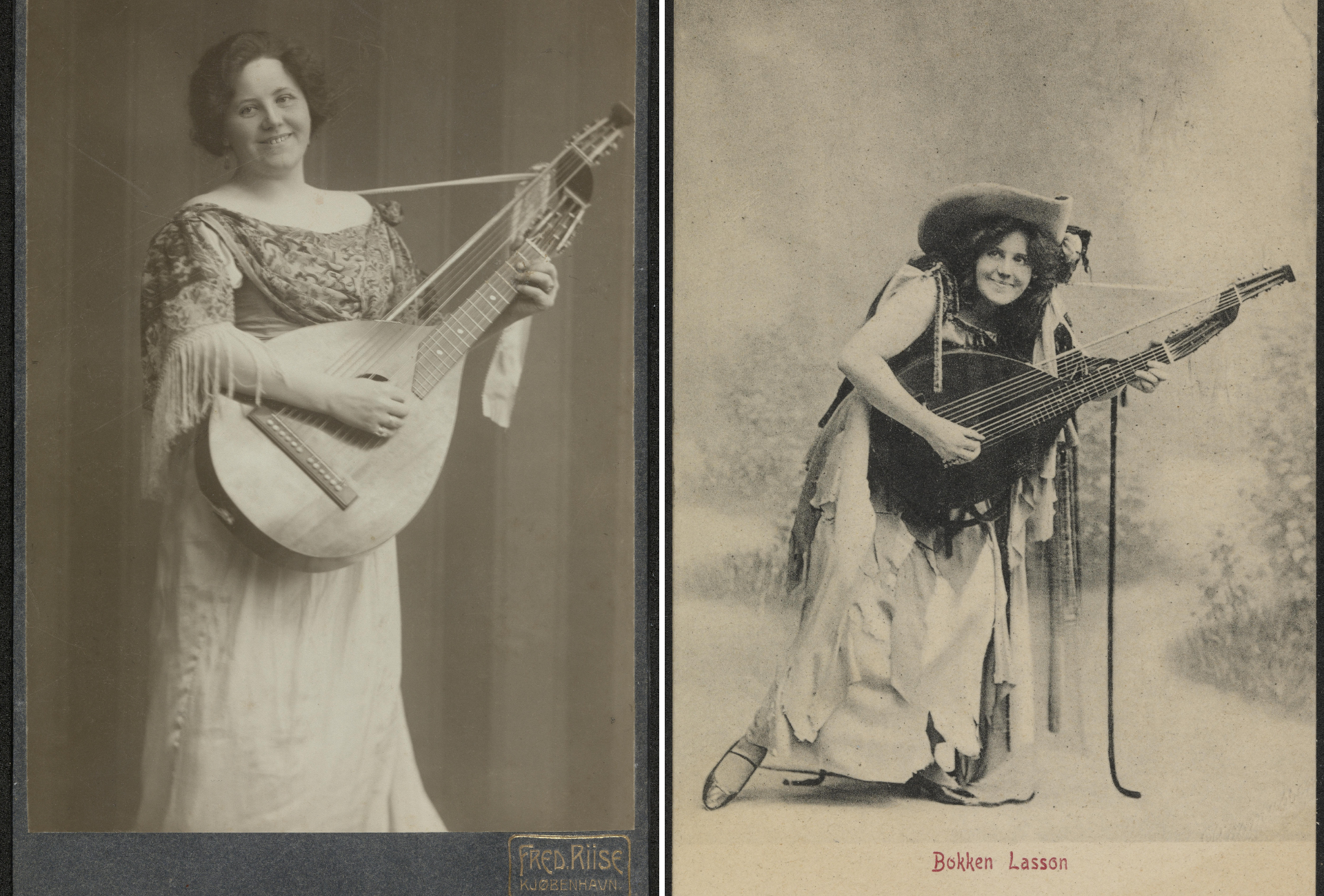
Just a short distance from here, in Grønnegata, she grew up as one of the eight remarkable Lasson sisters, who became well known in Norwegian cultural life.
The Lasson family home attracted many artists from the cultural circles of old Christiania. One of them was Eva Nansen, the singer and wife of the famous Norwegian polar explorer Fridtjof Nansen, who gave Bokken singing lessons.
Bokken found her greatest inspiration in Paris, where she spent time with the artist couple Frits and Ingeborg Thaulow and experienced the lively literary cabaret scene of the time. In the years that followed, she toured across Europe wearing a self-made patchwork costume. Accompanying herself on a 12-string lute decorated with ribbons, she performed traditional songs, folk ballads and modern cabaret numbers.
Back in Norway she collaborated with the writer Vilhelm Dybwad. Together they founded the cabaret and revue theatre Chat Noir in 1912, which she directed until 1917. One of her most famous performances was the song “Tuppen og Lillemor,” written by Dybwad. The two married in 1916.
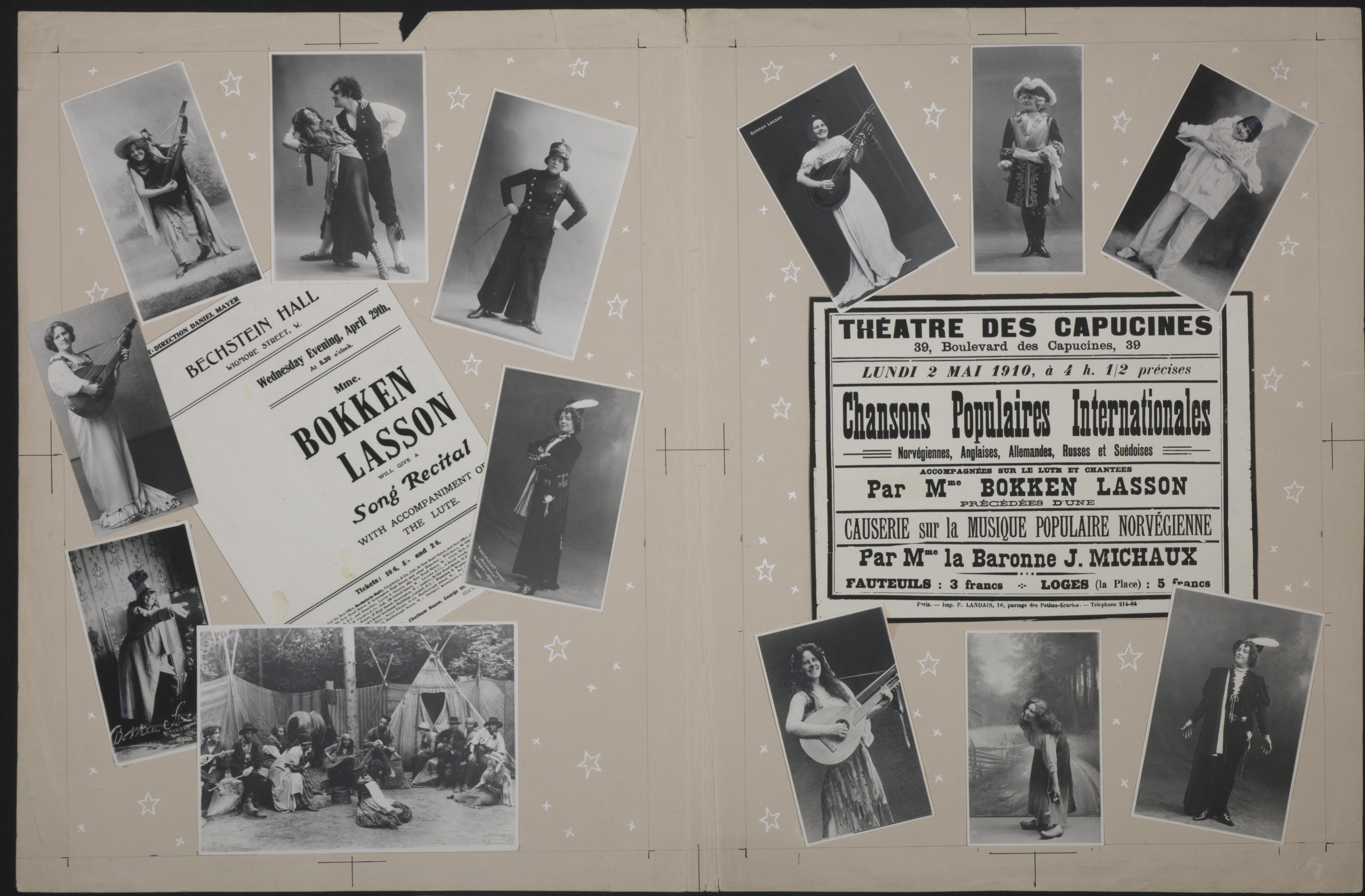
Public recognition came later in life. On her 90th birthday in 1961, she was honoured with a special celebratory performance at Chat Noir. The following year she received The King’s Medal of Merit in Gold, one of Norway’s highest civilian honors.
A biography published in 2012 notes that the statue represents “the young Bokken,” but sculptor Joseph Grimeland (1916–2002) created a figure that seems both young and old at the same time—as if she carries all the stages of her life within her.
The statue was a gift to the city of Oslo, donated by the shipping family A. F. Klaveness. Ironically, a relative of theirs – pastor Thorvald Klaveness – had once publicly condemned Bokken Lasson and the Danish writer Holger Drachmann for their relationship. Bokken herself found the situation amusing. She remarked that no other city in the world had erected a statue to a cabaret singer – not even Paris, the city of the famous performer Yvette Guilbert.
The property owners of Oscars gate 19 made this small square available on the condition that the city would maintain it.
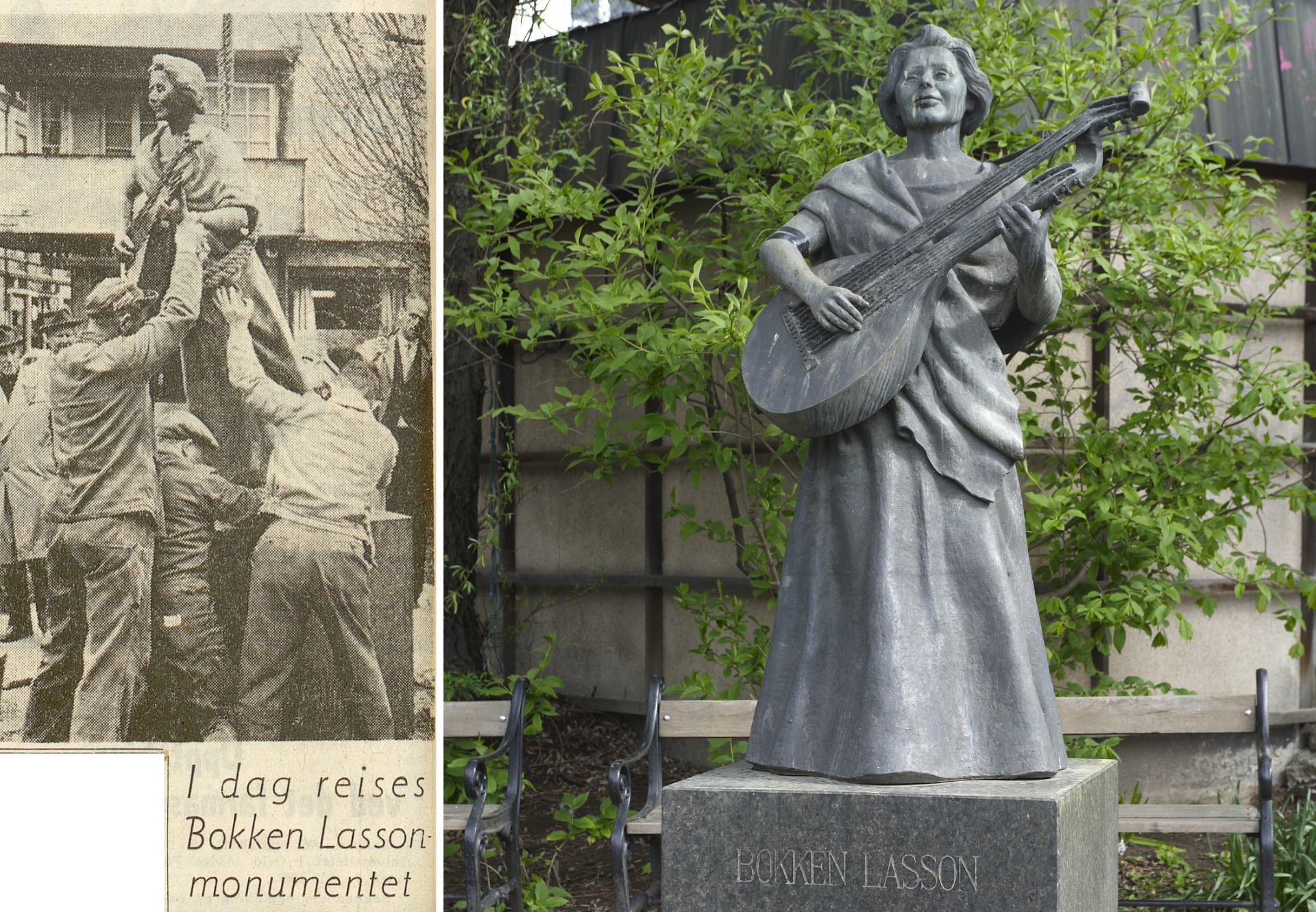
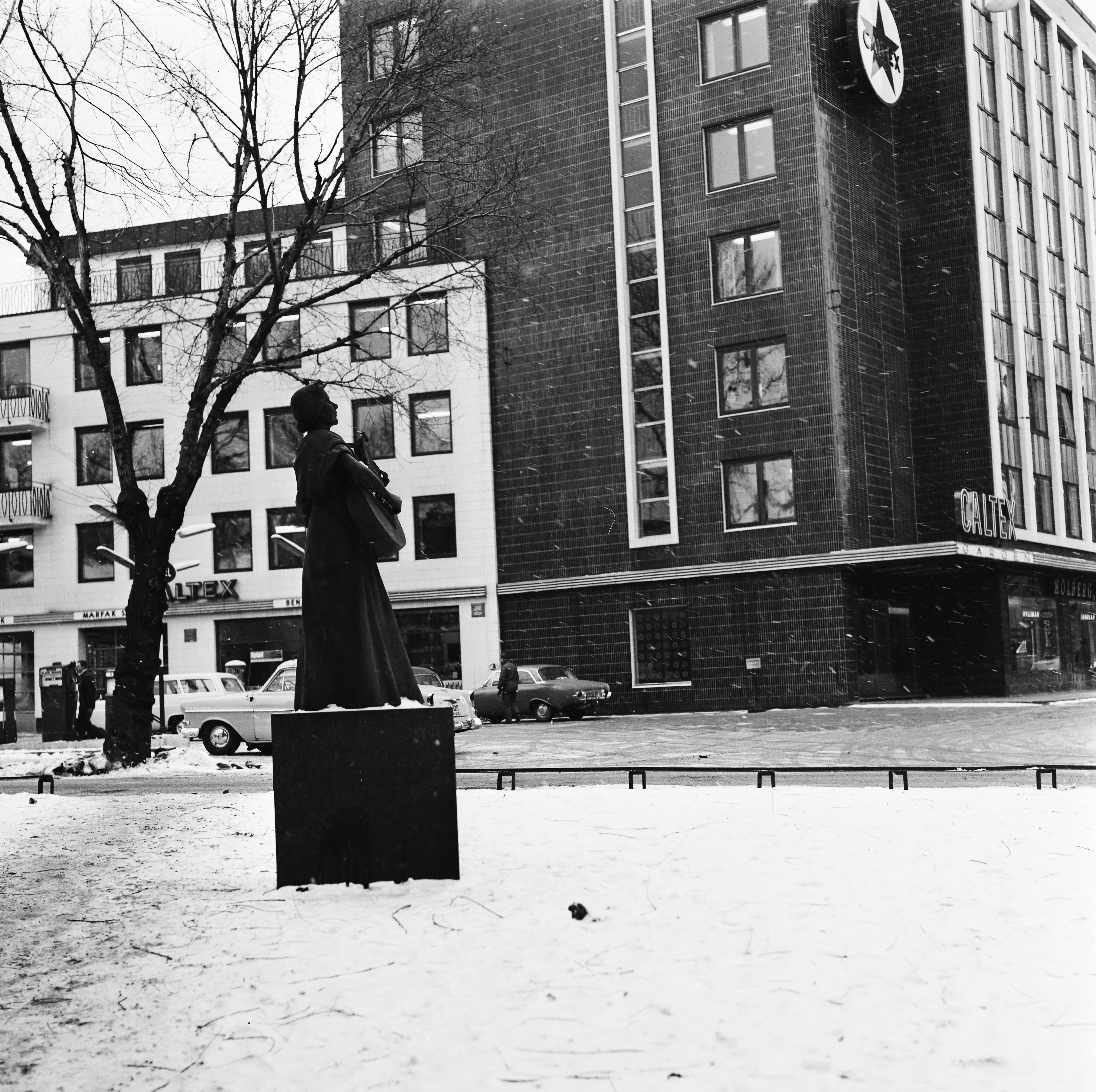
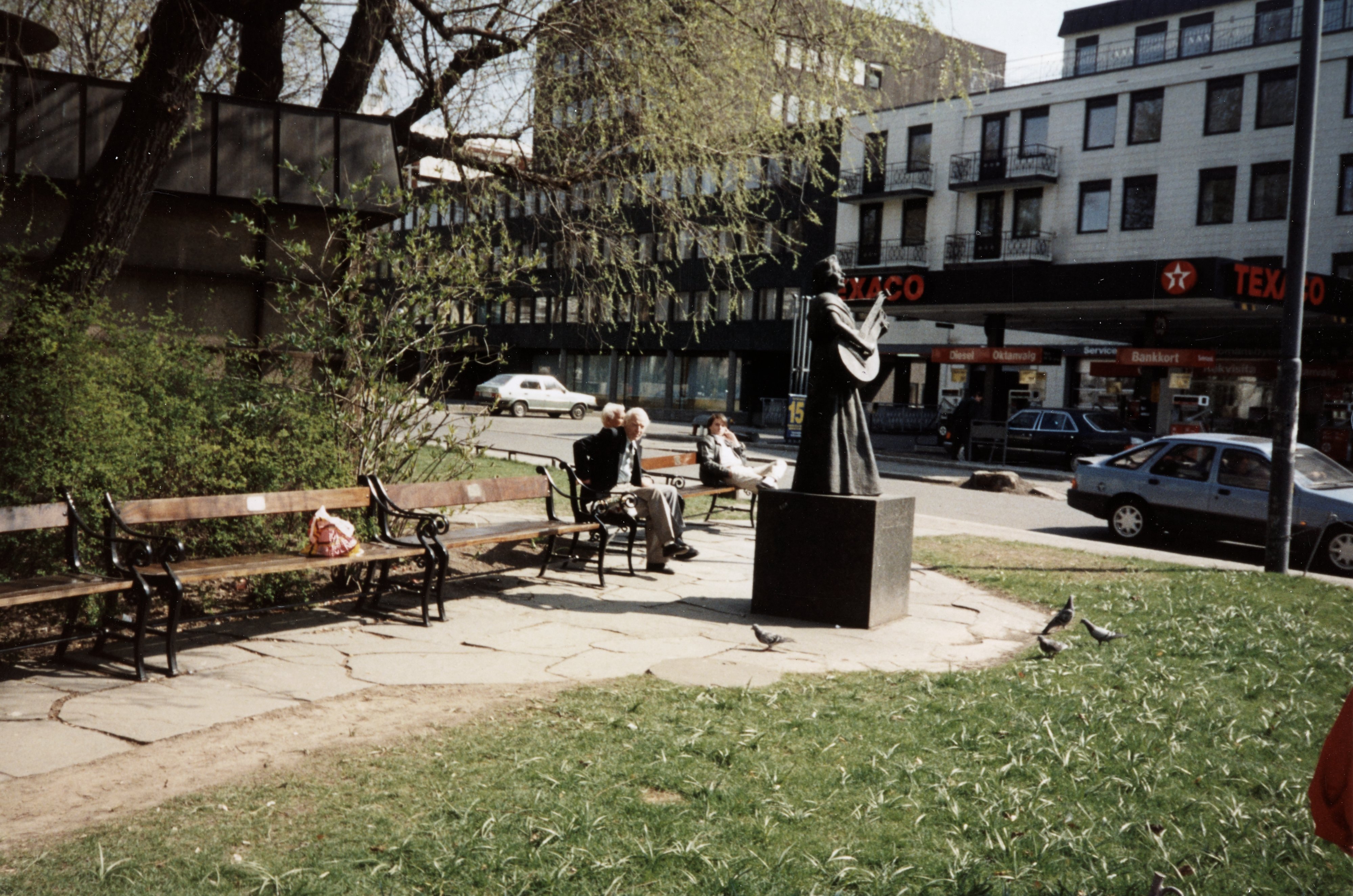
When the statue was unveiled, the 90-year-old Bokken Lasson was deeply moved. Hundreds of people gathered here for the occasion. When she managed to say a few words, she quoted Holger Drachmann:
“If I have been able to give something, I will say this: I am only an instrument—the master plays upon me.”
In 2012, exactly 100 years after Bokken Lasson founded the cabaret theatre Chat Noir, Oslo Museum presented an exhibition about the cabaret singer who grew up here in Homansbyen.
Sources
«Bokken (Caroline) Lasson 1871-1970», «Fast plass» (2017), by Kristin Johansen, Press
Bokken Lasson, Norsk biografisk leksikon
«Bokken Lasson i ingenmannsland», by Cille A. Berglund, Lokalavisen Frogner (16th Feb. 2006)
«Bokken Lasson» (2012), by Anne Helgesen, Aschehoug
«Søker gjenstander etter Bokken Lasson», Aftenposten (28th Dec. 2011)
In the corner building at Josefines gate 23, a neighbourhood grocery store served the residents of Homansbyen for more than 100 years.
The building was originally constructed with two floors in 1863. A third floor was added in 1883 for the merchant Olaus Syvertsen.
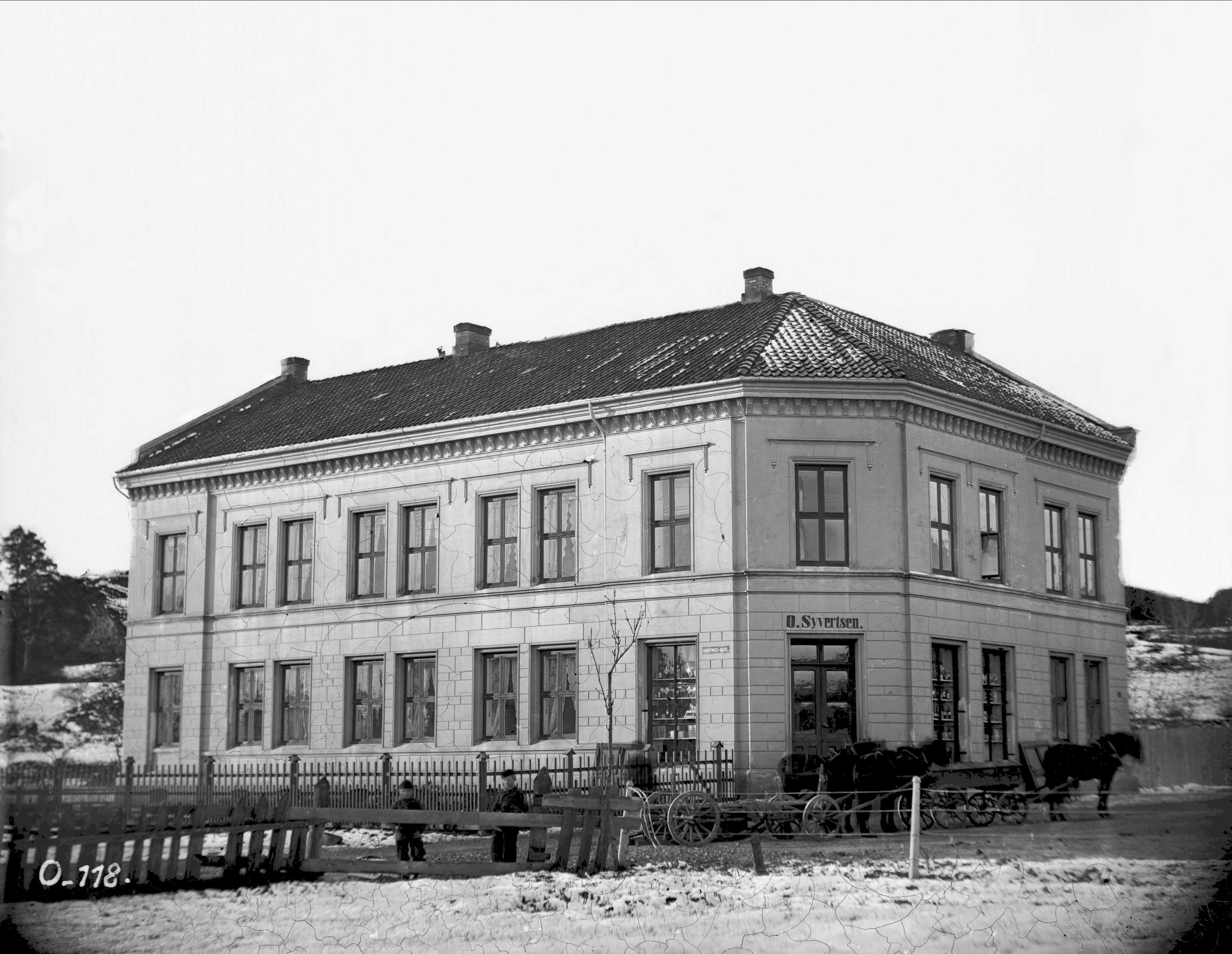
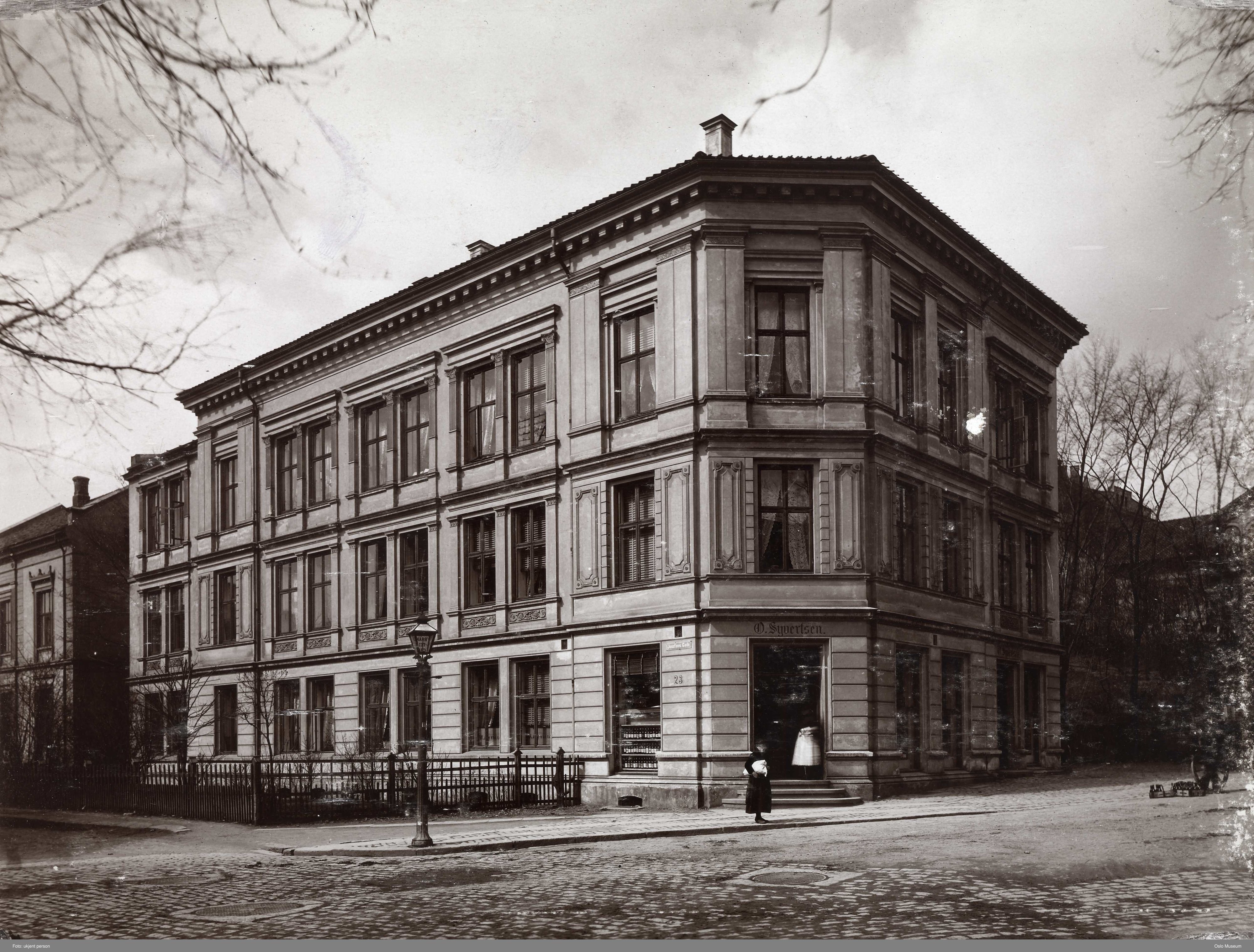
When the 26-year-old shopkeeper first opened his store here, many doubted he would succeed. The famous poet Johan Sebastian Welhaven reportedly exclaimed: “Imagine that—a grocer among the snobs!” Wealthy residents of Homansbyen were used to having their groceries delivered from large merchants in the city centre.
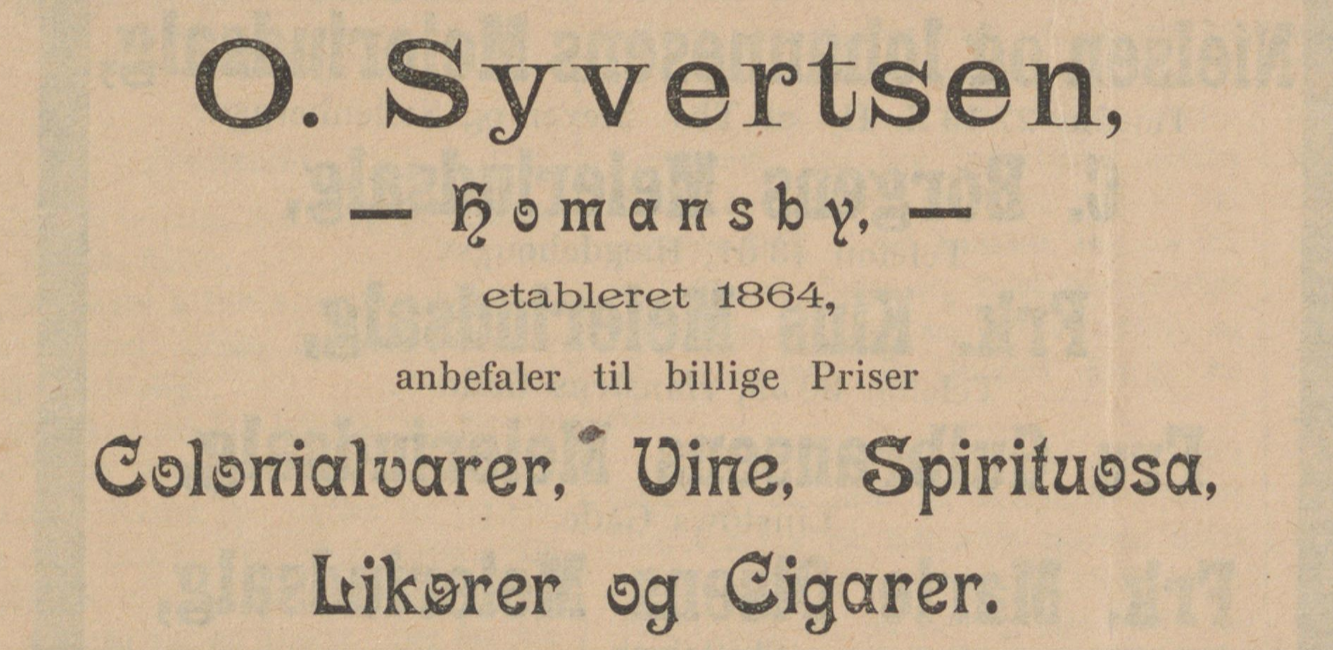
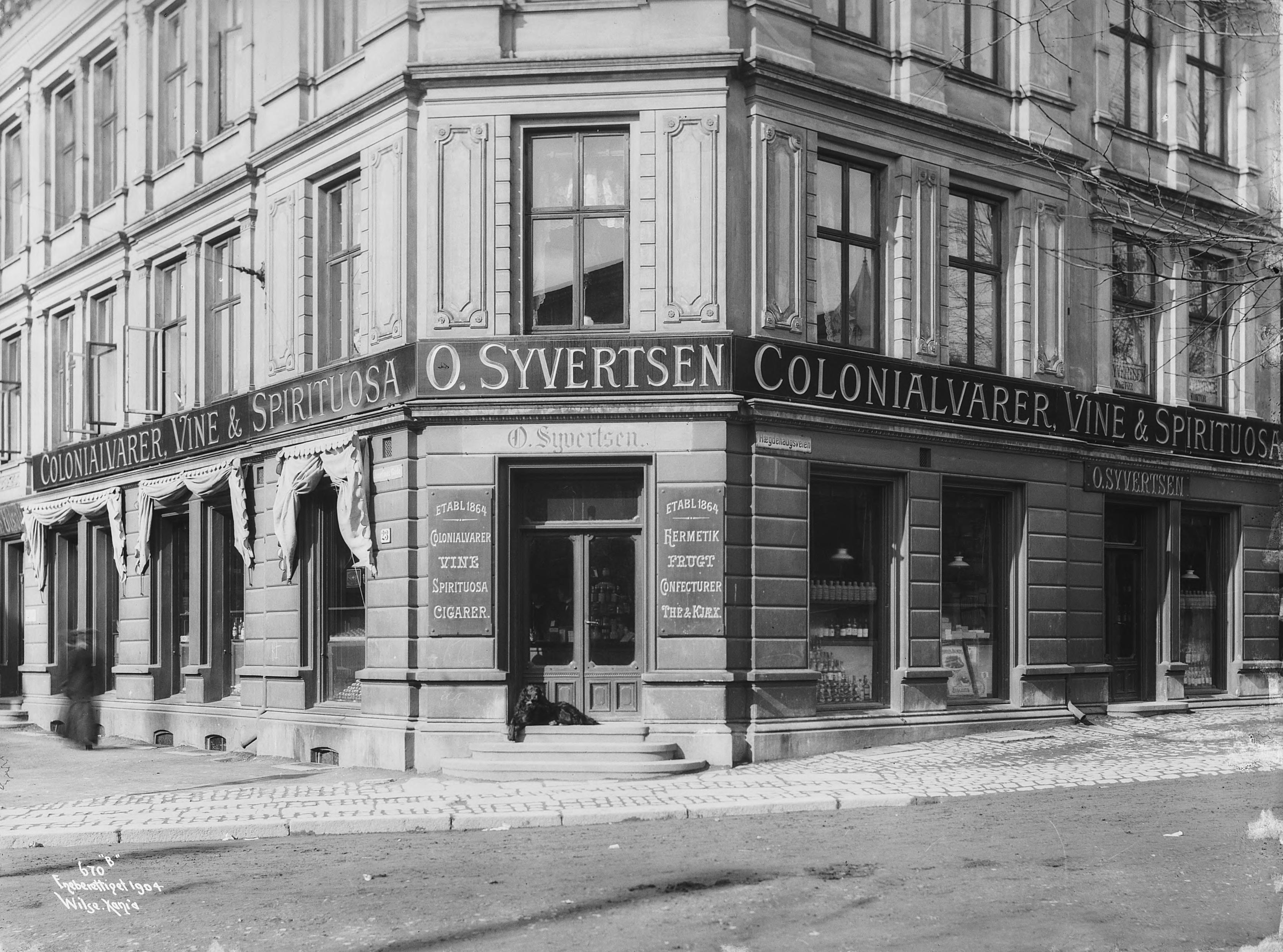
But the young shopkeeper understood his customers well. He realized that when people suddenly needed something quickly, the local shop would be their best option. Gradually the store became popular, and soon nearly every household’s maid came here to shop.
Syvertsen also knew how to present his business. Instead of placing barrels of herring, sacks of potatoes and containers of syrup outside the shop—as was common at the time—he installed elegant signs with gold lettering announcing fine imported groceries, fruit and quality wines. He began stocking more exclusive products: French sardines, grapes, imported cheeses and, not least, “fine wines” from prestigious brands. Before long, the well-to-do ladies of the neighbourhood started visiting the shop themselves.
The store became a local institution and attracted famous customers, including the writer Camilla Collett, the poet Andreas Munch, and the folklorist Peder Chr. Asbjørnsen. Eventually Syvertsen employed two delivery drivers and several shop assistants, while he and his family lived in the apartment above the shop.
Only a few historic shop interiors from old Christiania (Oslo) still exist today. Here you can still admire the decorative glass ceiling, filled with symbolic motifs of fruit and vegetables. The protected ceiling was painted in the 1880s by master painter Krogh-Fladmark. The interior of the nearby Stockfleths coffee bar has been inspired by the original grocery store.
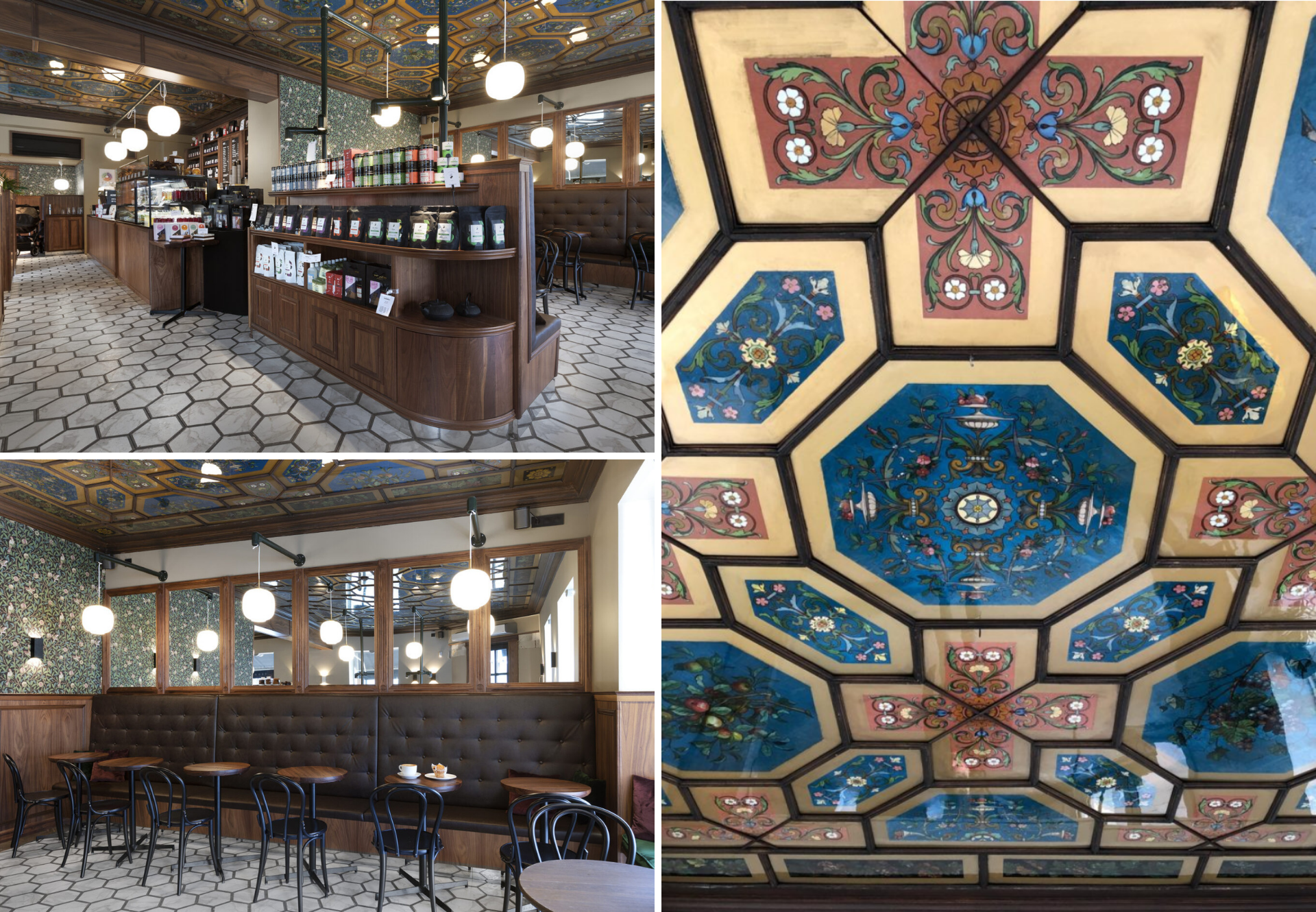
Even in the 1800s, this street corner was a lively place. The horse-drawn tram passed through the intersection, and not far away there was a station for horse-drawn taxis. Behind “Syvertsen’s Corner” there is still a stable building where a rested horse would sometimes be harnessed to help pull the tram up the hill.
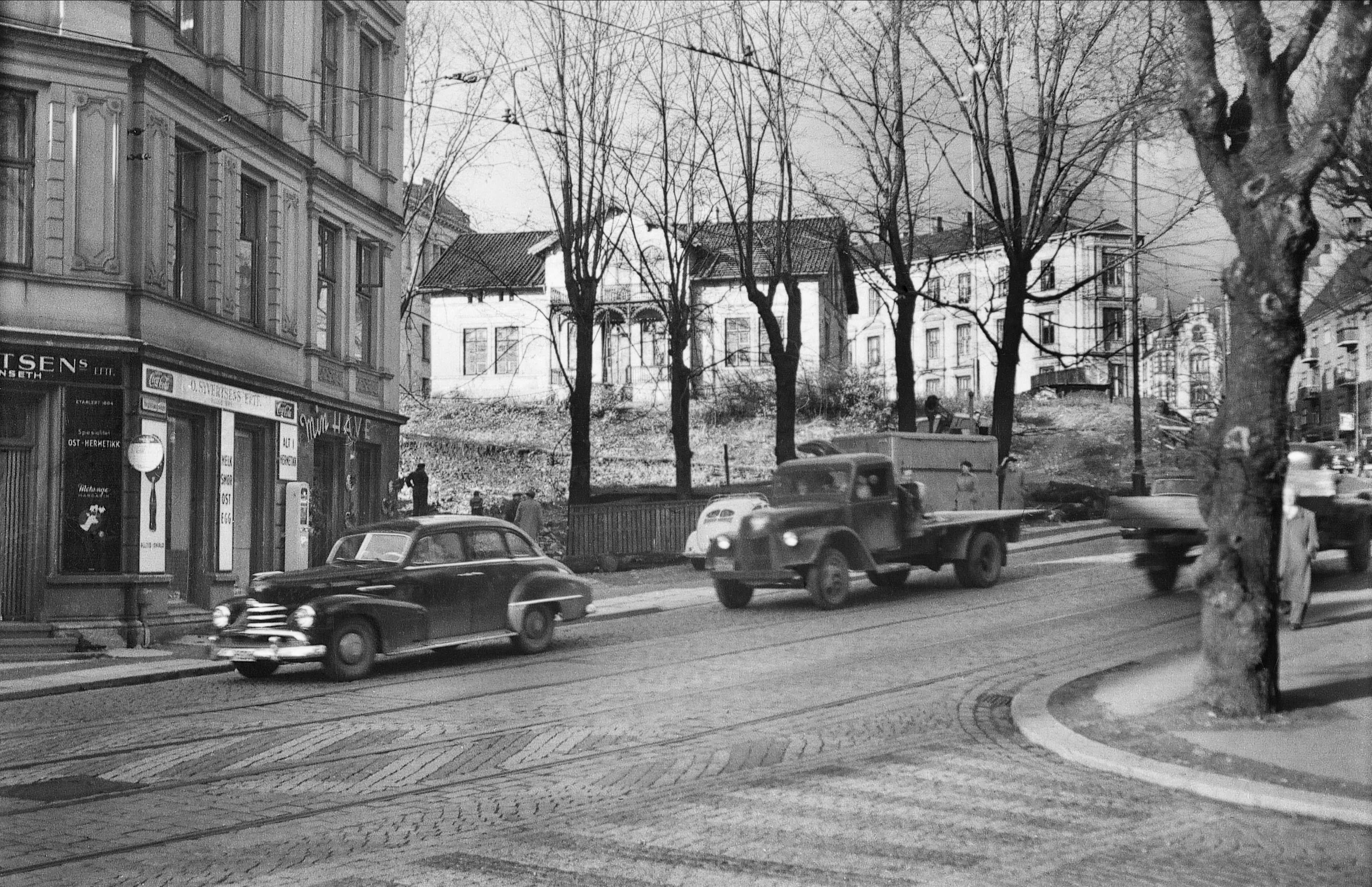
One colourful local character often stood here at the bottom of the slope: Lisa Kristoffersen (1833–1924). She was known for confronting drivers who mistreated their horses. Respected across the city for her devotion to animals, she became known by nicknames such as “Animal-Lisa,” “Dog-Lisa,” and even “Christiania’s awake conscience.”
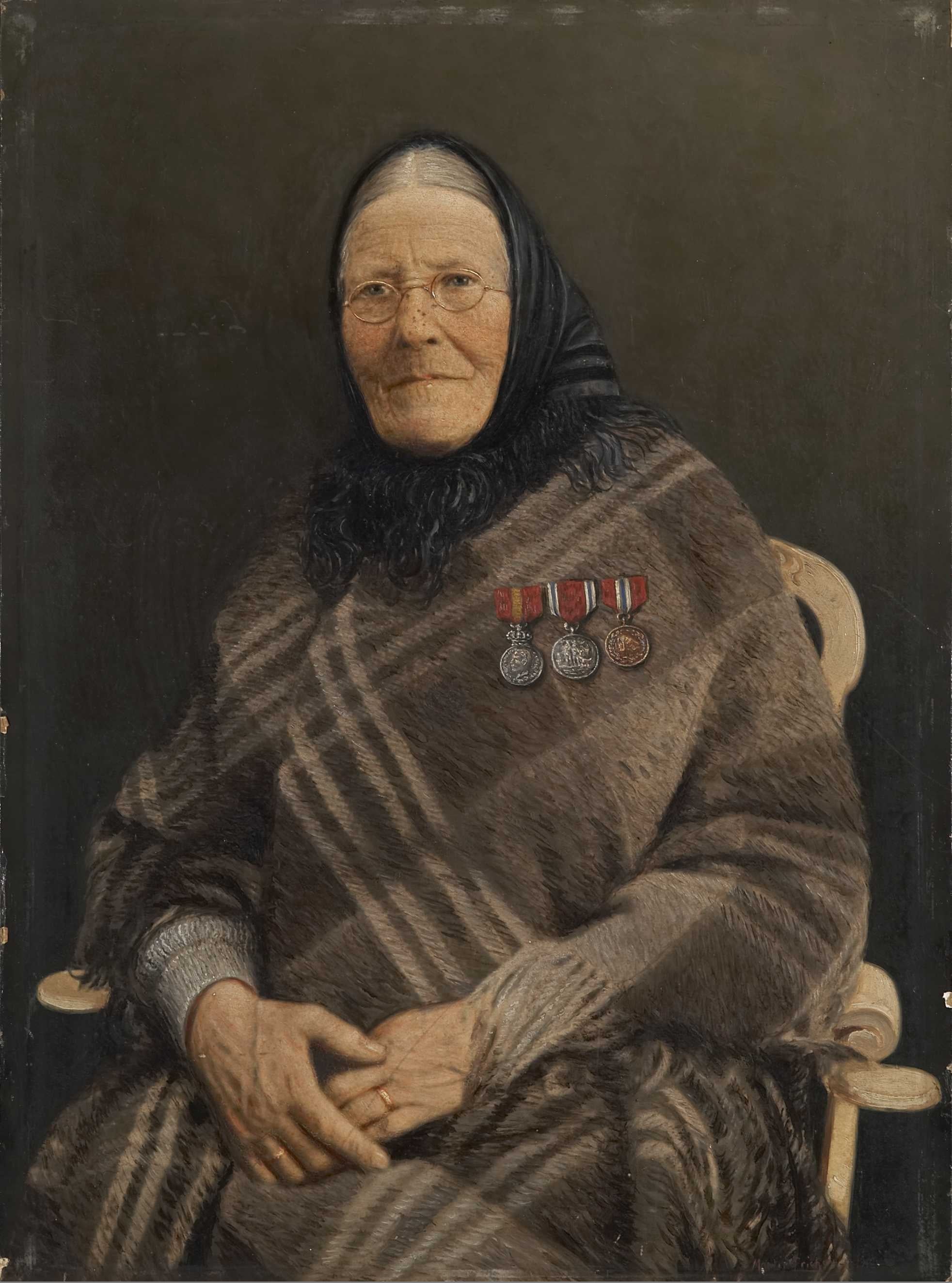
In 1907, she helped establish Norway’s first animal welfare organization. After her death, she has been remembered as a pioneer of animal protection in Oslo.
Sources
«Guide for Homansbyen» (1990), by Homansbyen Vel and Norsk Arkitekturmuseum
«"Se mig til den høker blandt snobbene"», by Trygve B. Steen, Aftenposten (6th Nov. 1964)
«Smithebakken», «Oslo - før bilene fylte våre gater» (2002), by Beate Muri, Schibsted
«Handel under blomster-ranker», by Signe Møller Forsberg, Aftenposten (3rd Nov. 1979)
Stockfleths Homansbyen, Magenta Interiørarkitekter AS
«Jeg er Lisa Kristoffersen!», by Jorunn Sanstøl, «Byminner» (2009) No. 4
Behind the large trees here lies a small green oasis in the middle of one of Oslo’s busiest shopping streets. The old sign on the wrought-iron gate, marked “21,” reveals that this park was once part of a private villa garden.
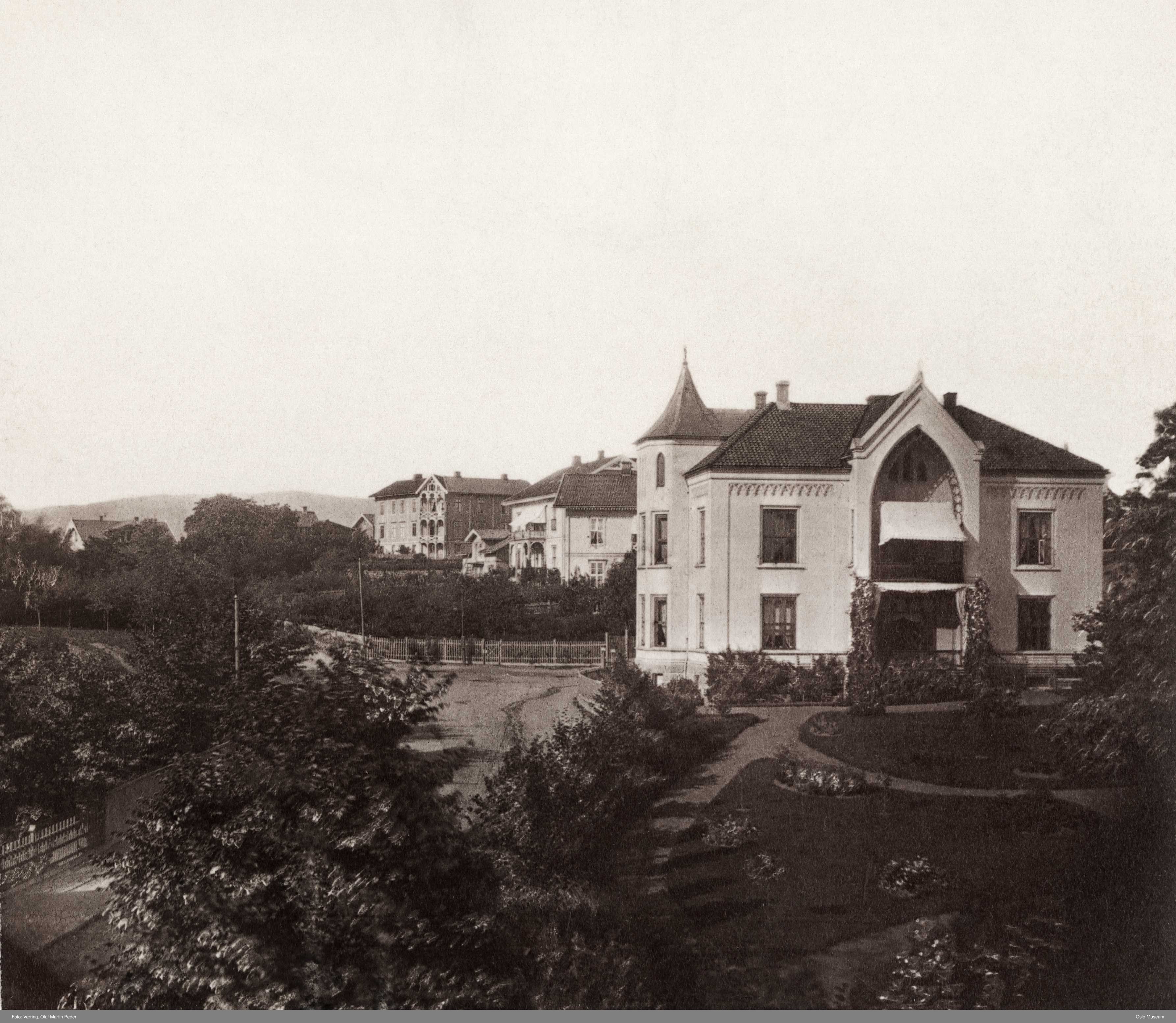
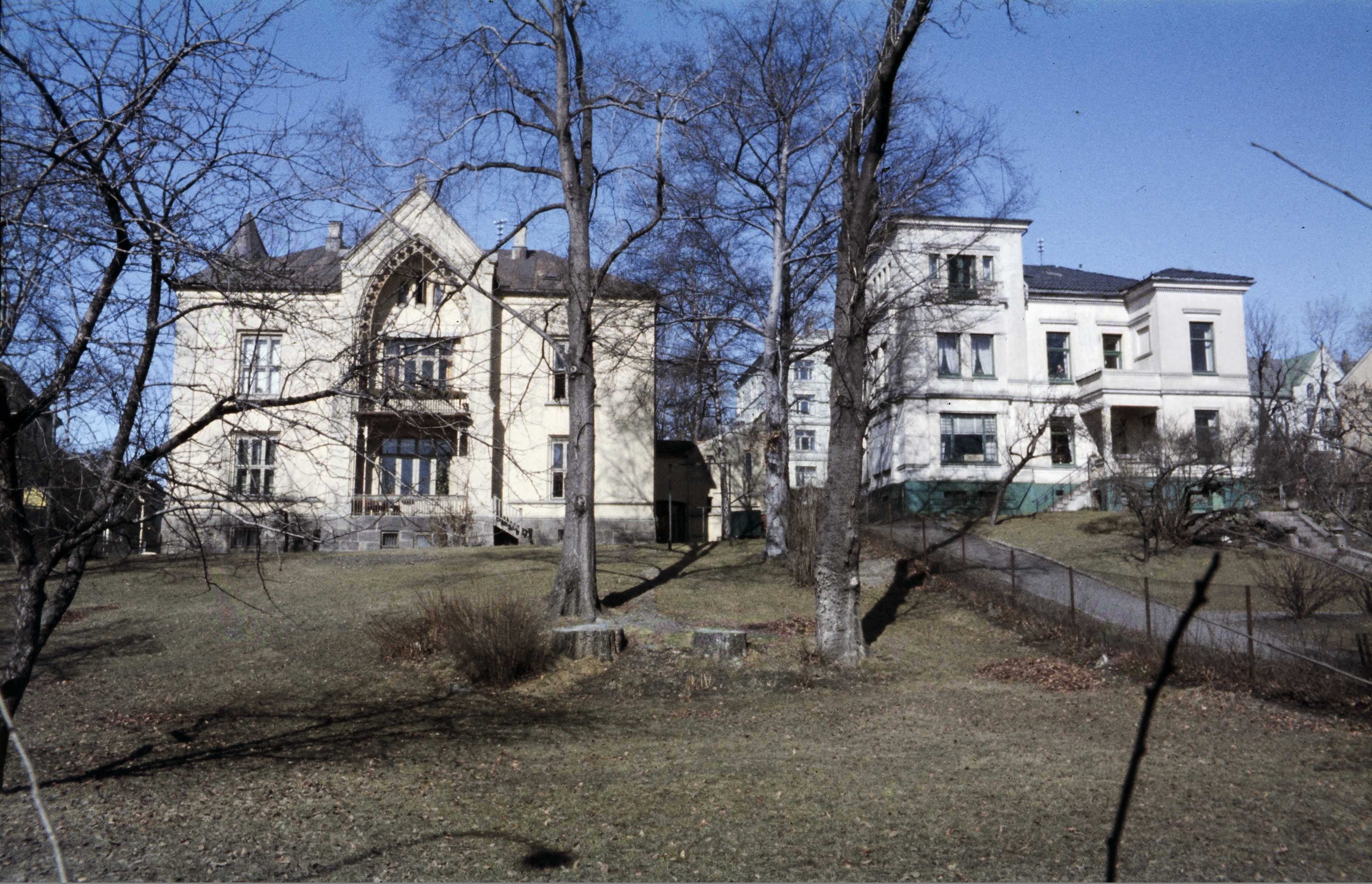
The Homan brothers – well-travelled and interested in art and architecture – worked with architect Georg Andreas Bull to create a romantic villa district. In Homansbyen, each house was designed in a different historical style inspired by various European traditions. The writer Camilla Collett once described the neighbourhood as resembling a masquerade:
“The most complete masquerade of human dwellings appears here in a strangely colorful mixture. All nationalities seem to have gathered: Normans and Goths, Turks and Chinese, Sarmatians and Hanseatics.”
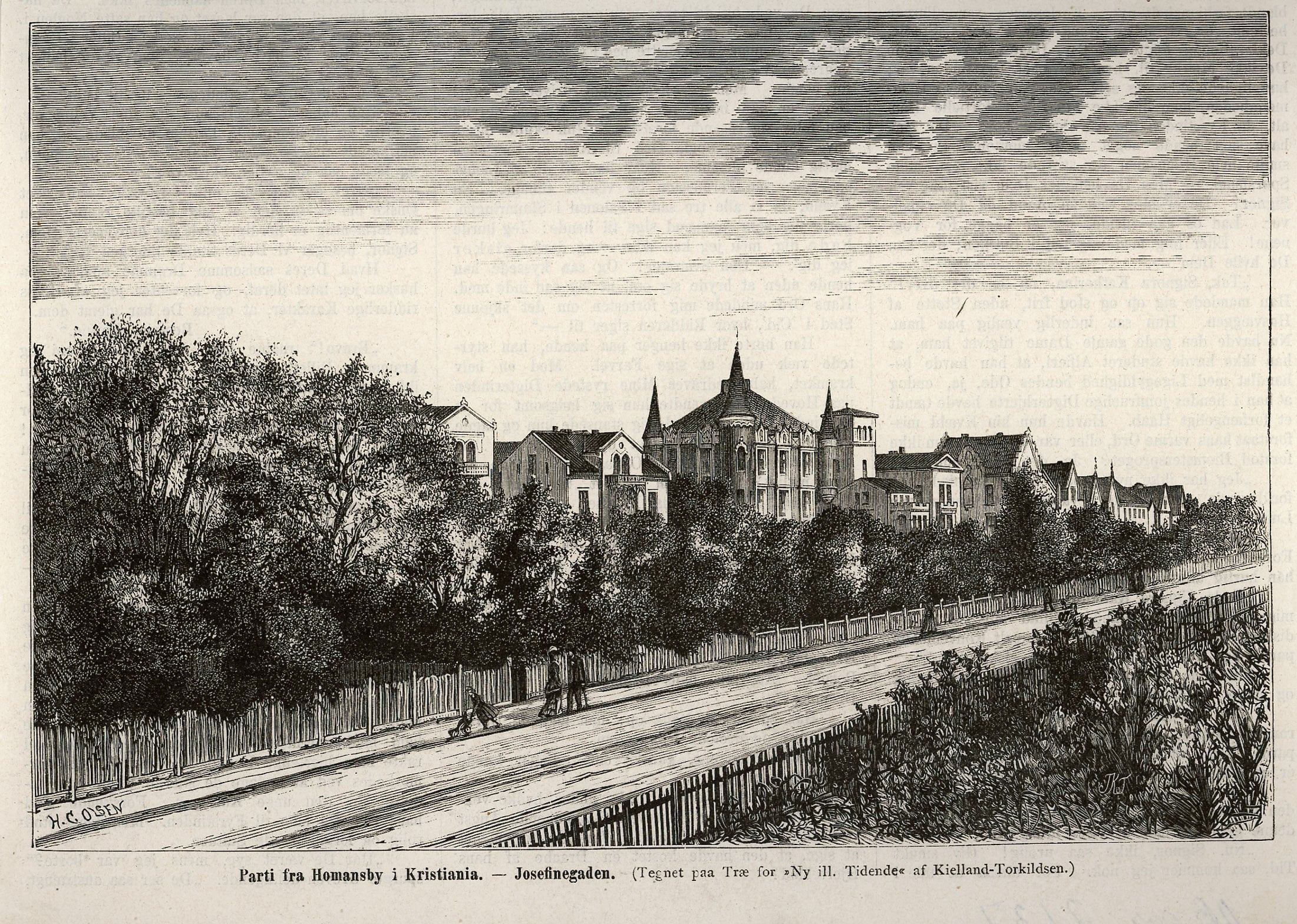
The gardens of Homansbyen were admired from the very beginning. The idea of a villa, a concept dating back to ancient Italy, was to combine the comfort of city living with the peace of the countryside. Inspired by English garden suburbs, the villas here were built freestanding on their plots, aligned along the street and surrounded by well-kept gardens.
Homansbyen’s golden age came to an end in 1884, when Norway appointed its first parliamentary government. That same year a major constitutional crisis transformed the country’s political system, ending the era when much of Norway’s political elite lived in this neighbourhood.
In 1969, the lower part of the garden at Josefines gate 21 was turned into a small public park called Hygiea Park, named after a pharmacy across the street. The civic organization Selskabet for Oslo Byes Vel offered the garden to the public so that elderly residents could have a place to rest during their daily errands in the neighbourhood.
The fence around the garden was kept, which made many people believe the park was still private. When the area was revitalized during the renovation of the shopping street, new entrances and pathways were added to make the park more welcoming and accessible.
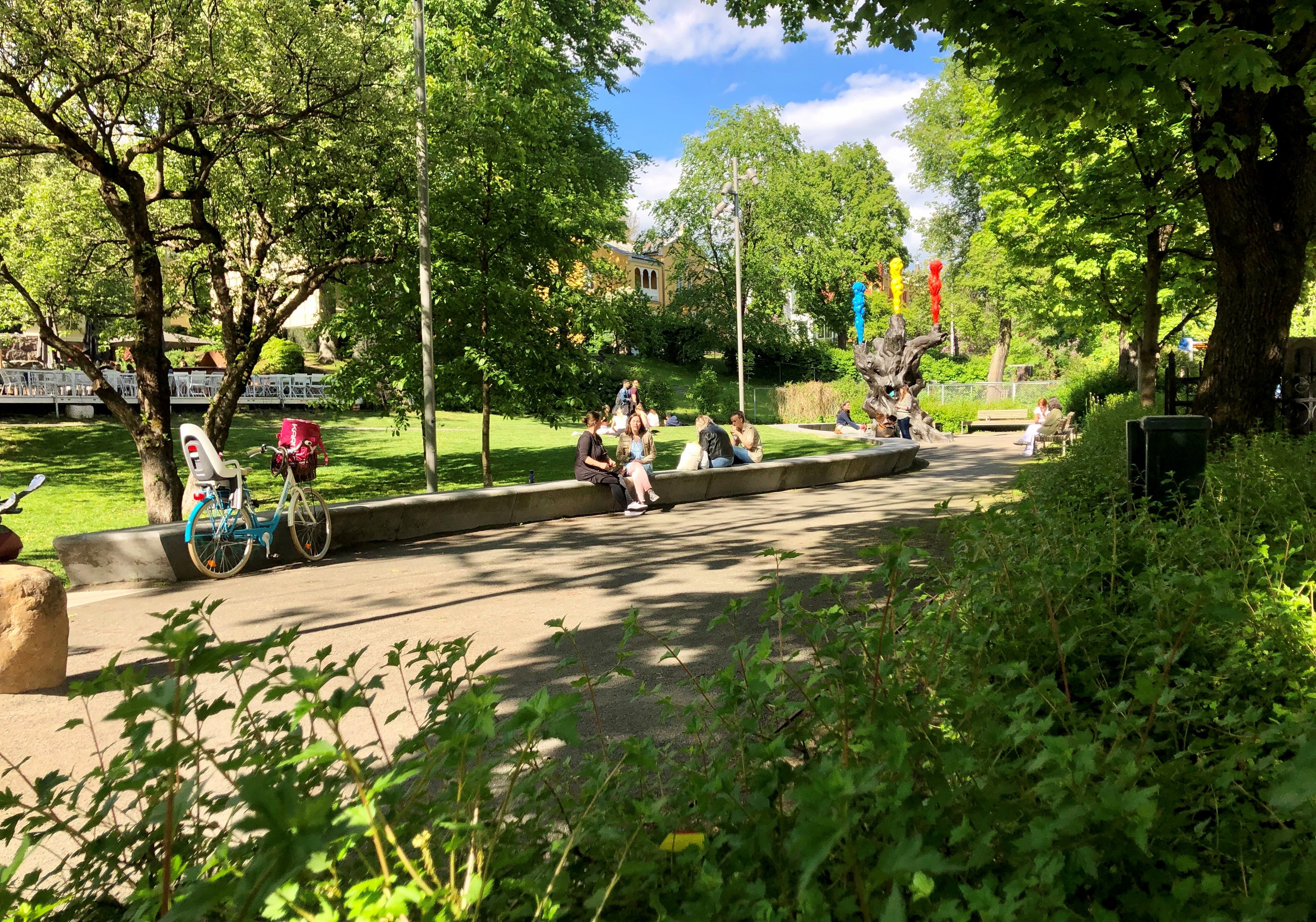
At the same time, landscape architects Bjørbekk & Lindheim wanted to preserve the feeling of an overgrown historic garden. The large old trees were kept, along with trimmed hedges, flowering shrubs, fruit trees and perennial flower beds. The park remains lush and green, but is now more open and filled with sunlight. New lighting creates a distinctive evening atmosphere while also improving safety.
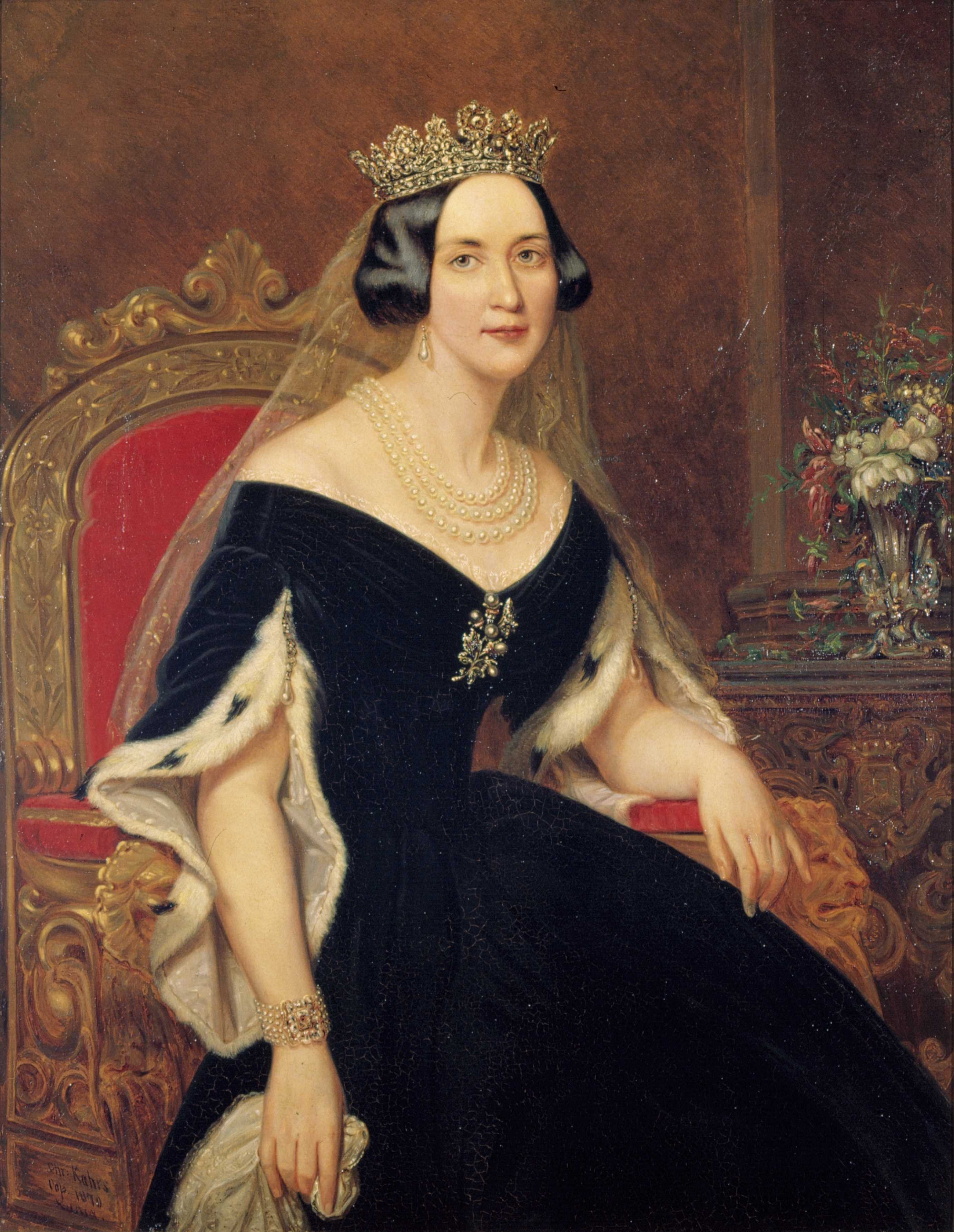
When the park was reopened to the public in 2015, it was renamed Josefines Park. The name comes from nearby Josefines gate, which is named after Queen Josephine, an Italian-born queen who ruled Norway and Sweden from 1844 to 1859.
Sources
«Guide for Homansbyen» (1990), by Homansbyen Vel and Norsk Arkitekturmuseum
«Høyesterettsadvokat Peter Jacob Homan», «Byggekunst» (1959) Vol. 41 No. 7
«Riksrettssaken mot Selmer i 1884», Stortinget (26th Sep. 2022)
«Ny offentlig park i Josefinesgate», Aftenposten (18th Jan. 1969)
«Hemmelig hage i handlegaten», by Ingri Valen Egeland, «Bogstadveien Magasinet» (Summer 2022)
«Hemmelighetenes hage», by Mari Therese Jørgensen, «Bogstadveien Magasinet» (Winter 2015/16)
At this intersection with Professor Dahls gate, Hegdehaugsveien turns into Bogstadveien.
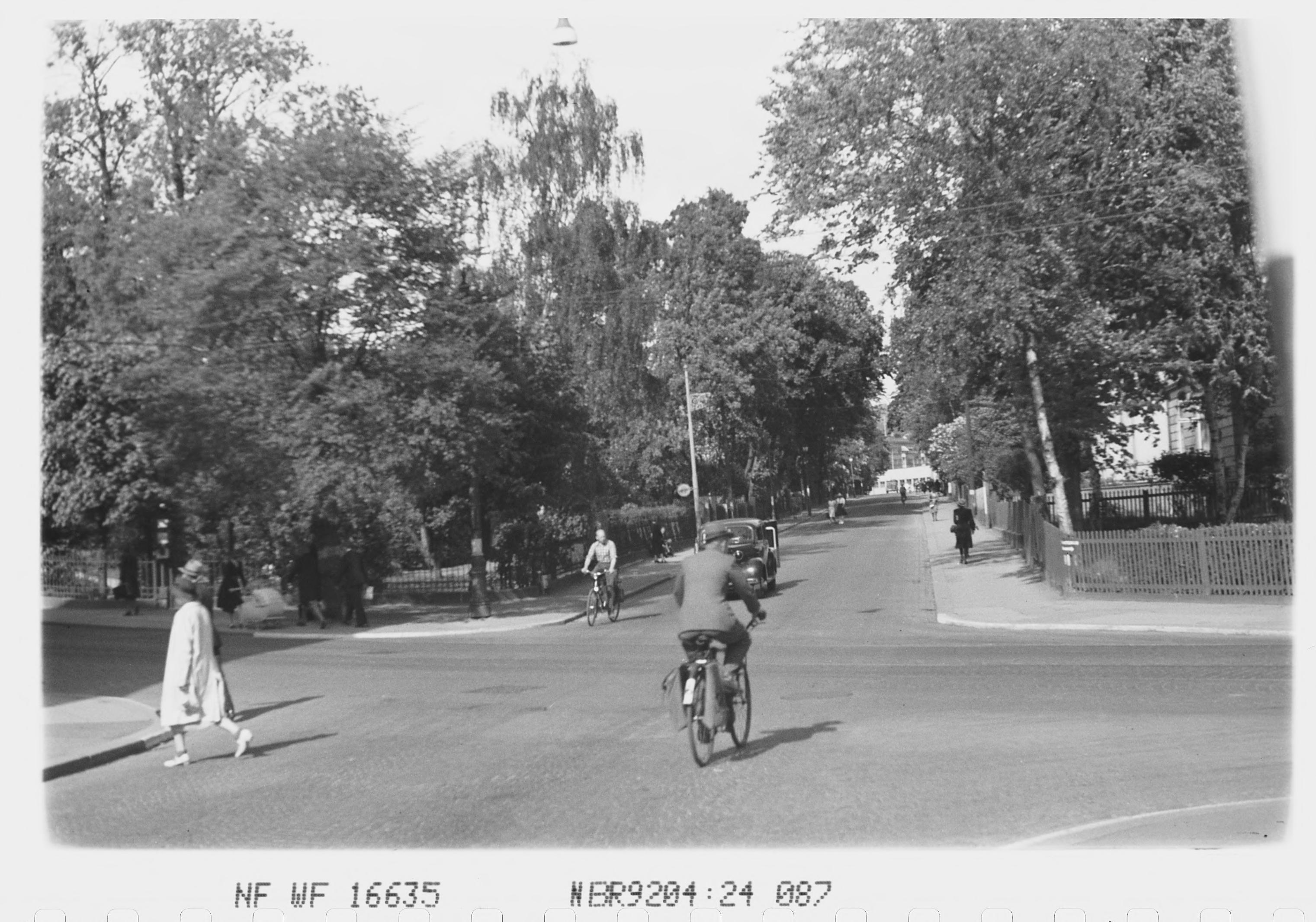
Bogstadveien was completed in 1861 as the final section of the road connecting the capital with Sørkedalen and Bogstad, areas just outside the city. The older route out of town followed what is now Professor Dahls gate and Majorstuveien, climbing steep hills over Hegdehaugen. This made it difficult to transport goods by hand or by horse and cart. The new road was both shorter and less steep, making travel much easier.
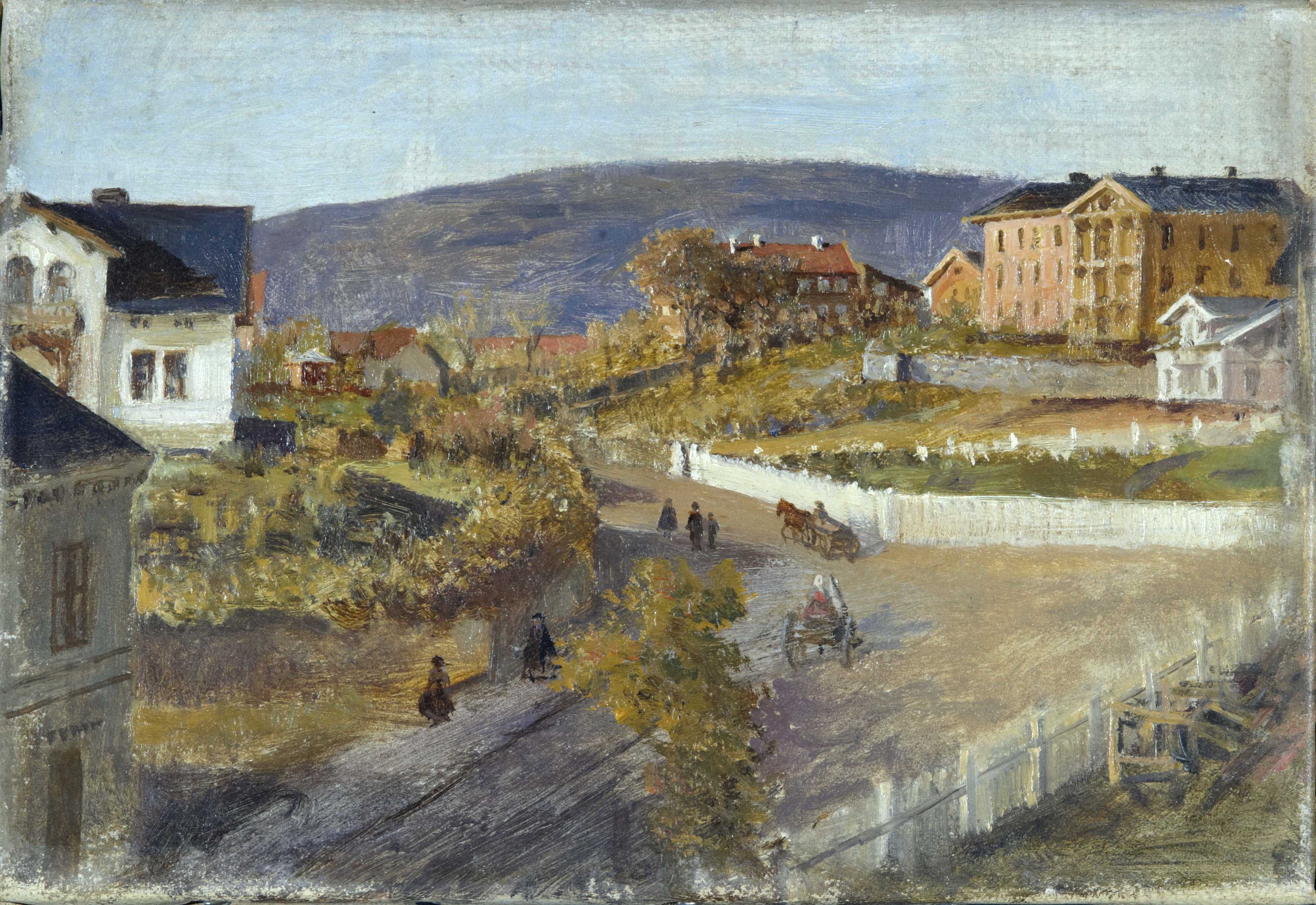
While building regulations in central Christiania required houses to be made of brick, wooden houses were still allowed in the suburbs. However, when this area was incorporated into the city in 1878, the wooden houses along Bogstadveien were gradually replaced by brick apartment buildings.
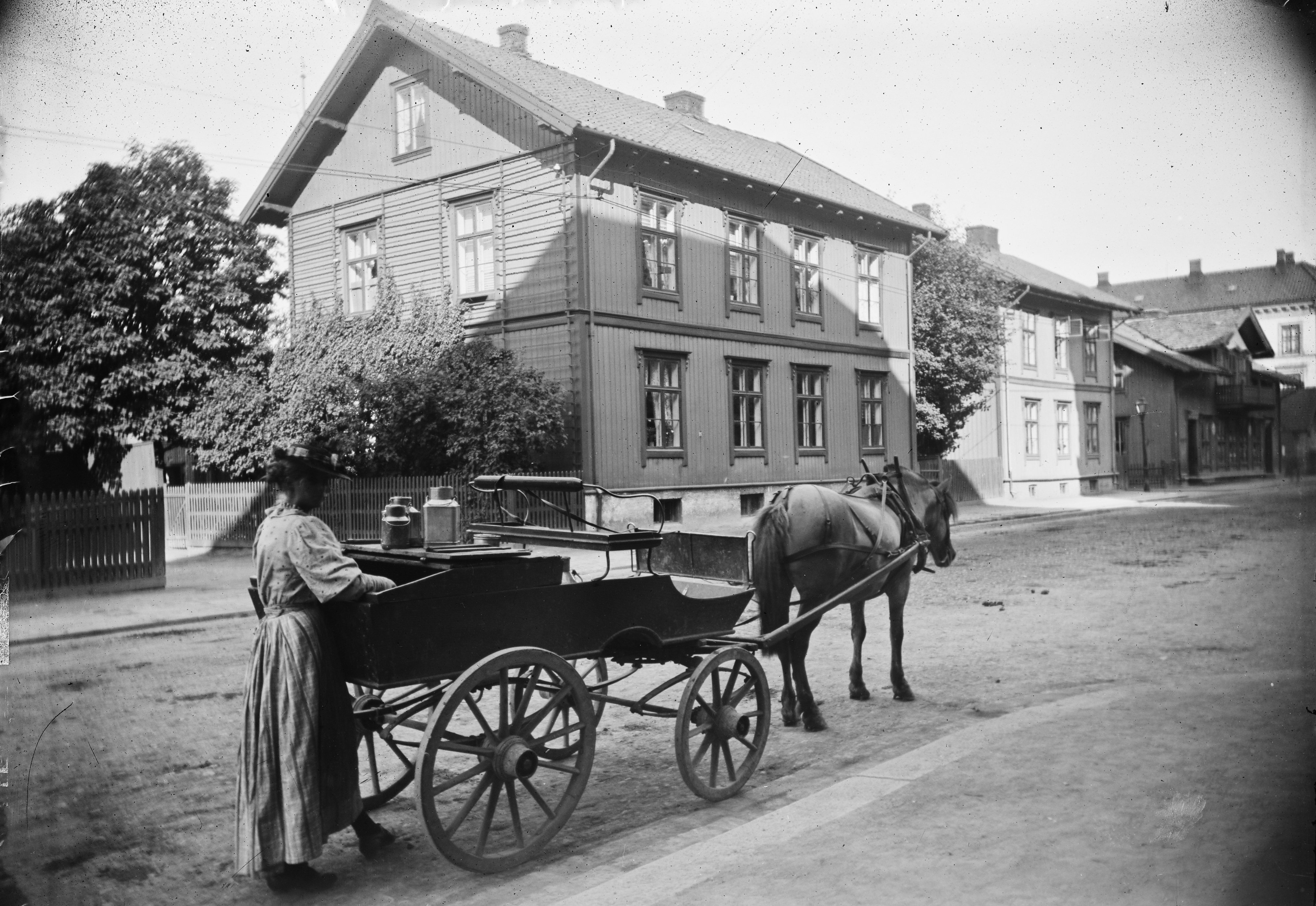
Building these structures was hard work. Every brick had to be carried up scaffolding ladders. The same ladders were also climbed by apprentices carrying countless bottles of beer—because, as people said, what is a bricklayer without beer? Skilled workers could stand high up on the scaffolding, singing loudly enough to be heard from afar. Writer Tryggve B. Steen described the bricklayers as sounding like “a buzzing hive,” often exchanging jokes and banter as they worked:
— Say wot you like, Peder, I don’t give a toss—but I’ll be damned if you get to say I ain’t a proper mate! We’ve been workin’ together for years now—yeah, you remember that mornin’ when we caught that posh lady in bed?
— Yeah, the one who forgot to pull the curtains—hic—yeah, now you say it! Blimey, that was a right sight, Rudolf!
— And you was singin’ all mornin’, Peder: “In me arms you shall not freeze” — — — freeeeze!
Life for working-class people at the time was tough. Wages were low, and many families struggled to make ends meet, especially those with several children. It was not uncommon for workers to seek comfort in alcohol after long and demanding days.
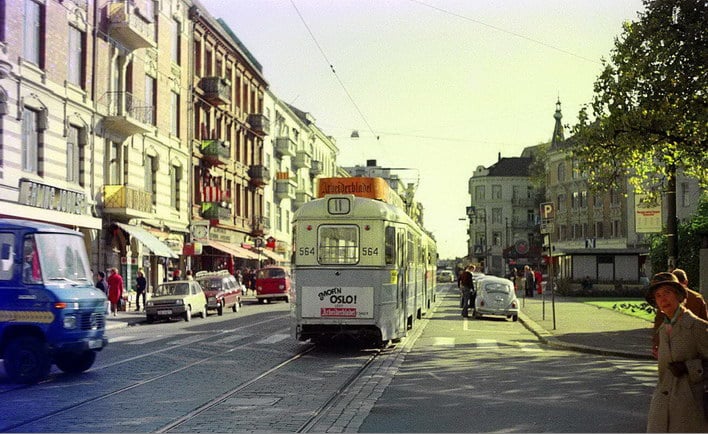
Over time, horse-drawn transport faced new competition. In 1894, Bogstadveien got its own tram line – known as the Briskeby Line – which was the first electric tramway in Scandinavia. Locals simply called it “the electric,” later shortened to “trikken” a word that has remained unique to Norwegian usage.
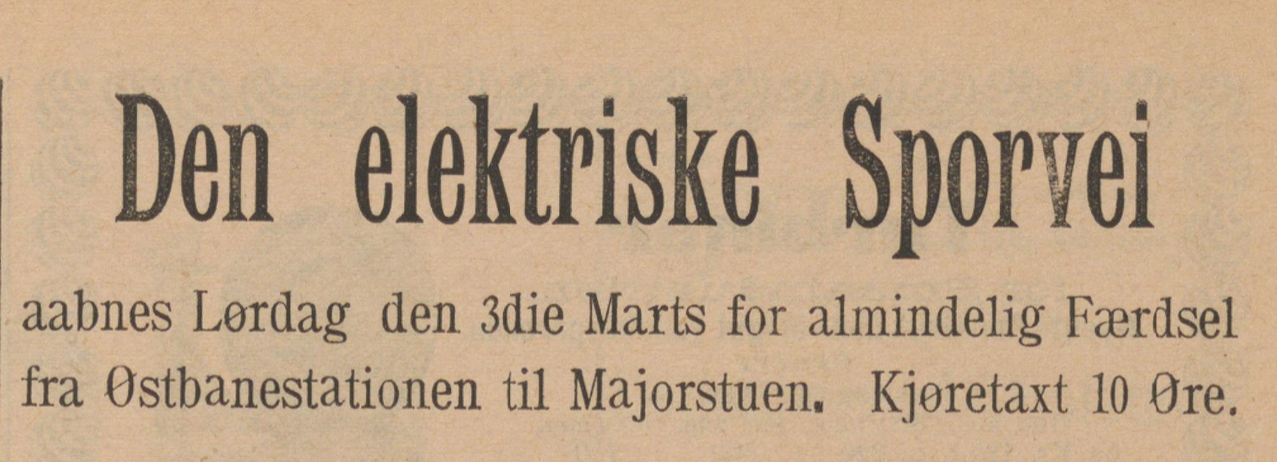
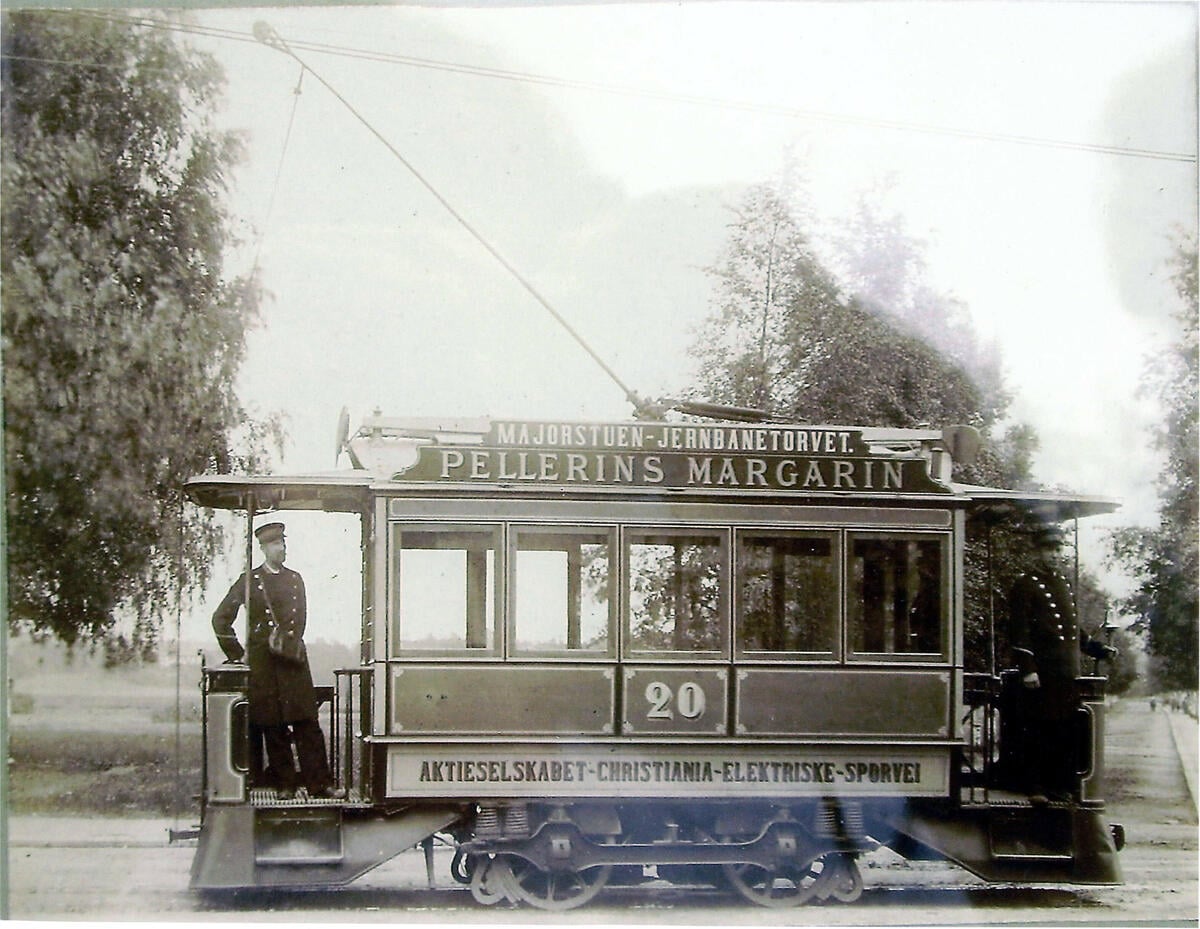
It was not until the 1890s that the long street began to take on its present form, with commercial buildings lining both sides of a broad avenue featuring wide sidewalks and classic street lamps.
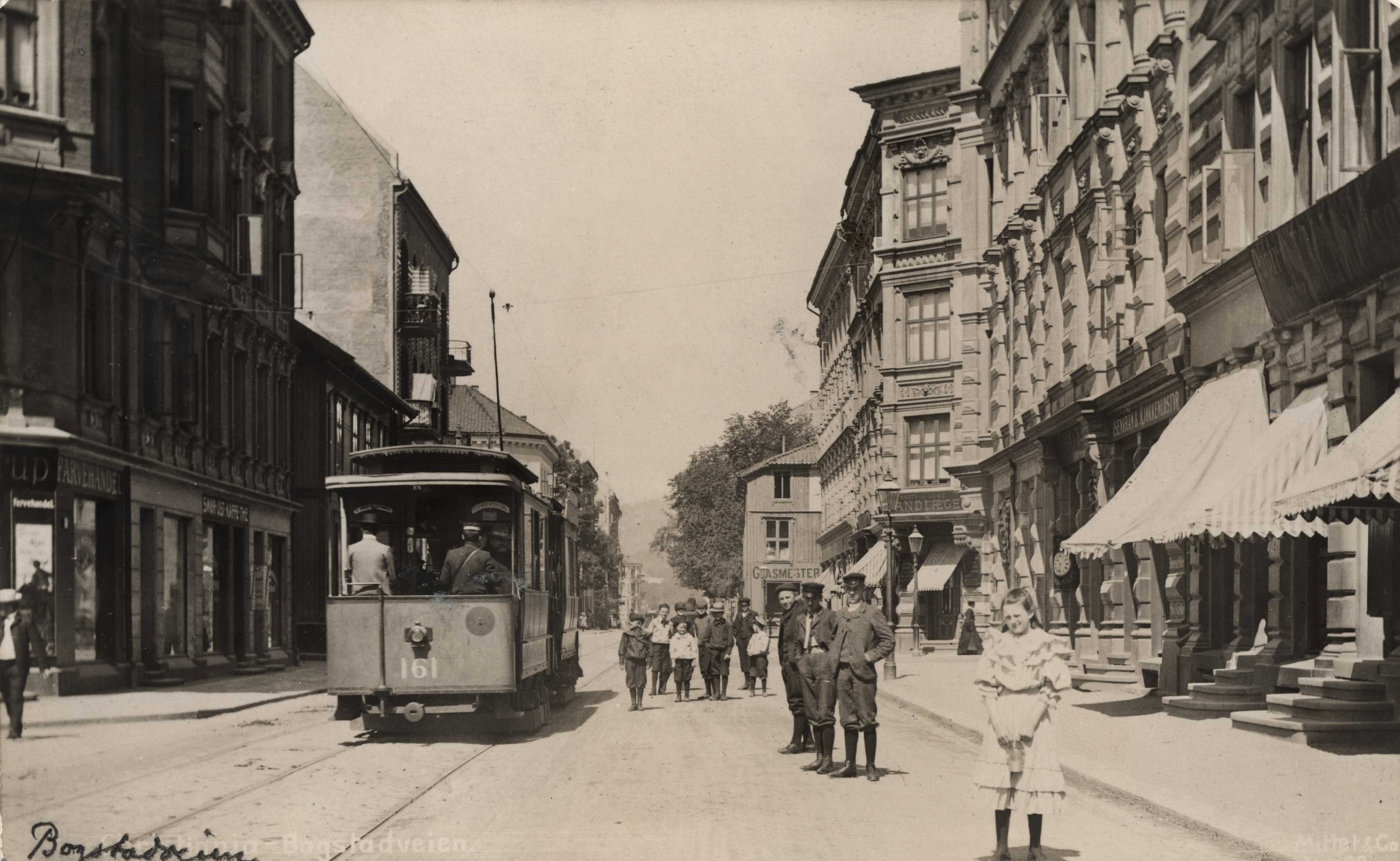
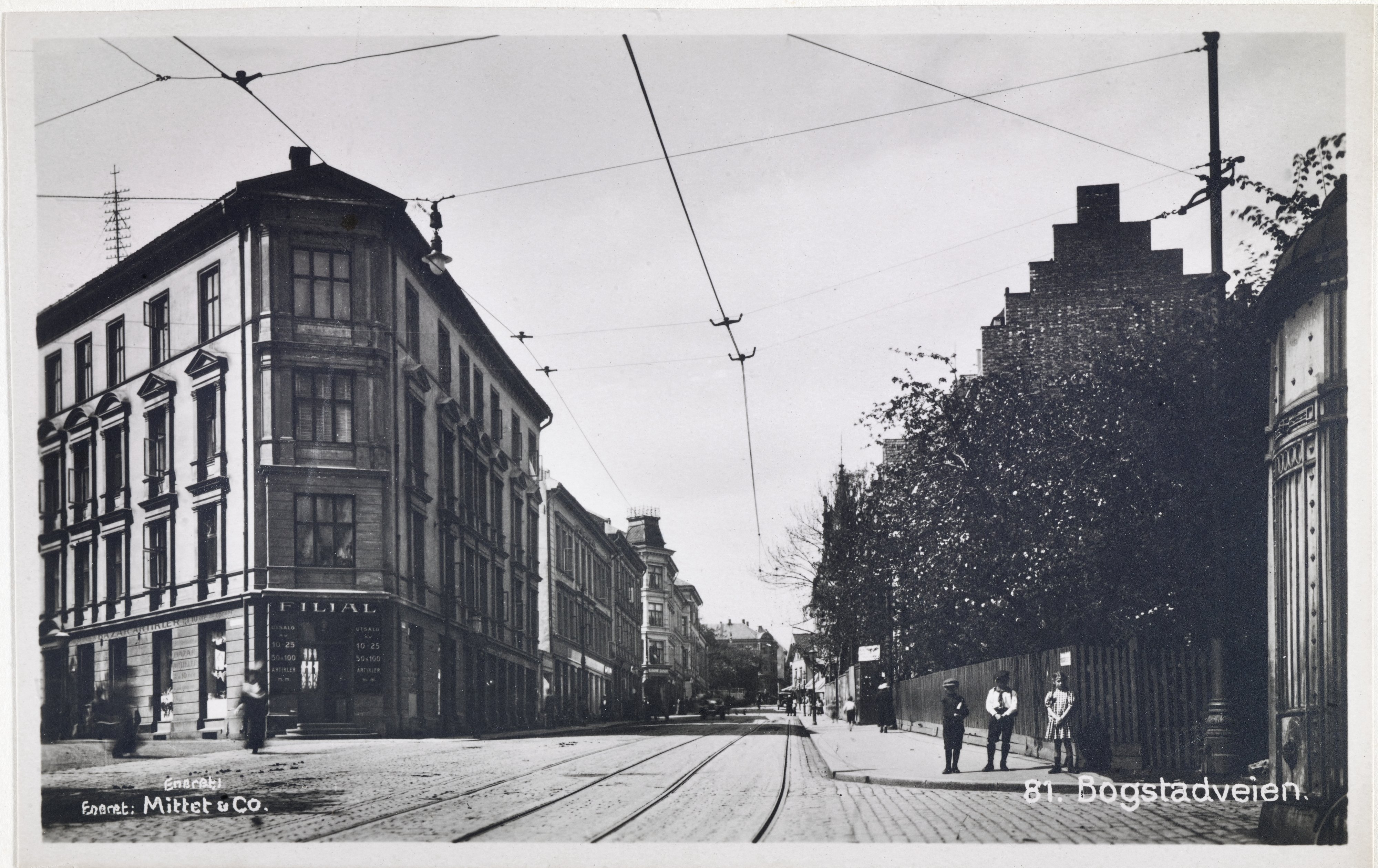
However, this intersection could have looked very different today. In 1929, Oslo’s city planning director Harald Hals proposed an ambitious master plan for the city’s future. Bogstadveien was to become a major traffic artery leading out of the city. The plan included building a new main road – Edvard Griegs gate – from the city center through Homansbyen to a large square at this very intersection.
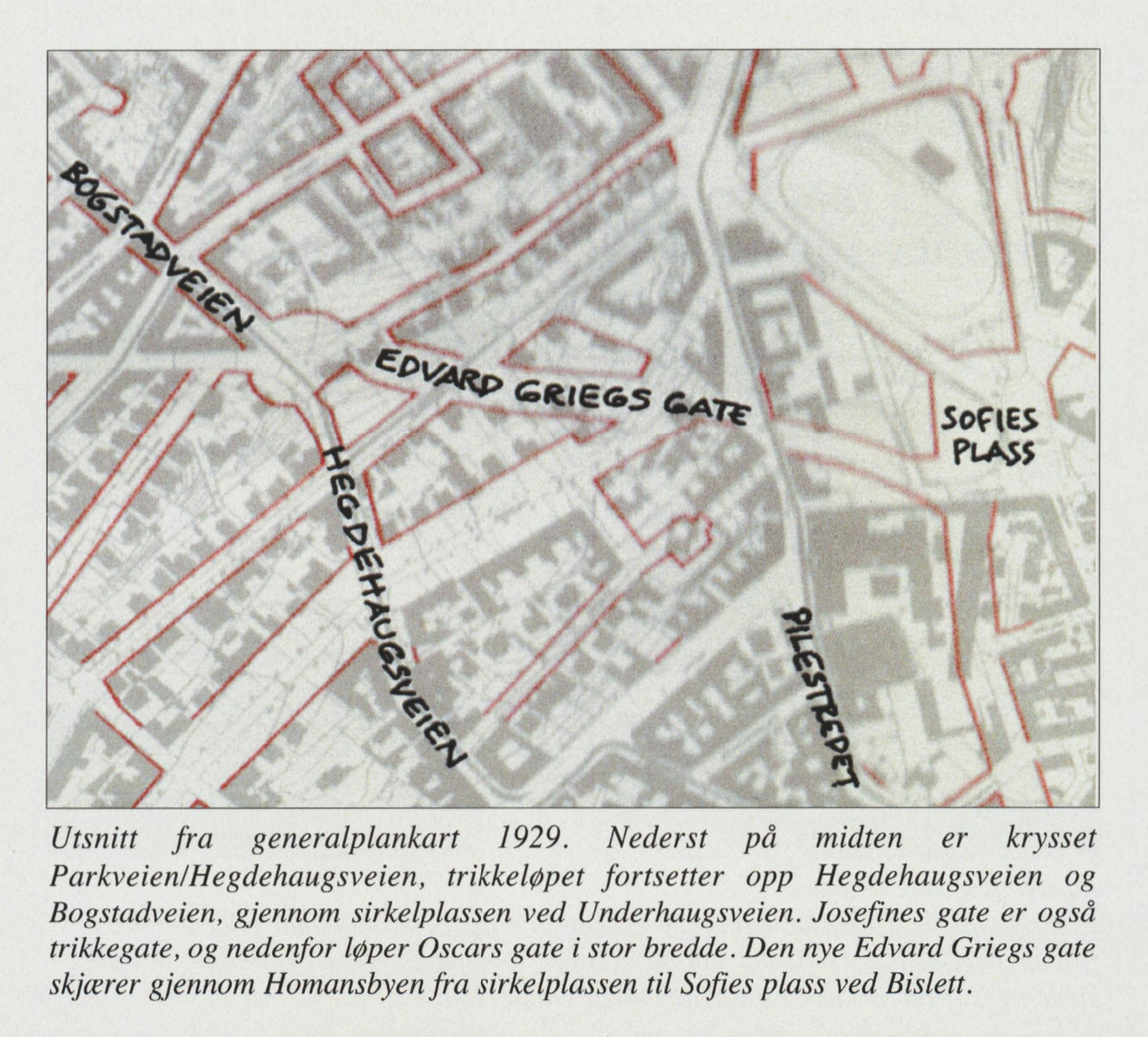
Looking back, the plan seems drastic. It would have required demolishing several historic villas in Homansbyen, as well as all the apartment buildings along one side of Bogstadveien.
Sources
«Bogstadveien» (2022), by Finn Holden, Dreyers forlag
«Det var en annen tid–» (1943), by Tryggve B. Steen, Tanum
«Valkyrienes plass», by Bjørn Stendahl, «Kavringen» (2021) No. 99
«Historisk handlegate med høy bypuls», Aftenposten (12th Dec. 2005)
«Edvard Griegs gate», by Bjørn Stendahl, «Kavringen» (2015) No. 79
Residential construction in Oslo grew rapidly in the decade when the tramway was introduced, and architectural styles from America, England and continental Europe flowed into the city. Along Bogstadveien, many apartment buildings from the 1880s and 1890s still stand today. Their façades show great variety, with decorative reliefs, ornaments and a rich range of colours.
The Franck Building, at Bogstadveien 11, is one of the most recognizable buildings on the street. The elegant commercial building was inspired by medieval and Renaissance architecture, with features such as a corner tower, spires, bay windows, stepped gables and arches. It was designed by architect Carl Michalsen.
In 1902, the merchant Johs. Franck opened a large textile and household goods store here, which operated for more than 80 years. The shop sold a wide range of products—from men’s clothing and women’s fashion to curtains, bedding, linoleum and carpets. Its specialty was fabrics sold by the meter, including dress fabrics and coat materials, which many customers brought to local seamstresses to have clothing made.
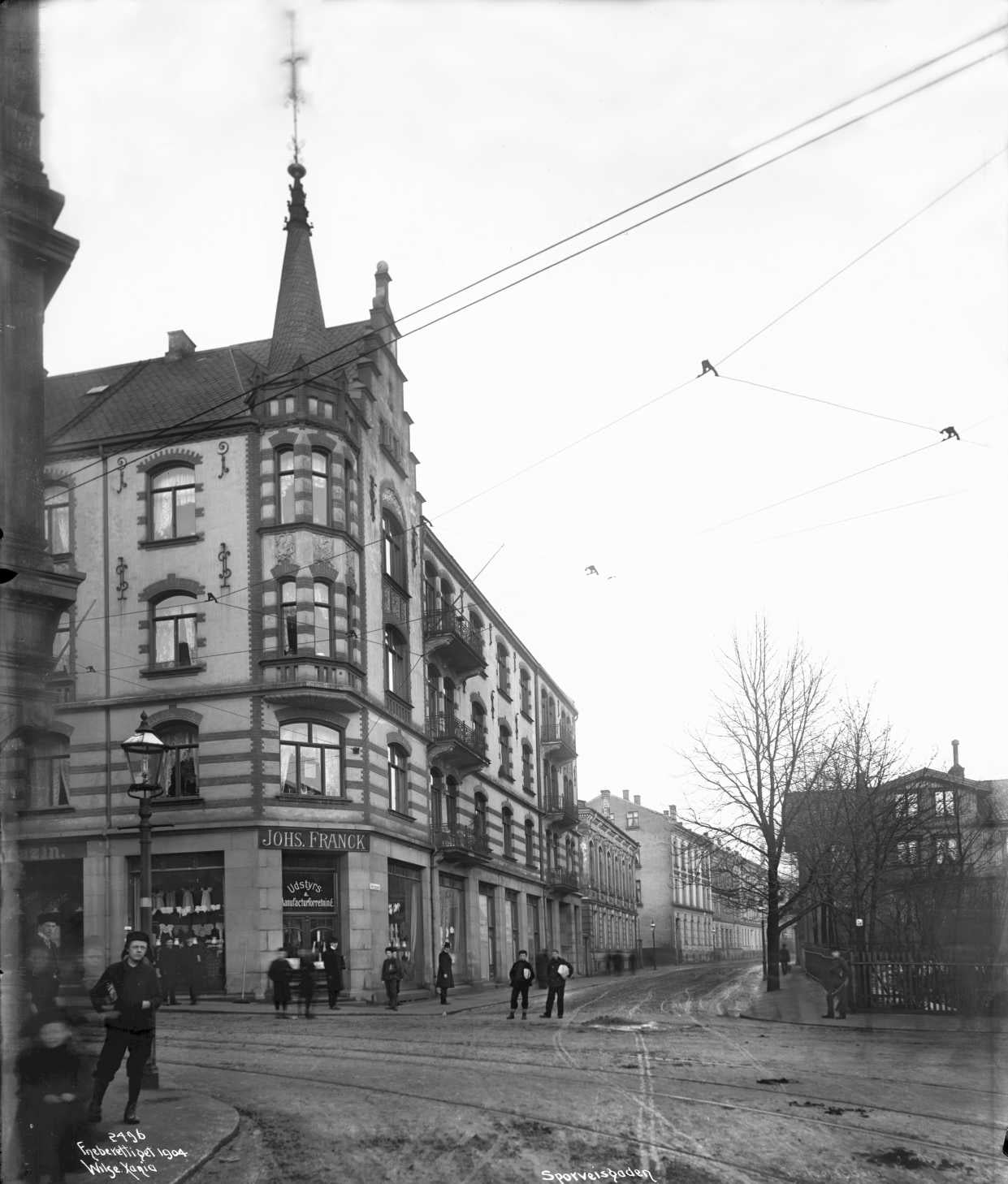
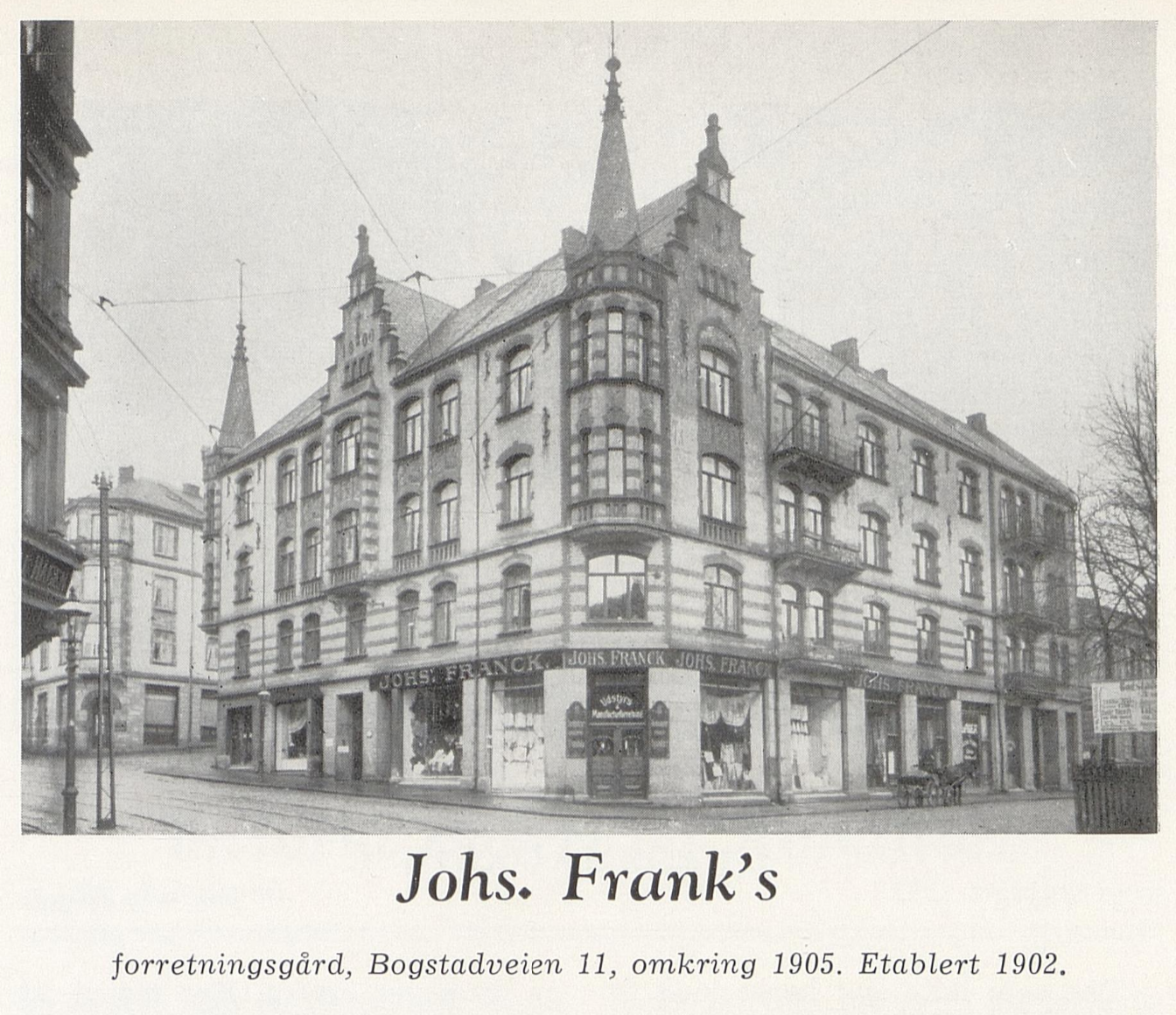
Some people believed the shop would struggle because it was located far from the traditional city centre. However, the store stood directly along the tram line, making it easy to reach from many parts of Oslo. During the 1920s and 1930s, the business expanded, and the second floor of the building was converted into additional retail space. Thanks to the building’s iron structural framework, large display windows could be installed in the façade, creating brighter and more open interiors – quite different from the more crowded shop designs of the 19th century.
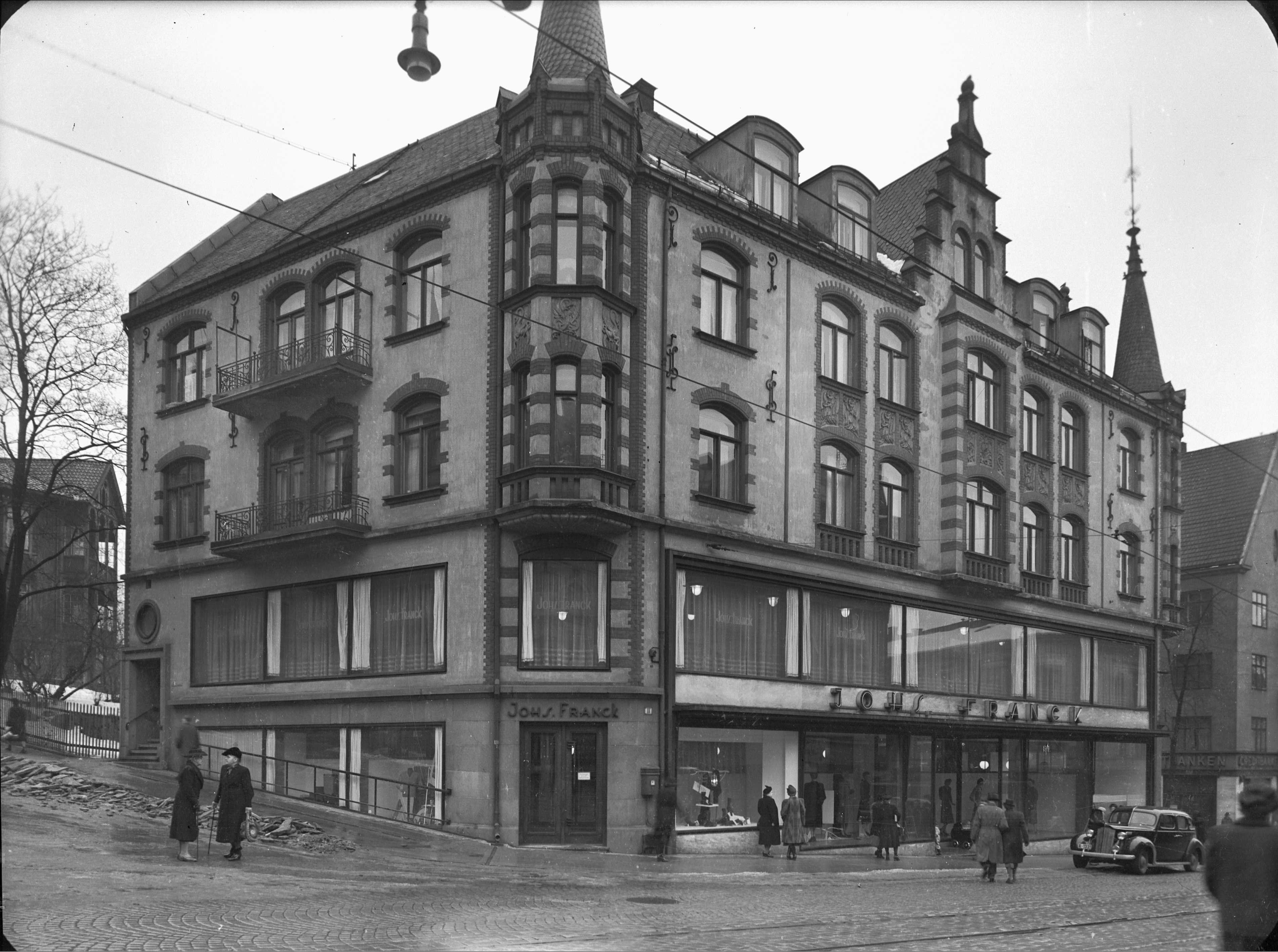
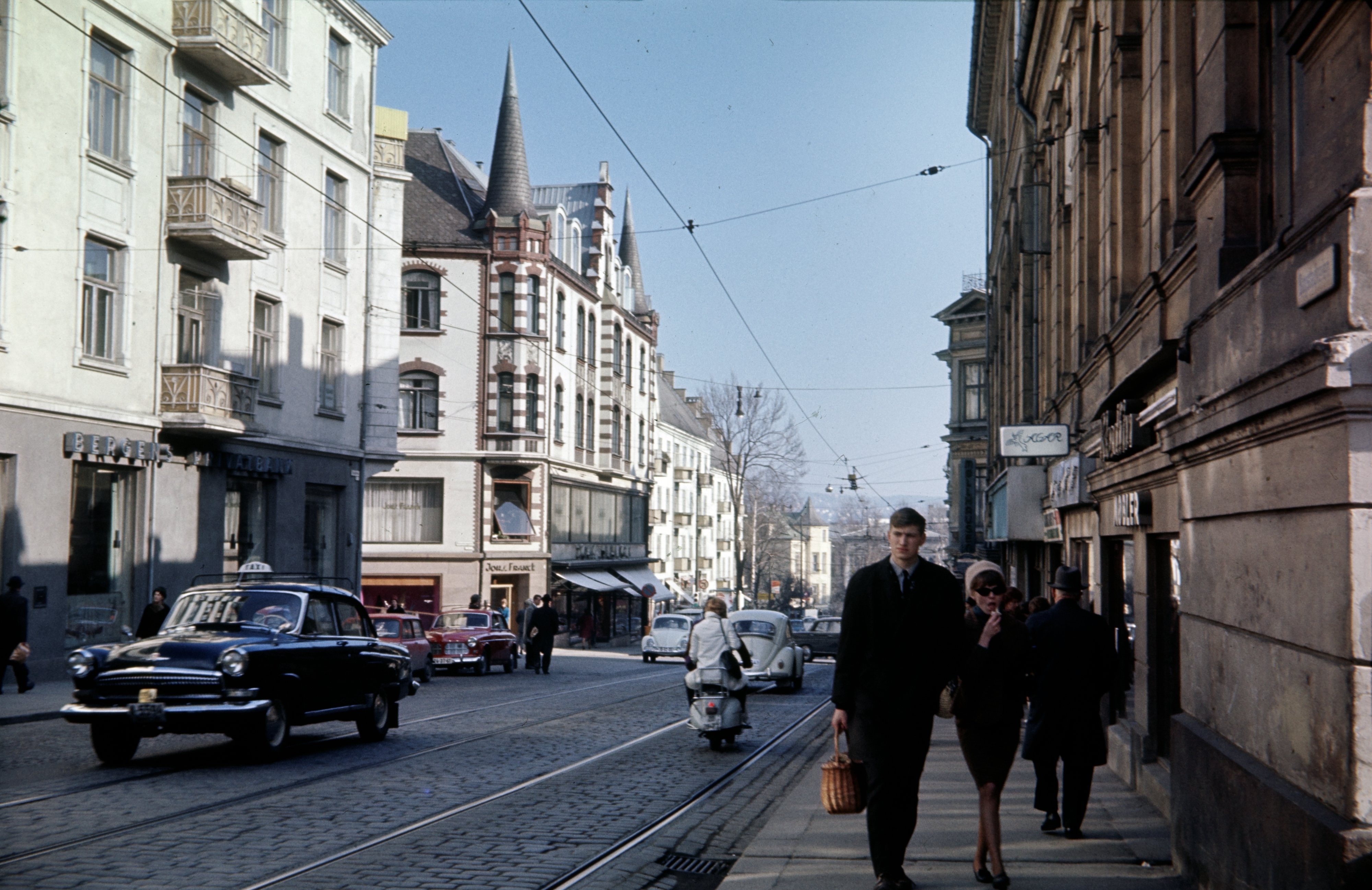
“Franck in Bogstadveien” became one of the city’s leading stores in its field. Almost everyone in Oslo knew the shop, much like the famous department store Steen & Strøm. A 1933 book about the city described the store as impressively large:
“Order and precision prevail everywhere, and there is plenty of space to move around and examine the wide variety of goods.”
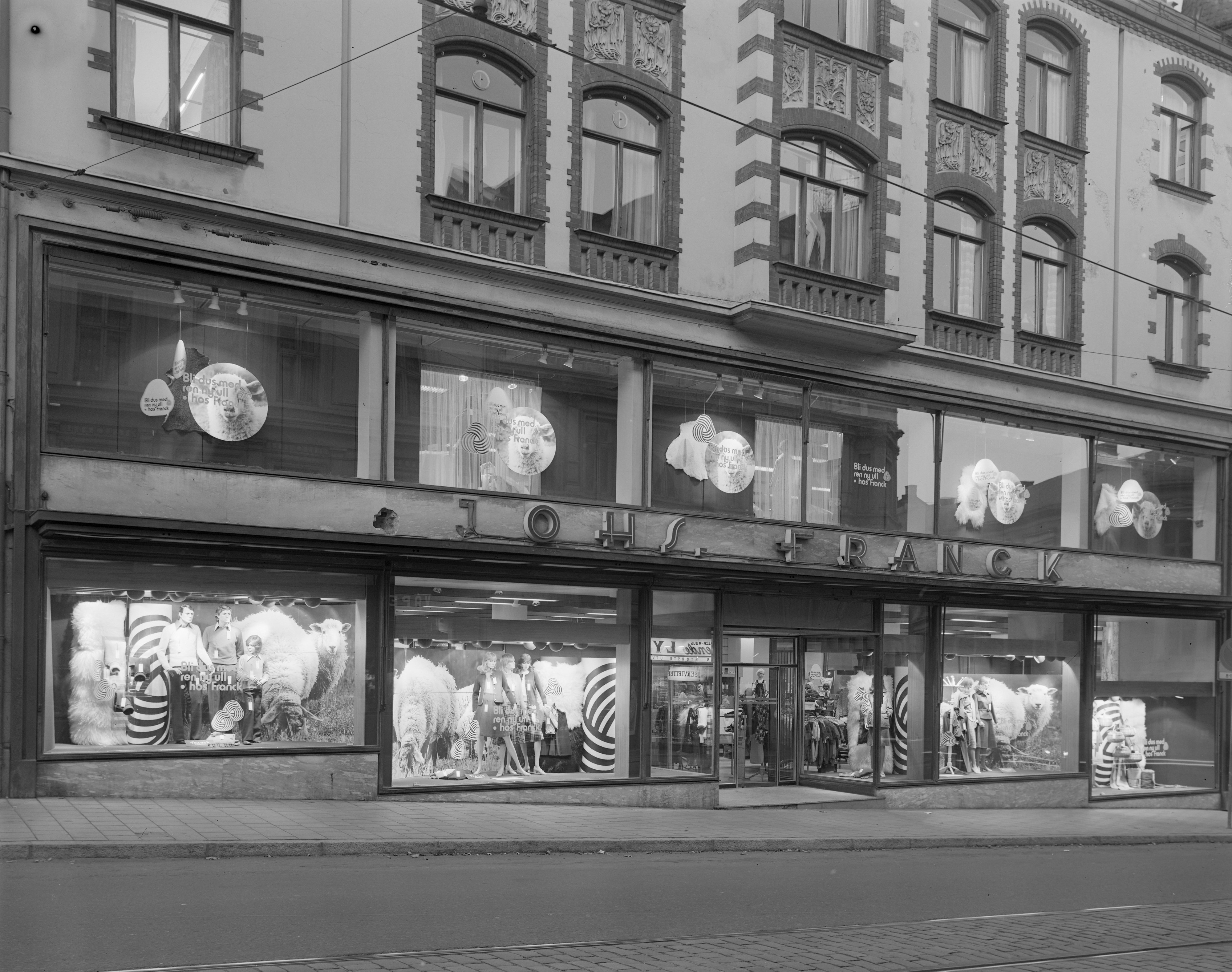
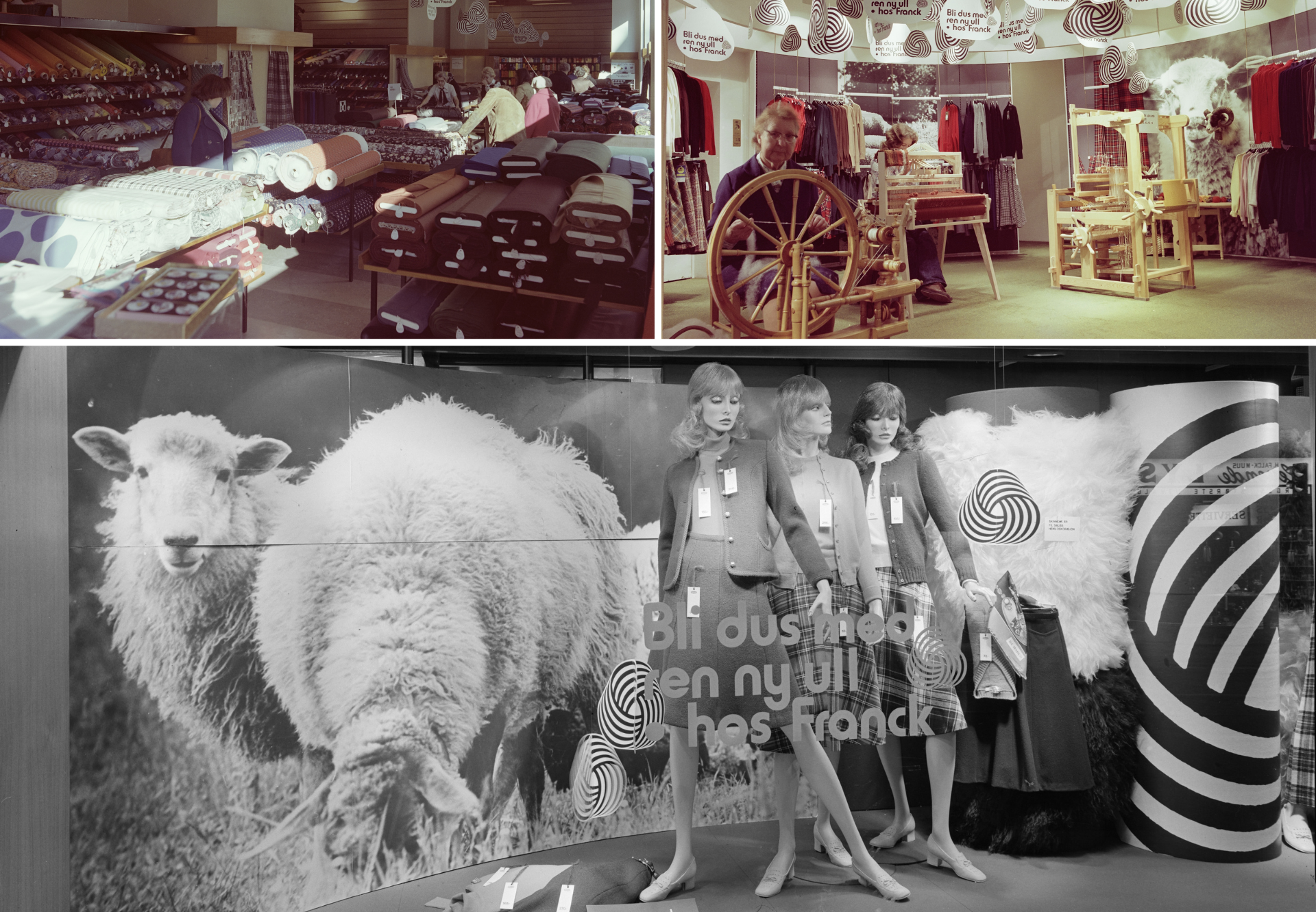
When Franck finally closed in the 1980s, it felt almost unreal to many longtime customers. People still remembered the inspiring department store atmosphere, including the cozy café on the second floor. But the arrival of large retail chains offering lower prices eventually made it difficult for independent stores to compete.
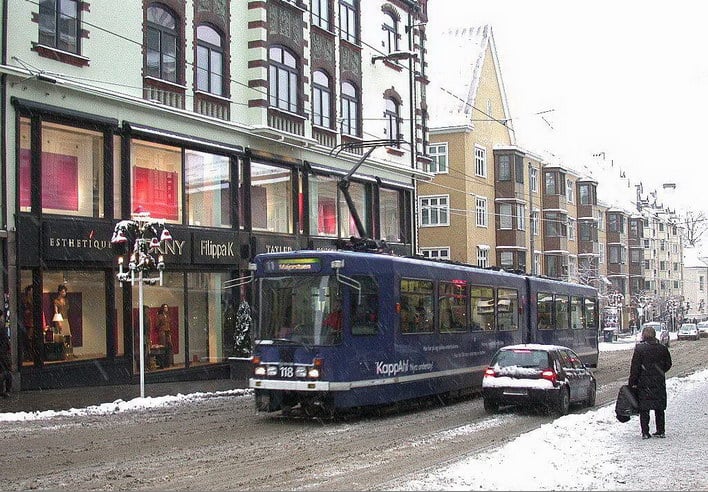
From the beginning, Bogstadveien has been known for its wide range of specialized shops. Over time, however, rising rents and the growth of chain stores have led to the disappearance of many small, independently owned businesses, while clothing stores have become larger.
Since 2010, the fashion retailer H&M (Hennes & Mauritz) has occupied the building. Inside, little remains of the historic shop. In the old days, there was often a small bell above the shop door. It rang cheerfully as customers came and went – and when the bell kept ringing throughout the day, it was a sure sign that business was good.
Sources
«Bogstadveien» (2022), by Finn Holden, Dreyers forlag
«Johs. Franck, Bogstadveien 11», «Det nye Oslo i tekst og billeder» (1933), Blix forlag
«Historisk handlegate med høy bypuls», Aftenposten (12th Dec. 2005)
«Johs. Franck A/S, Bogstadvn. 11», «Butikken på hjørnet» (2009), by Per-Erling Johnsen, Schibsted
«Mer kjedebutikk», by Tonje Egedius, Aftenposten (14th Jan. 2009)
The functionalist buildings at Bogstadveien 20 and 22 are among the most interesting architectural features along this street.
In 1929, city planner Harald Hals presented a bold and forward-looking master plan for Oslo’s development. One key idea was to widen the southern side of Bogstadveien, setting new buildings further back from the street to create more space. This is clearly visible here today.
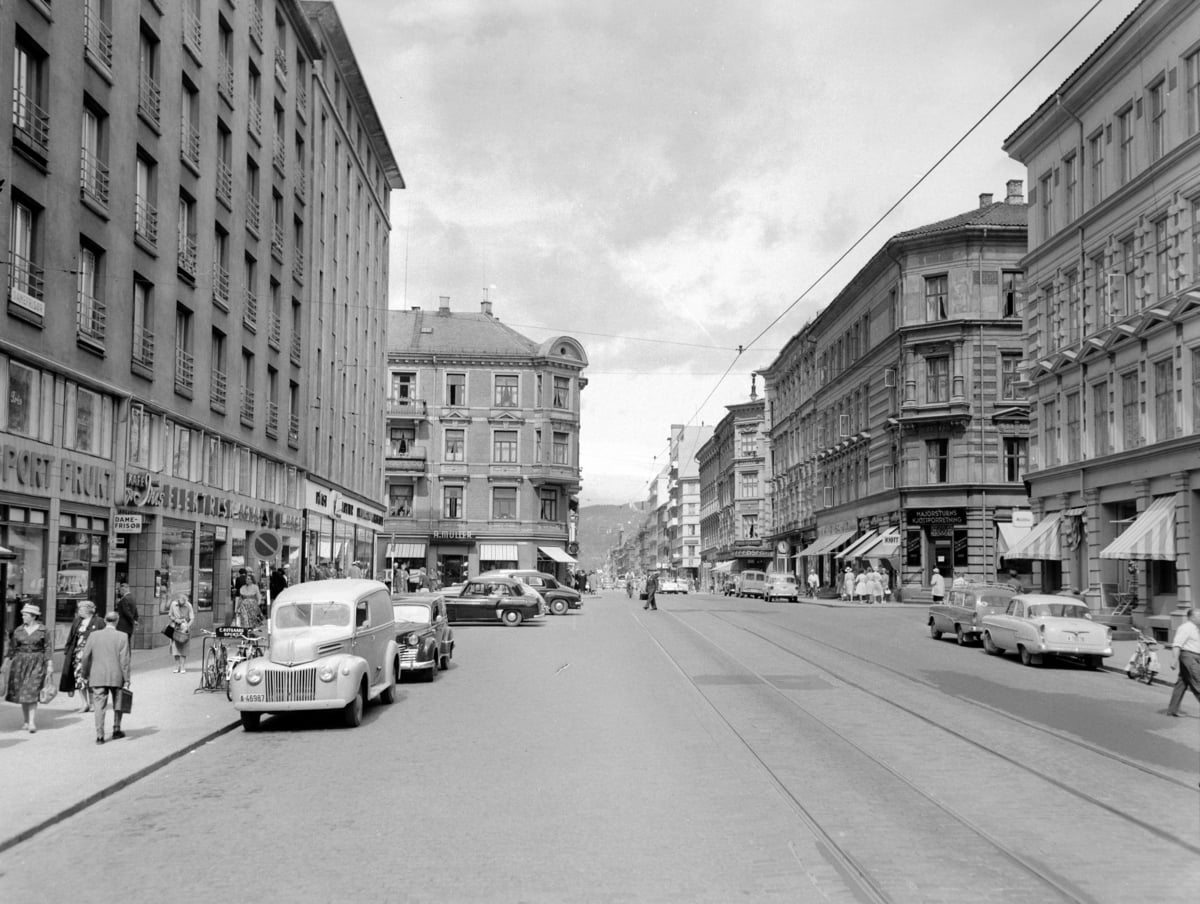
When the owner of Bogstadveien 22 applied in 1929 to demolish a two-storey wooden house and replace it with a commercial building, the application was initially rejected due to an incorrect building line. It followed the older street width of 15.7 metres, while the new plan required a width of 25 metres. When the new apartment building was finally constructed in 1931, it was set 9.3 metres back from the street (architects Harald Sund and Sam Axelsen).
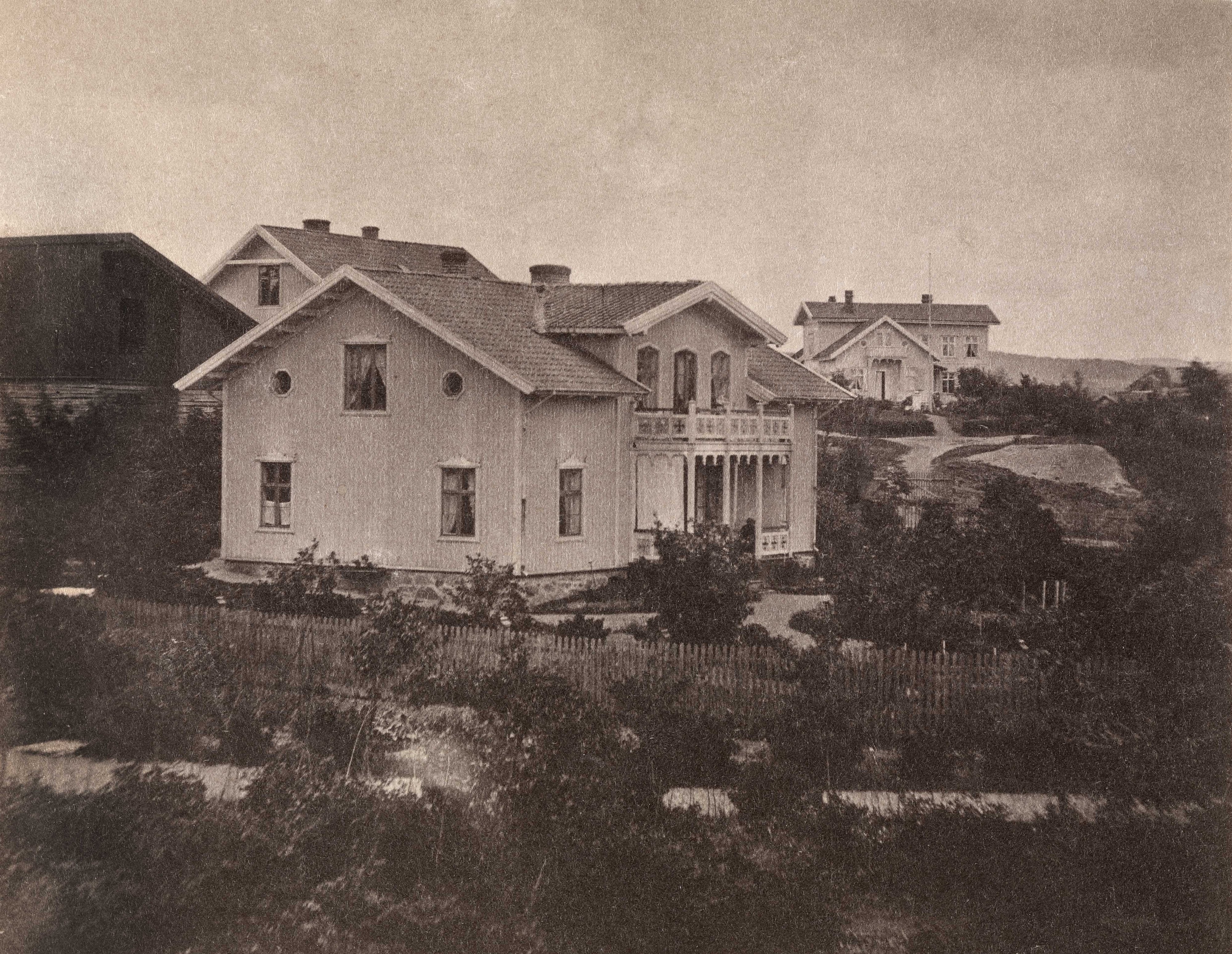
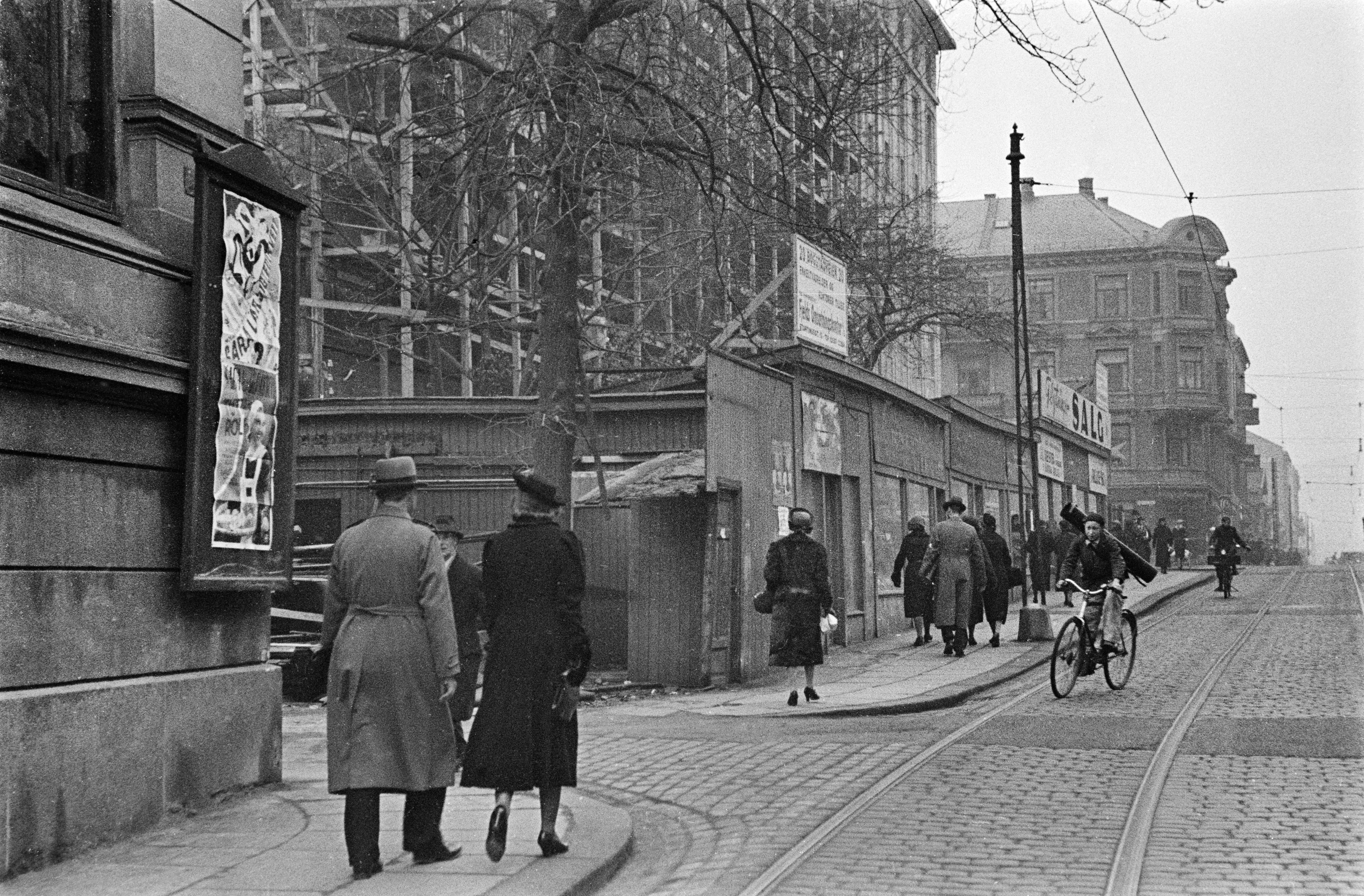
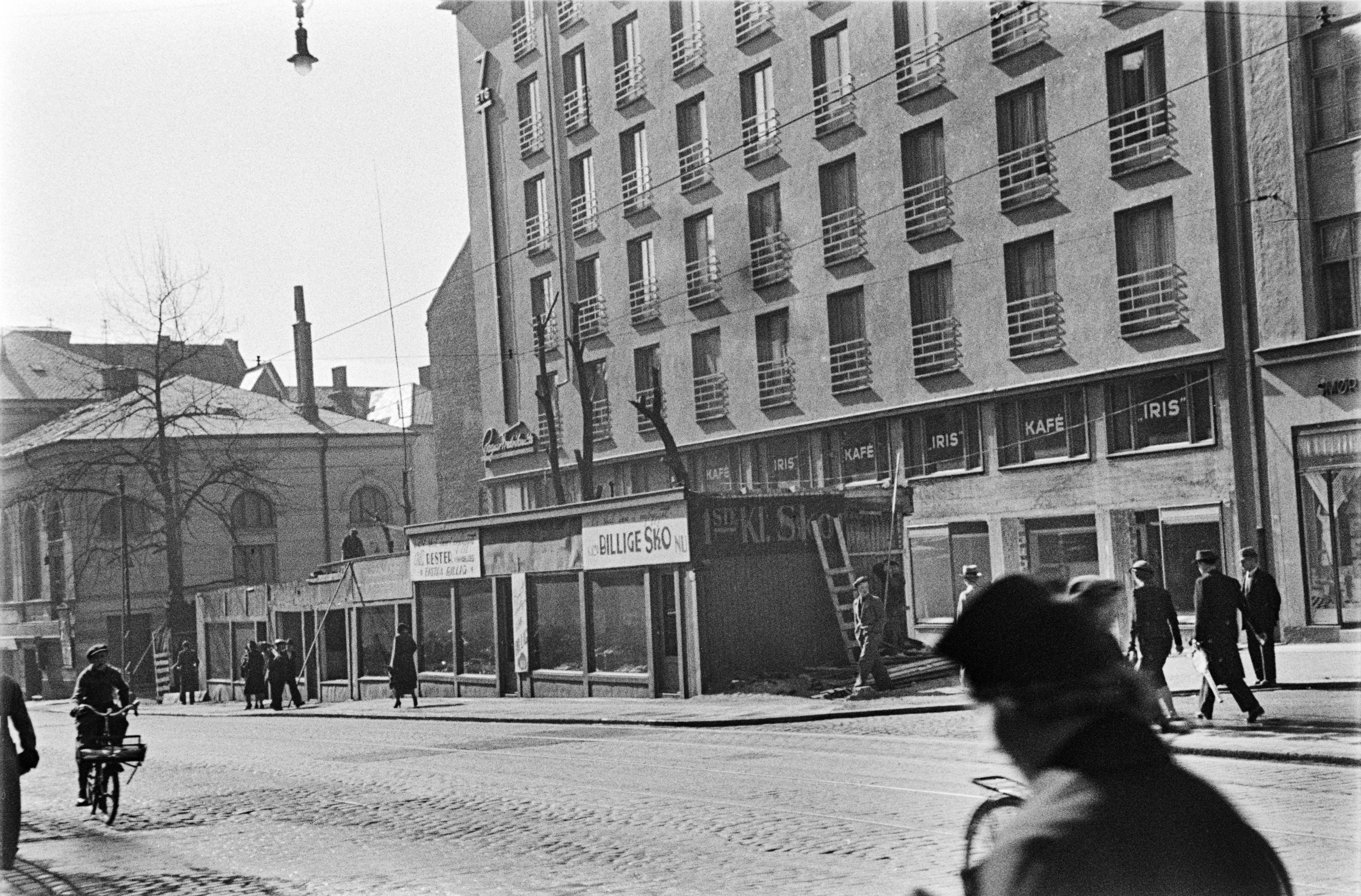
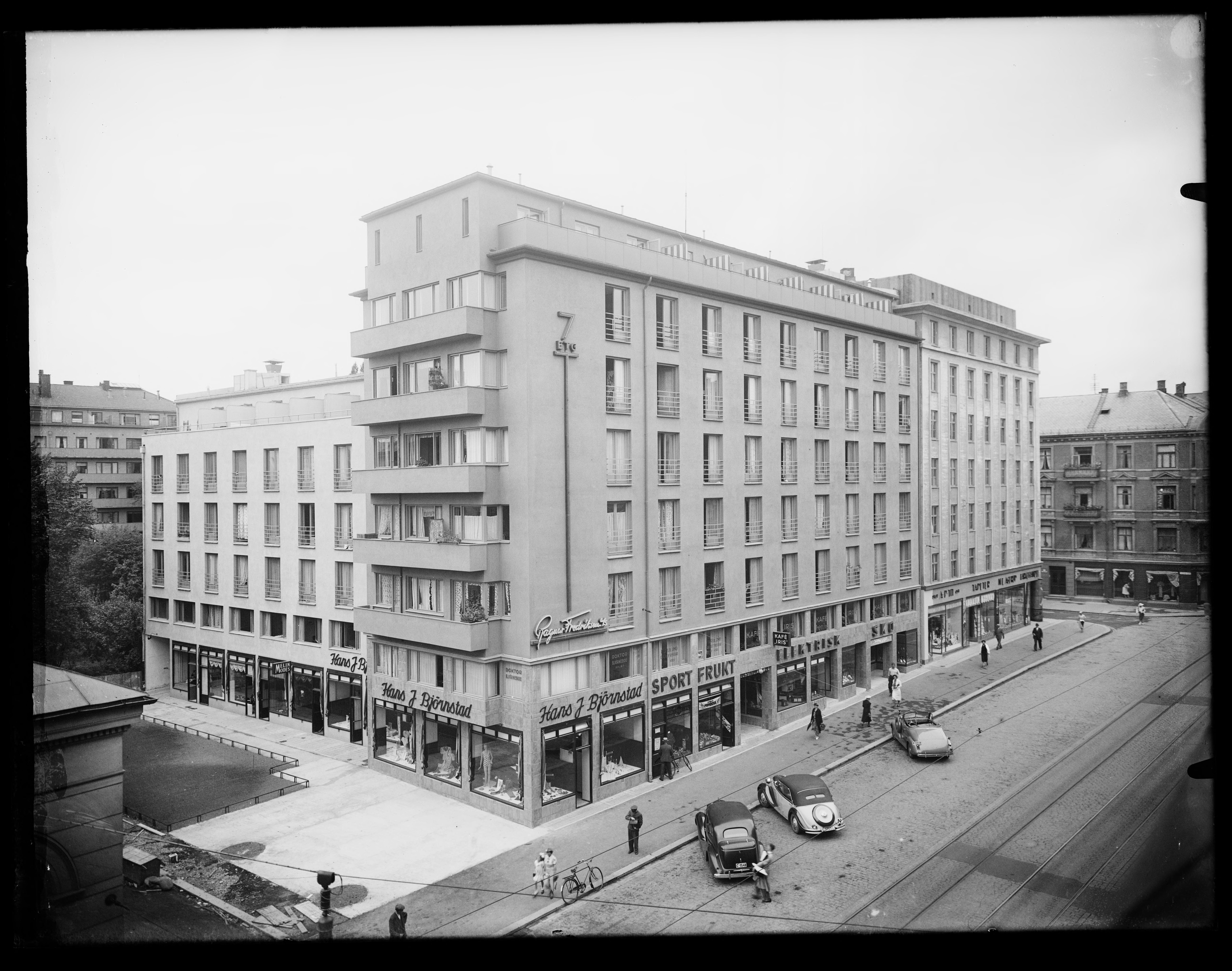
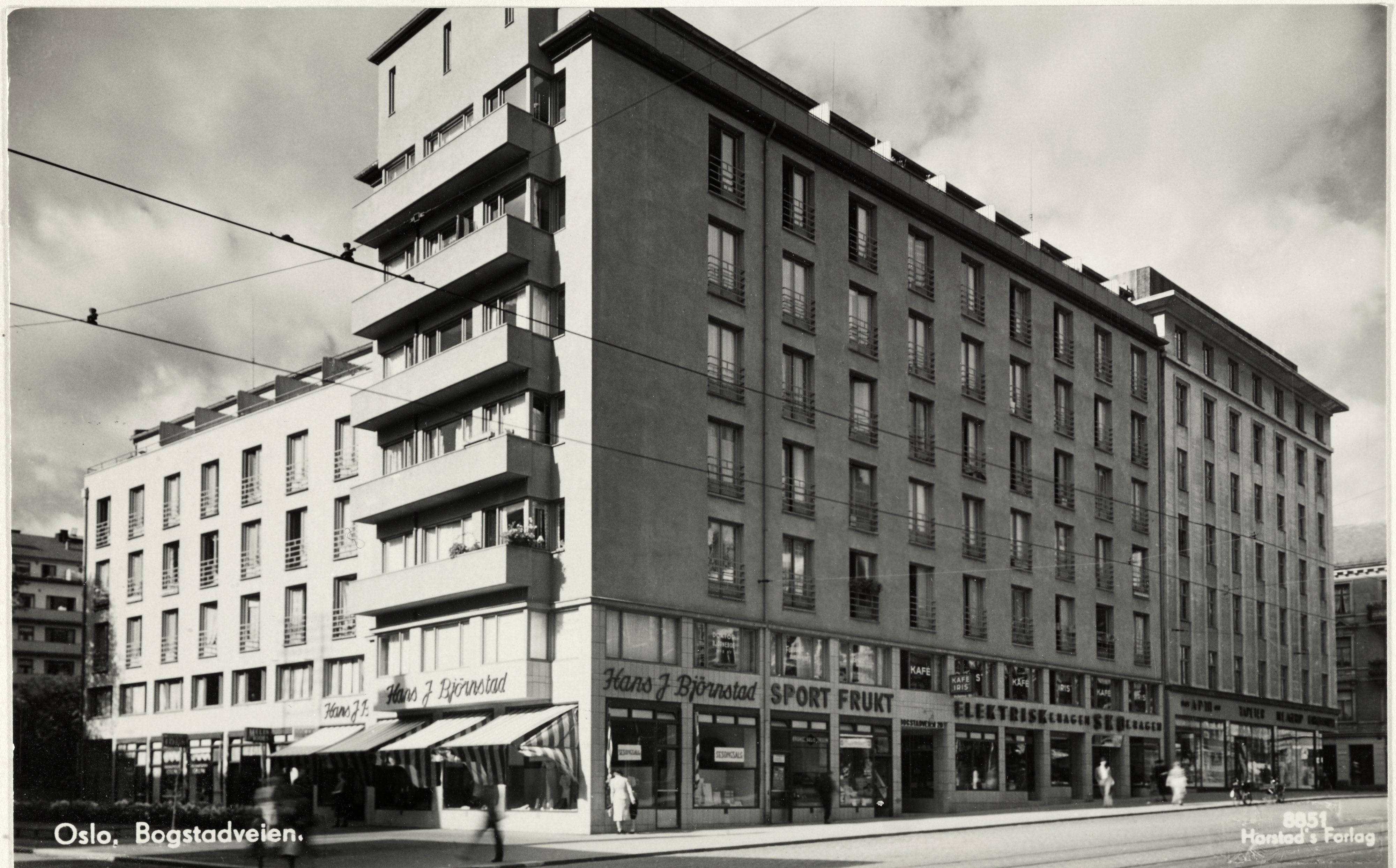
Although the ambitious master plan was never fully realized, parts of Bogstadveien were widened in shorter sections. Older wooden houses were demolished, but many of the brick buildings proved more difficult to replace and remained standing longer than expected. This explains the irregular building line along the street today, where façades shift back and forth. As a result, small open spaces have been created, bringing more light, air and room into the street.
When Bogstadveien was later upgraded, these open spaces were enhanced as public areas for rest and relaxation, with seating, flowering trees and shallow water features. After dark, you can see circles of light projected onto the pavement from tall light poles. These circular patterns are echoed in the decorative steel grates around the trees, as well as in the design of drains and manhole covers.
Back in 1929, Bogstadveien was already a lively street filled with trams, cars, horses, bicycles and handcarts. Horse-drawn taxis had rubber wheels, making them almost silent on the cobblestones. In summer, the horses wore small bells to warn pedestrians of their approach.
One young boy, Nils Jarmann, especially noticed that the horses wore rubber shoes. But horses were not the only ones being “shod” here—Bogstadveien quickly became known as a place to buy shoes. At Bogstadveien 20, shoes have been sold continuously since 1916.
The family business Agnar Hagen is still running today, now managed by the fourth and fifth generations. For decades, people have come here to find something new to walk in. The shop offers shoes for men, women and children, with a particularly wide selection for kids. High-quality footwear from around the world has found its place here.
Step out onto Bogstadveien in a new pair of shoes, and you might just notice the familiar scent of fresh leather as you walk confidently down the street.
Around the year 1900, lavish decorative interiors turned everyday shopping into something almost festive. Many of these elaborate shop interiors have disappeared over time, but one of the few surviving examples can still be found behind the door at Bogstadveien 27.
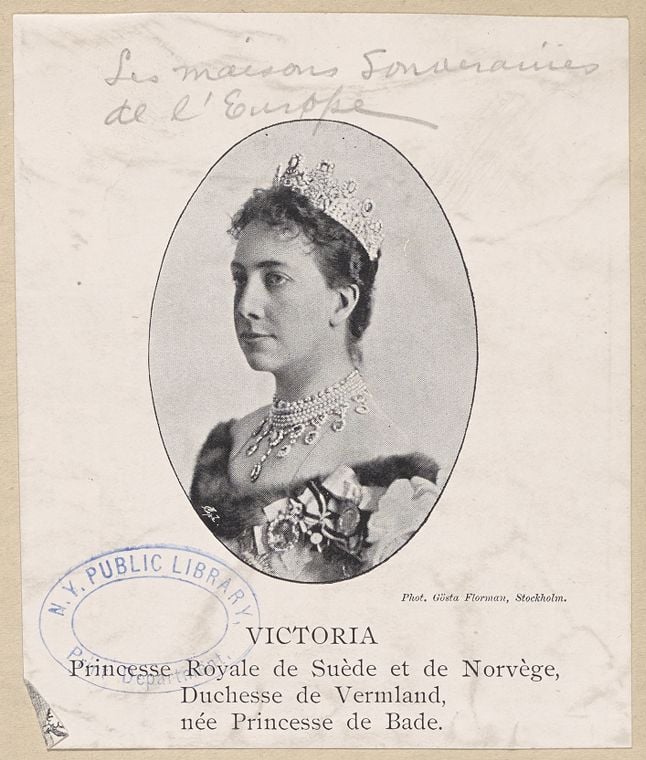
The building was designed in 1890 by the Swedish architect Carl Aaman in the Neo-Renaissance style. For many years it housed Victoria Bakery and Confectionery, named after the Crown Princess of Sweden and Norway at the time.
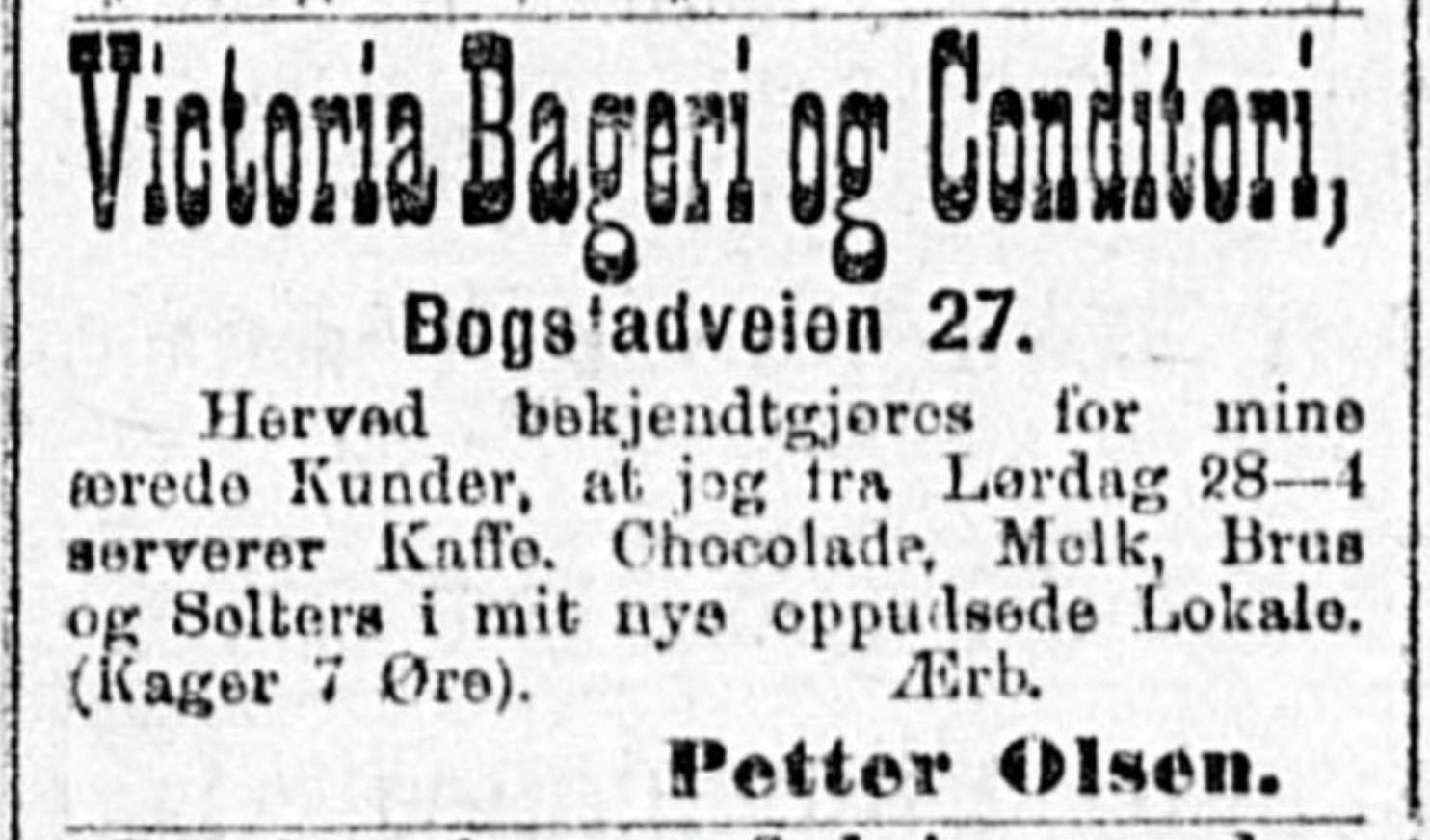
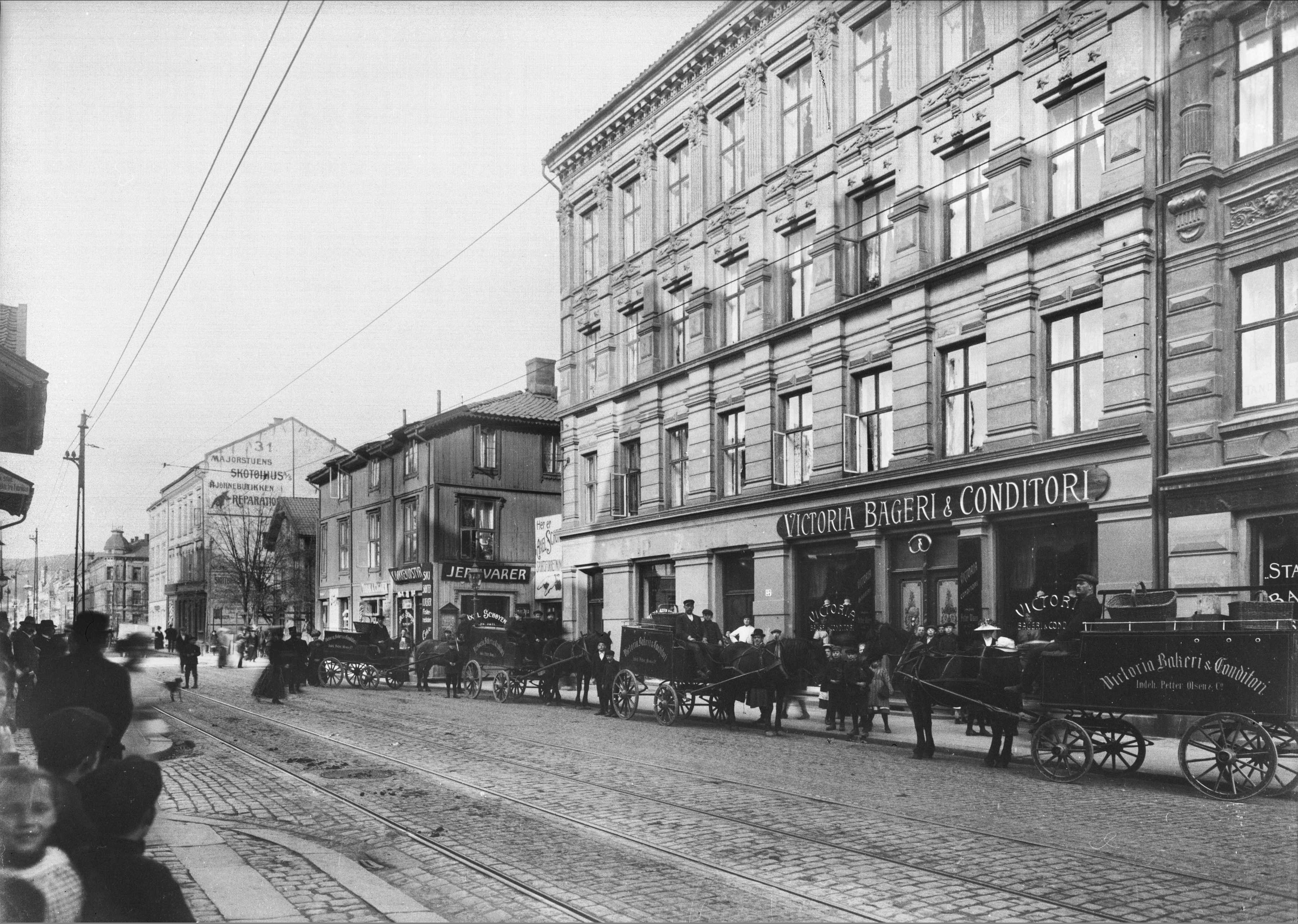
It was a very different era. Women in rustling skirts, elegant buttoned boots and carefully styled hair visited the café, which became one of the most popular meeting places in the neighbourhood. In the courtyard behind the building there was a bakery and a stable, and horse-drawn carts delivered freshly baked goods to residents in the surrounding streets.
The prosperous merchants of Christiania (the former name of Oslo) who commissioned shop interiors in the 1890s were able to invest in prestigious premises. Glassmakers, carpenters and decorative painters were hired to create cohesive interiors of high craftsmanship. The design style was inspired by German traditions, brought to the city by skilled craftsmen traveling from mainland Europe.
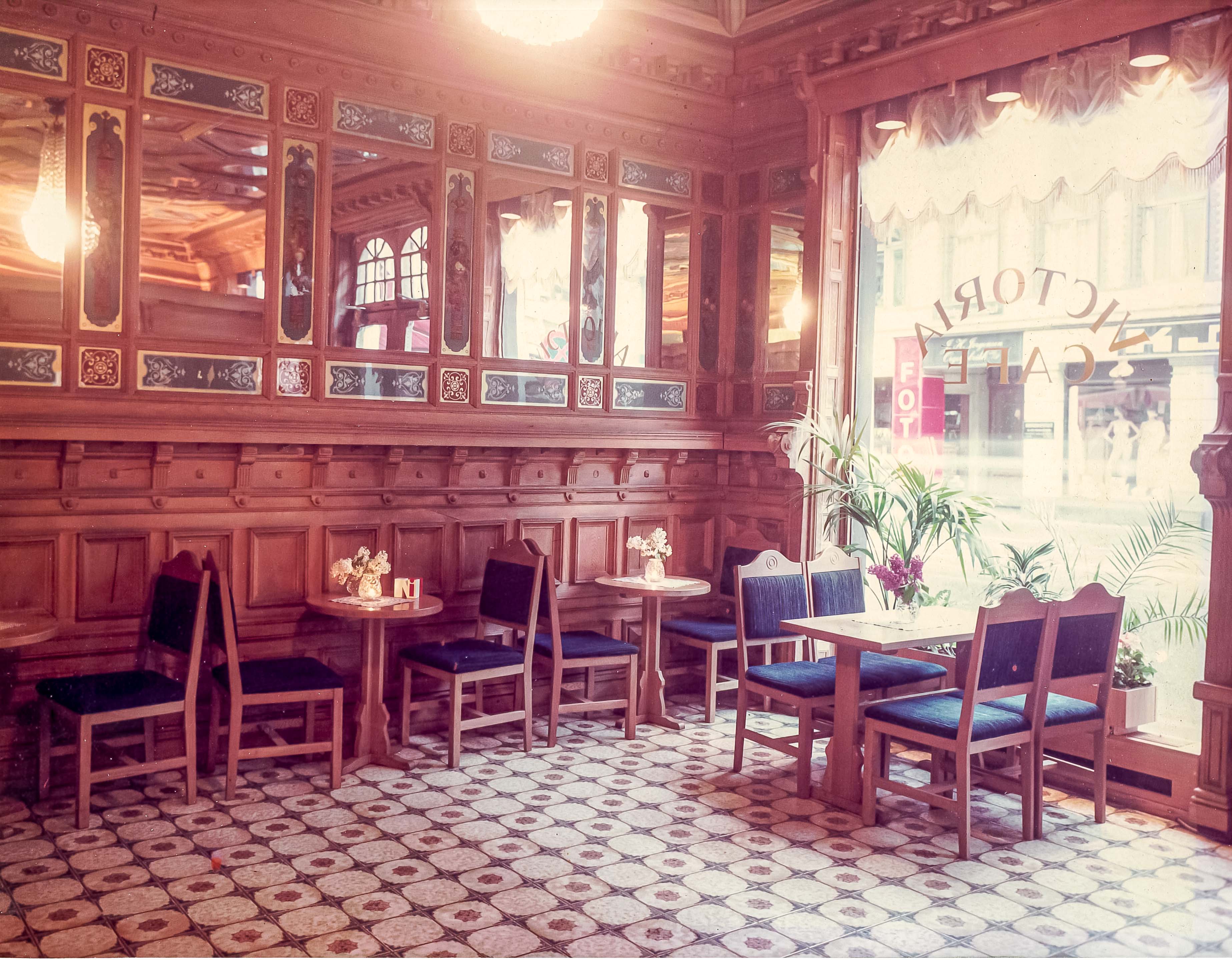
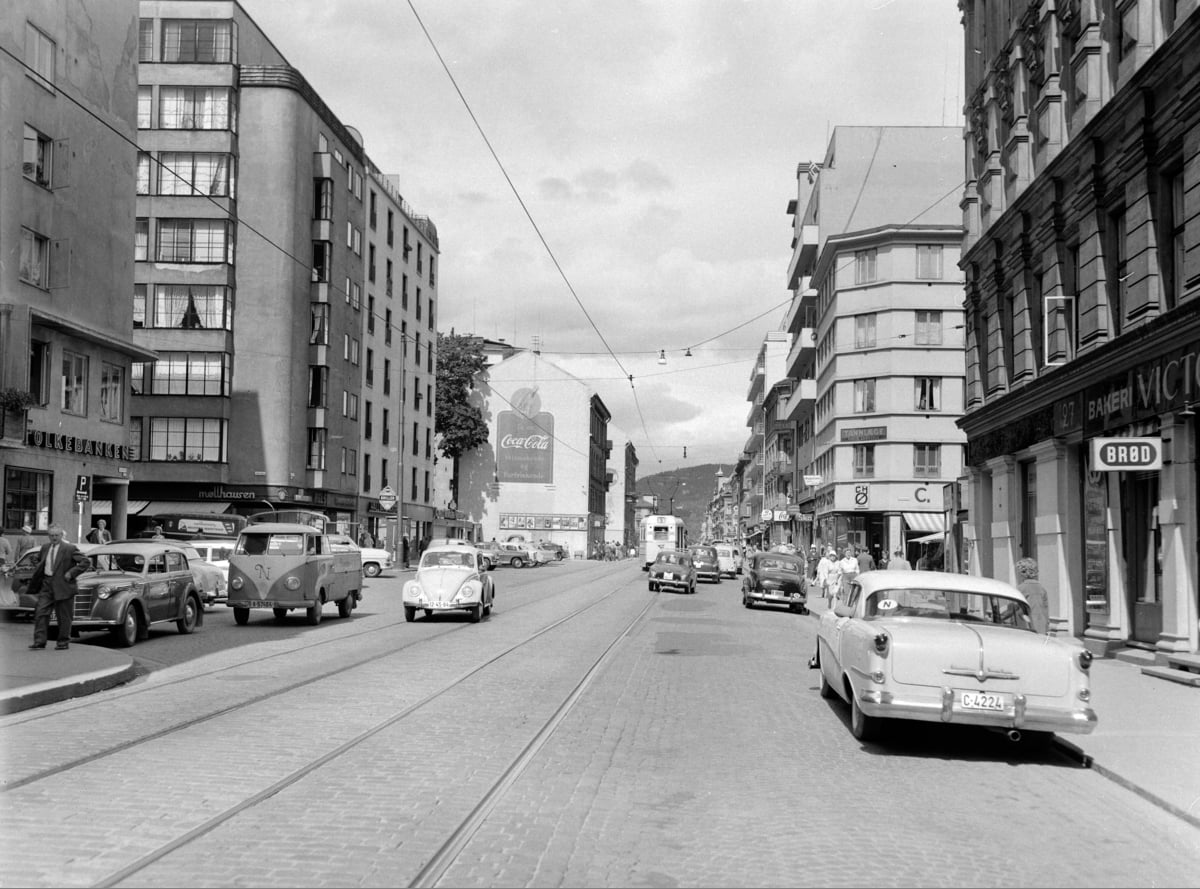
When the premises were restored in 1960, the carpenters constantly had to replace their tools. The extremely hard oak panelling—mixed with sand in the wood—quickly wore down their planes and knives. After sandblasting away many layers of paint, the beautiful grey-gold oak surfaces finally appeared again.
In the 1980s, the property company Thon Group decided that the legendary Victoria Confectionery had had its time. Many longtime local customers were shocked when cakes and pastries were replaced with blue suits, sparkling wine and caffè latte. Oslo had entered the era of the 1980s financial boom, and property director Halgrim Thon was clear about the change:
“You simply couldn’t make enough money from pastries and coffee,” he reportedly said.
The bar “The Broker” opened here with great fanfare in 1985. As the name suggests, stockbrokers and businesspeople were especially welcome, and champagne often flowed freely. At last, Oslo had an alternative to the traditional coffee houses. The place quickly became popular with the city’s social elite, students and working people alike.
Today the café is no longer a gathering place mainly for the newly wealthy, and people are less focused on champagne corks popping in the air. What was once a Viennese- or French-style café now resembles an English-style pub. The interior combines rustic wooden floorboards with green mirrored wall panels framed by carefully carved beams and window frames. A new bar has been built in a traditional style, and classic chandeliers hang from the ceiling.
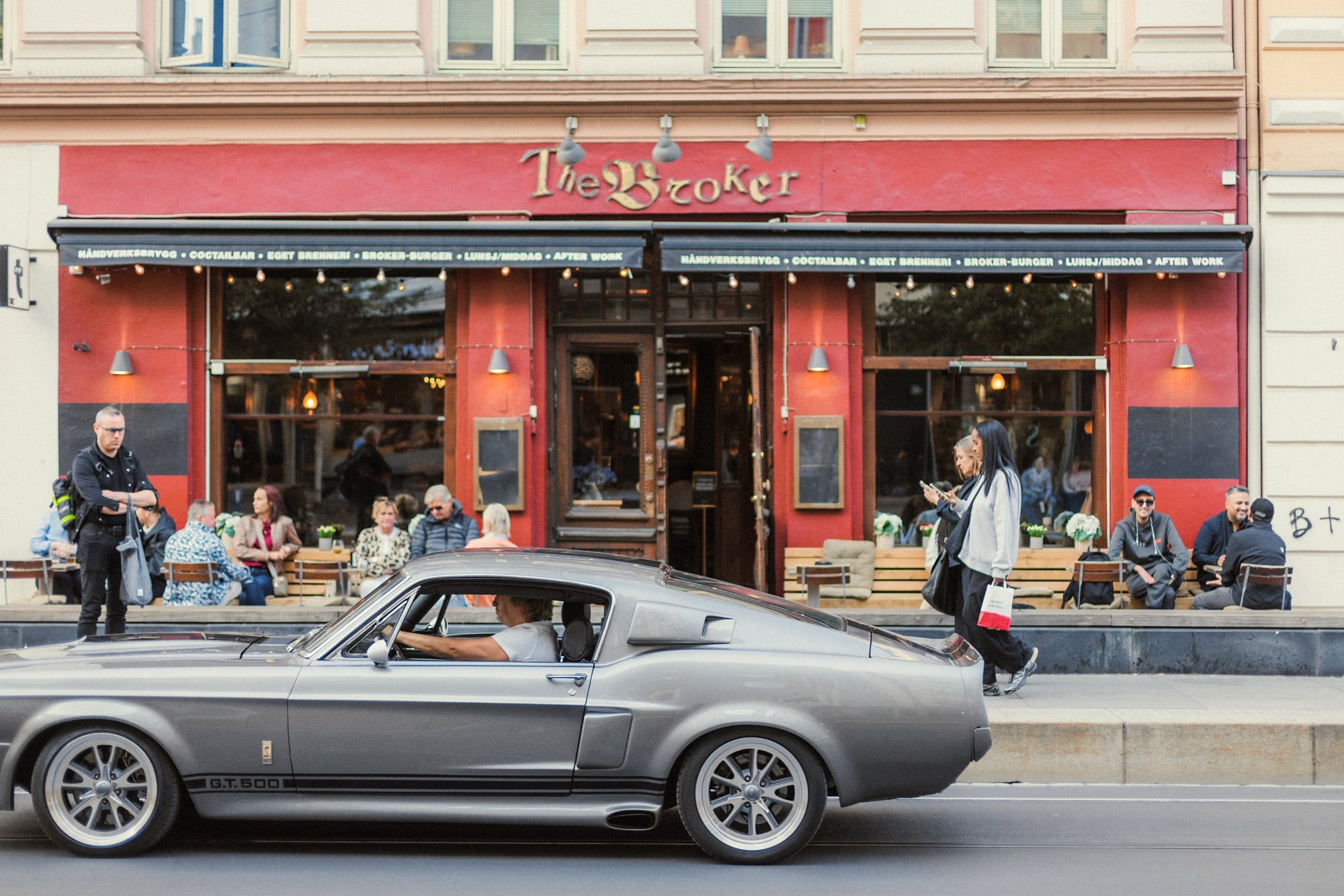
Visitors can still spend a long time simply looking up at the historic ceiling, which is protected as a heritage feature. From the large windows, you can also enjoy a front-row view of the lively street life of Bogstadveien outside.
Sources
«Handel under blomster-ranker», by Signe Møller Forsberg, Aftenposten (3rd Nov. 1979)
«Historisk handlegate med høy bypuls», Aftenposten (12th Dec. 2005)
«Bogstadveien» (2022), by Finn Holden, Dreyers forlag
«Vestkantfruene var i harnisk da de åpnet», by Jonas Krüger Skotner, Avisa Oslo (5th Dec. 2025)
«Ny kurs for gammel traver», by Byløvene, Dagsavisen (30th Nov. 2013)
During the First World War, trade with other countries came to a halt, which hit Norway hard.
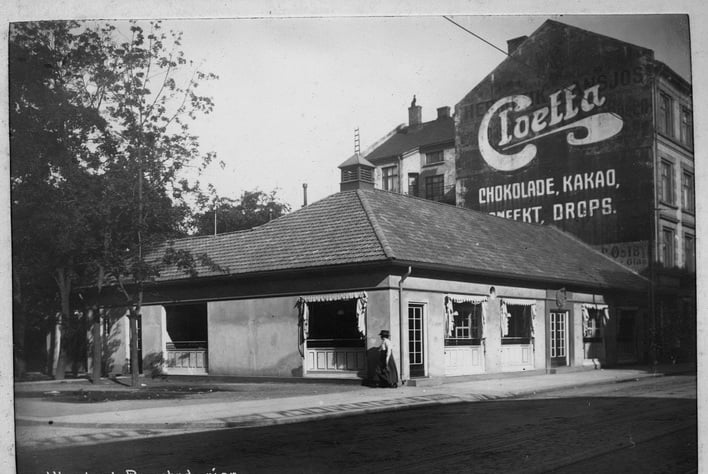
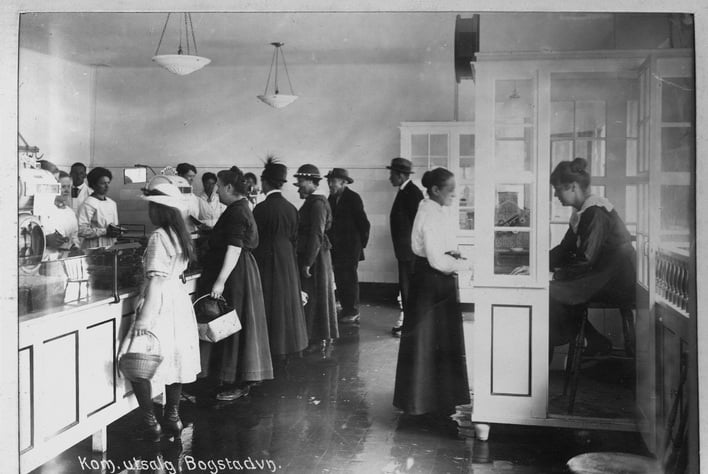
Food shortages in the city became so severe that the municipality decided to establish public outlets for essential food supplies. From 1915 to 1927, these city-run shops operated in several locations across Oslo. One of them was in the small building that once stood here at Bogstadveien 39, where people could buy basics such as meat, potatoes, vegetables and fish.
The functionalist apartment building standing here today was completed in 1932 (architect Victor Schaulund). The long balconies are typical of the period, and the narrow horizontal band between the first and second floors elegantly wraps around the corner of the building.
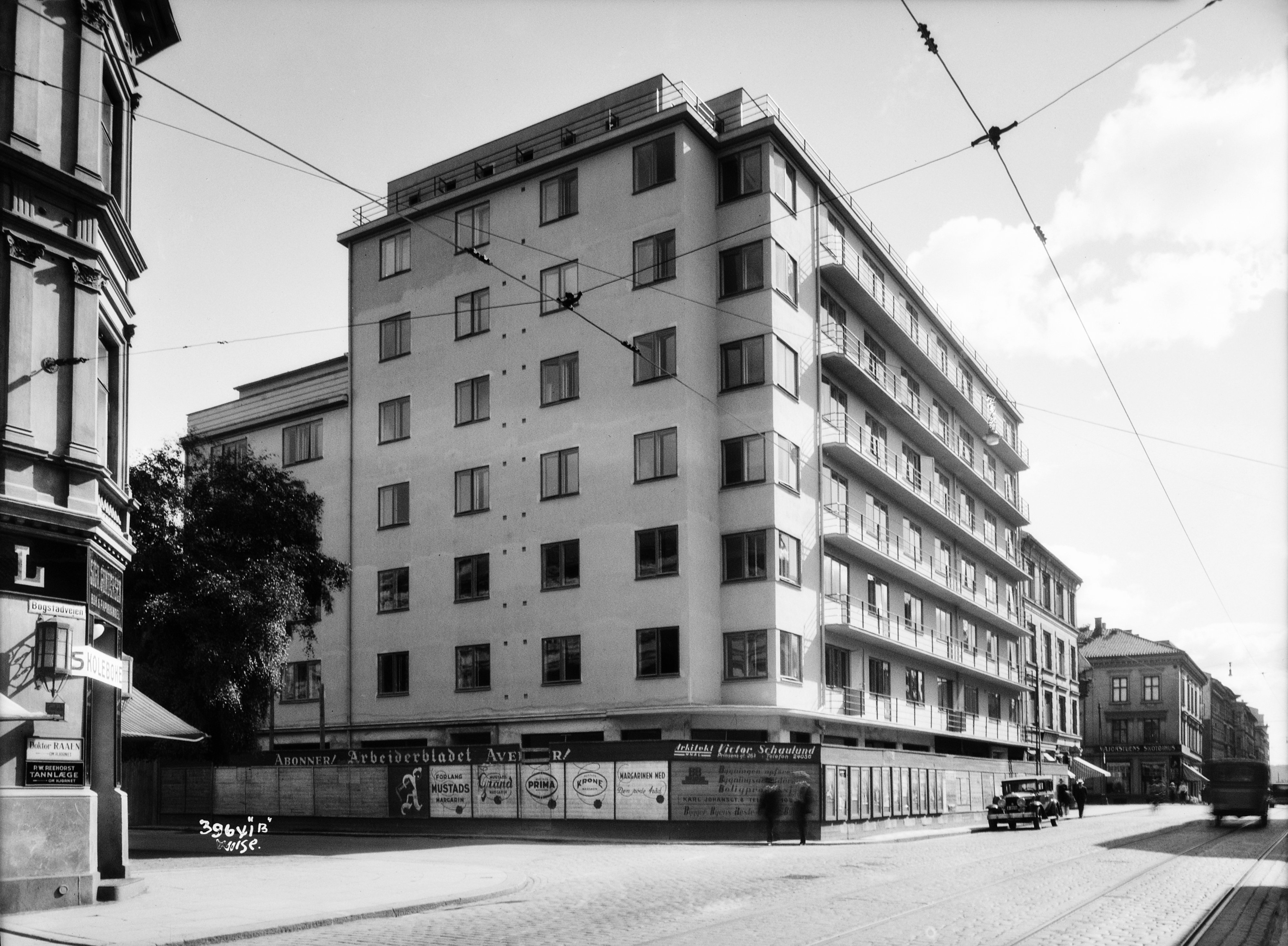
Bogstadveien has changed significantly over time. Today, chain stores dominate, while small independent shops are fewer. But it wasn’t always like this – 100 years ago, the street was filled with small businesses and specialty shops.
This building still reflects that history. It houses examples of the many small, independent shops that once gave Bogstadveien its distinct character – exactly the kind of businesses these buildings were originally designed for.
“Majorstuen Tea & Coffee” is one of the few remaining specialty shops on the street. It began as a coffee shop in Homansbyen in 1928, and has been located here at Bogstadveien 39C since the 1930s, making it one of the oldest shops in the area.
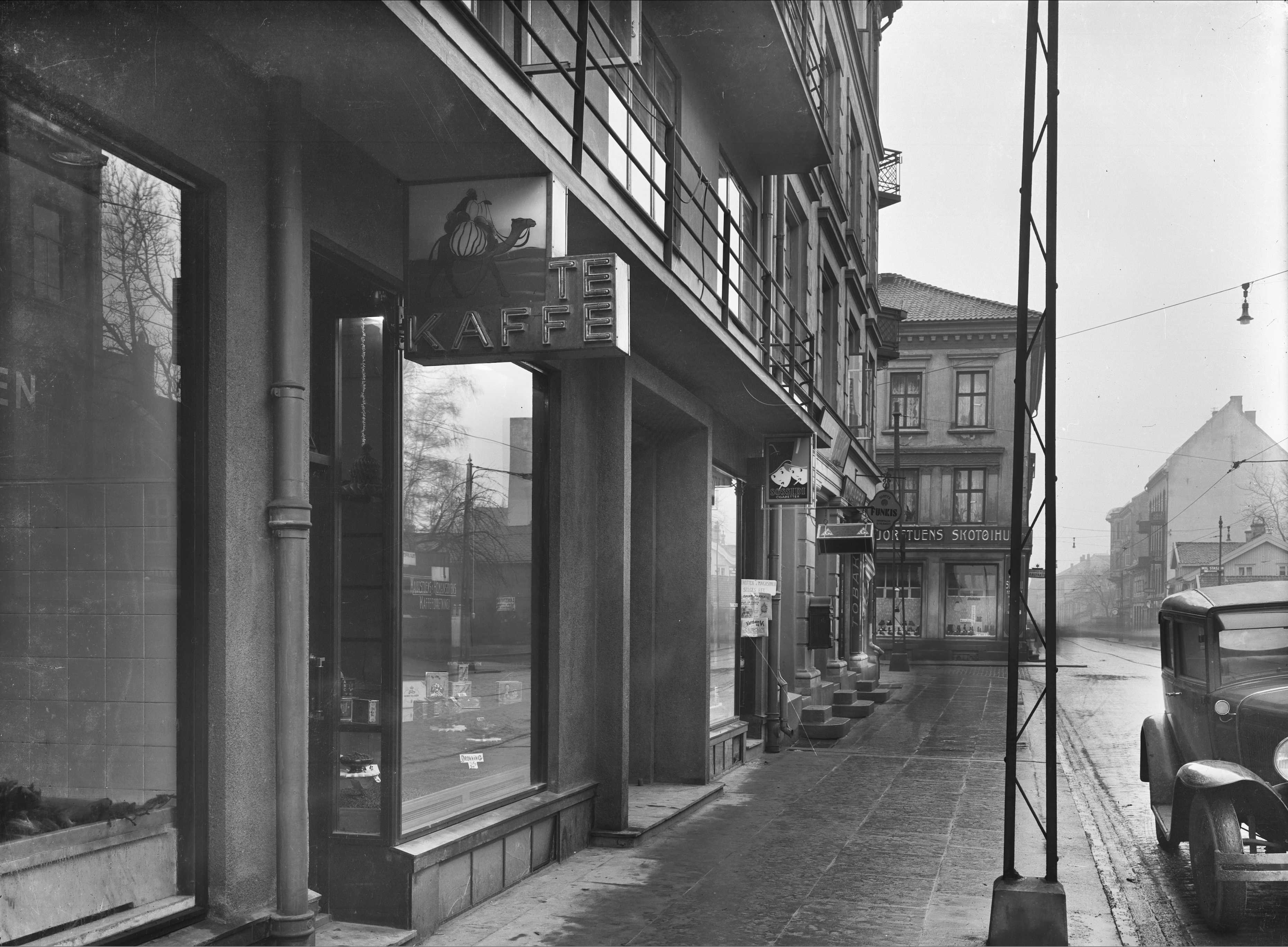
When you step inside, you are greeted by the rich aroma of tea and freshly ground coffee. The shop offers more than 150 varieties of tea. If you’re looking for Darjeeling First Flush – the first harvest from tea plants grown in the Himalayas – you can find it here, though it comes at a price. Often called the “champagne of tea,” it is so sought after that enthusiasts have been known to queue outside when the new batch arrives each spring.
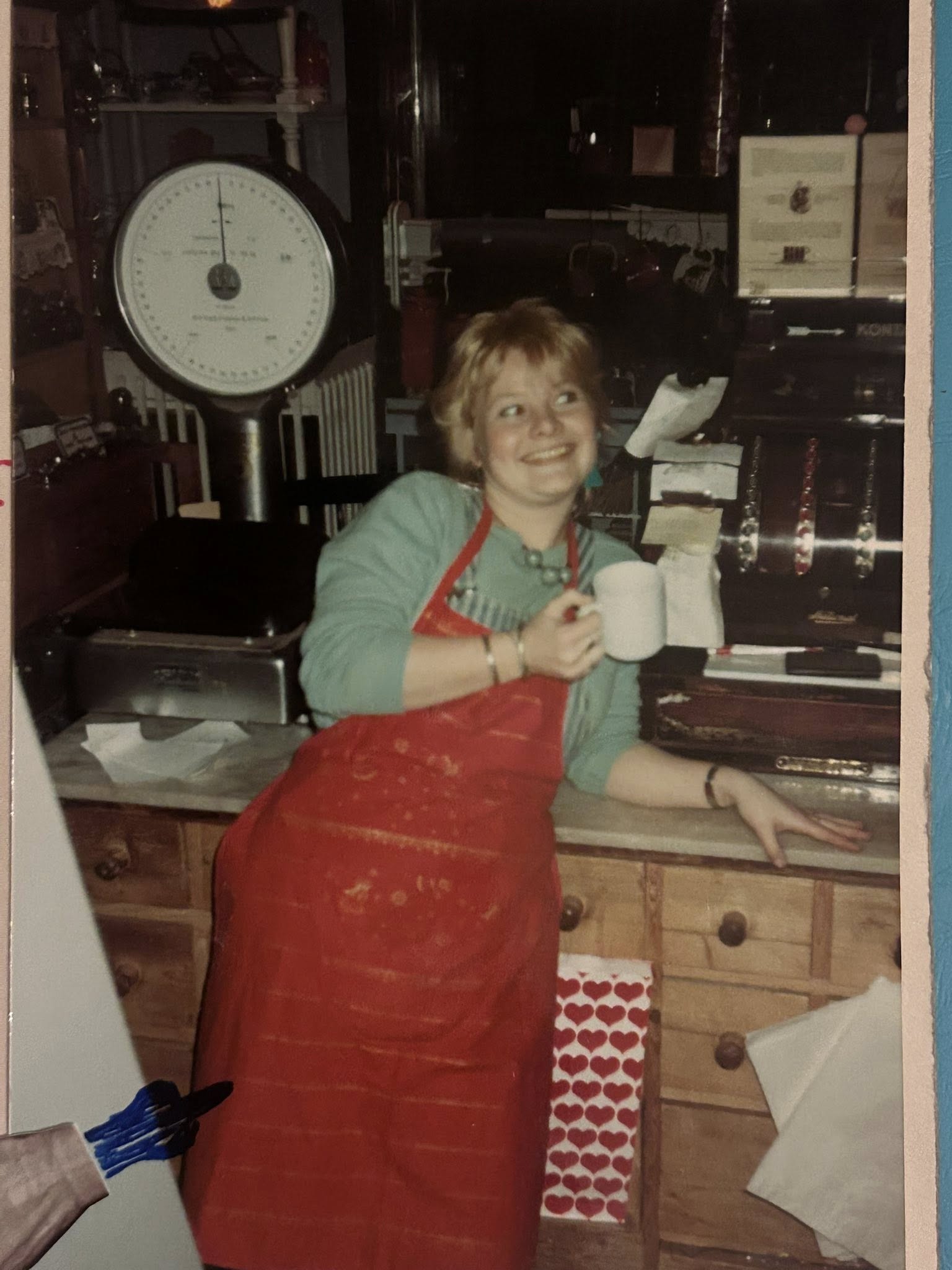
The old tea and coffee tins create an atmosphere of times gone by. There is a bell beside the original entrance door, and a beautiful old lamp hangs from the ceiling. Behind the marble counter, you can still spot the historic cash register on the floor. It only counts up to 99 kroner, so purchases over that amount once had to be entered in multiple steps.
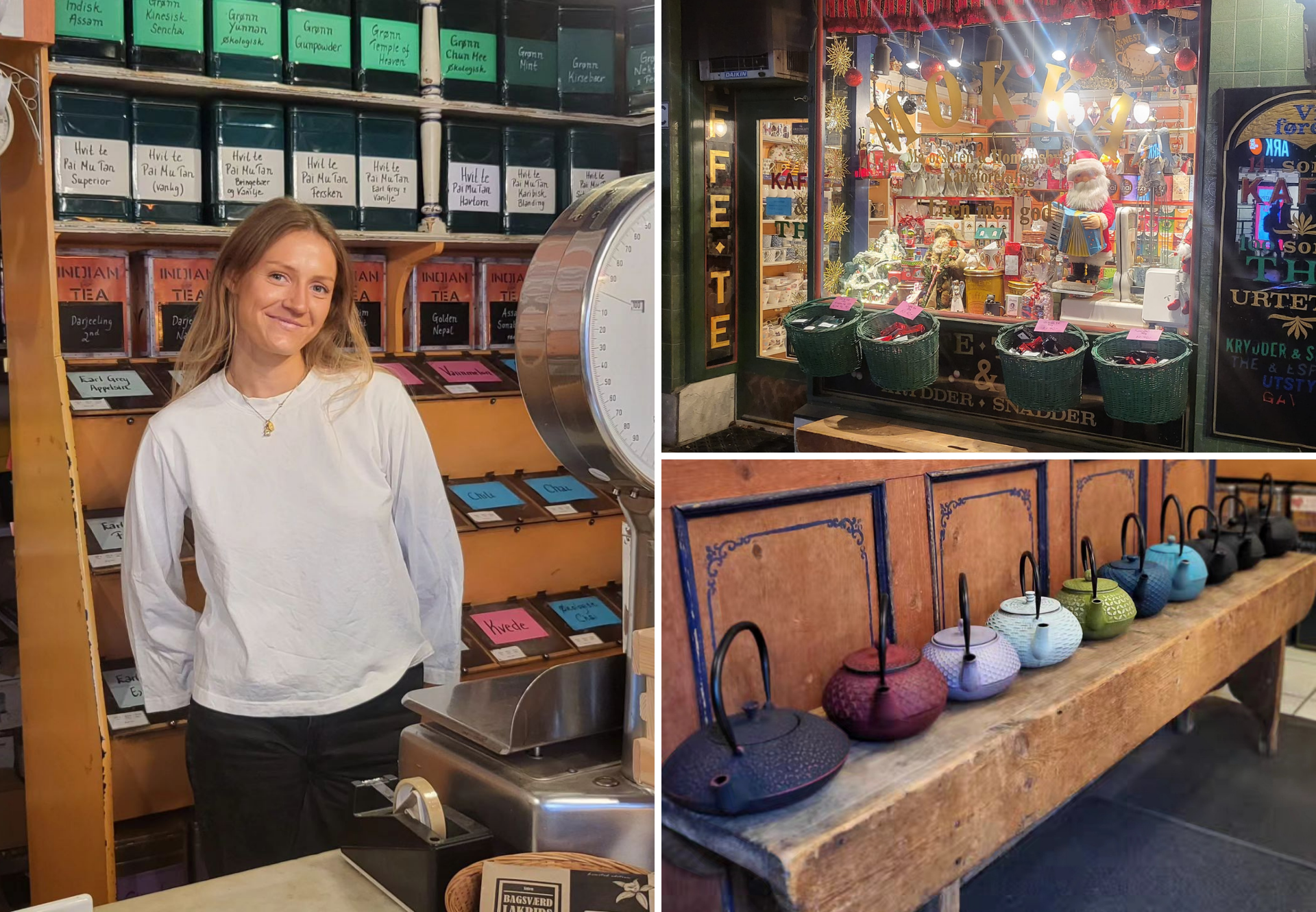
Tea is most popular in autumn and winter, while coffee is sold steadily all year round. Regular customers visit daily to pick up their bag of freshly ground coffee. The shop also sells tea and coffee accessories, making it a small gift shop as well.
On the sidewalk outside, under the shelter of the eaves, there is even a bench where customers can rest.
Sources
«Bogstadveien» (2022), by Finn Holden, Dreyers forlag
Bogstadveien 39, Byantikvaren i Oslo
«David mot Goliat i Bogstadveien», by Lena Westin, Lokalavisen Frogner (15th June 2006)
«Champagne i løs vekt», by Line Lilleskjæret, Finansavisen (22nd Jan. 2005)
«Duften av kaffe», by Bethen Steenbuch, Aftenposten (31st Aug. 2006)
«Ta en te», av Trond Bruce Hansen, Aftenposten (18th Feb. 2014)
Conversation with Emilie Arvik Hansen at Majorstuen Te & Kaffe
Today, Oslo’s historic city centre is undergoing transformation – much like many cities around the world – where older buildings are given new functions and uses.
Along Bogstadveien and Hegdehaugsveien, many buildings have kept only their historic façades, while the interiors that once told the story of their past have disappeared. Valkyrien Shopping Centre is an example of this kind of development.
The centre occupies what used to be five separate properties: Valkyriegata 1–3, Bogstadveien 45 and Ole Vigs gate 22–24.
Before the redevelopment, the area was filled with small shops. For 17 years, the Norwegian crime writer Jo Nesbø sat writing at the café Kaffebrenneriet here. When the café closed during the construction of the shopping centre, he reportedly wandered around the neighborhood searching for a new place to write.
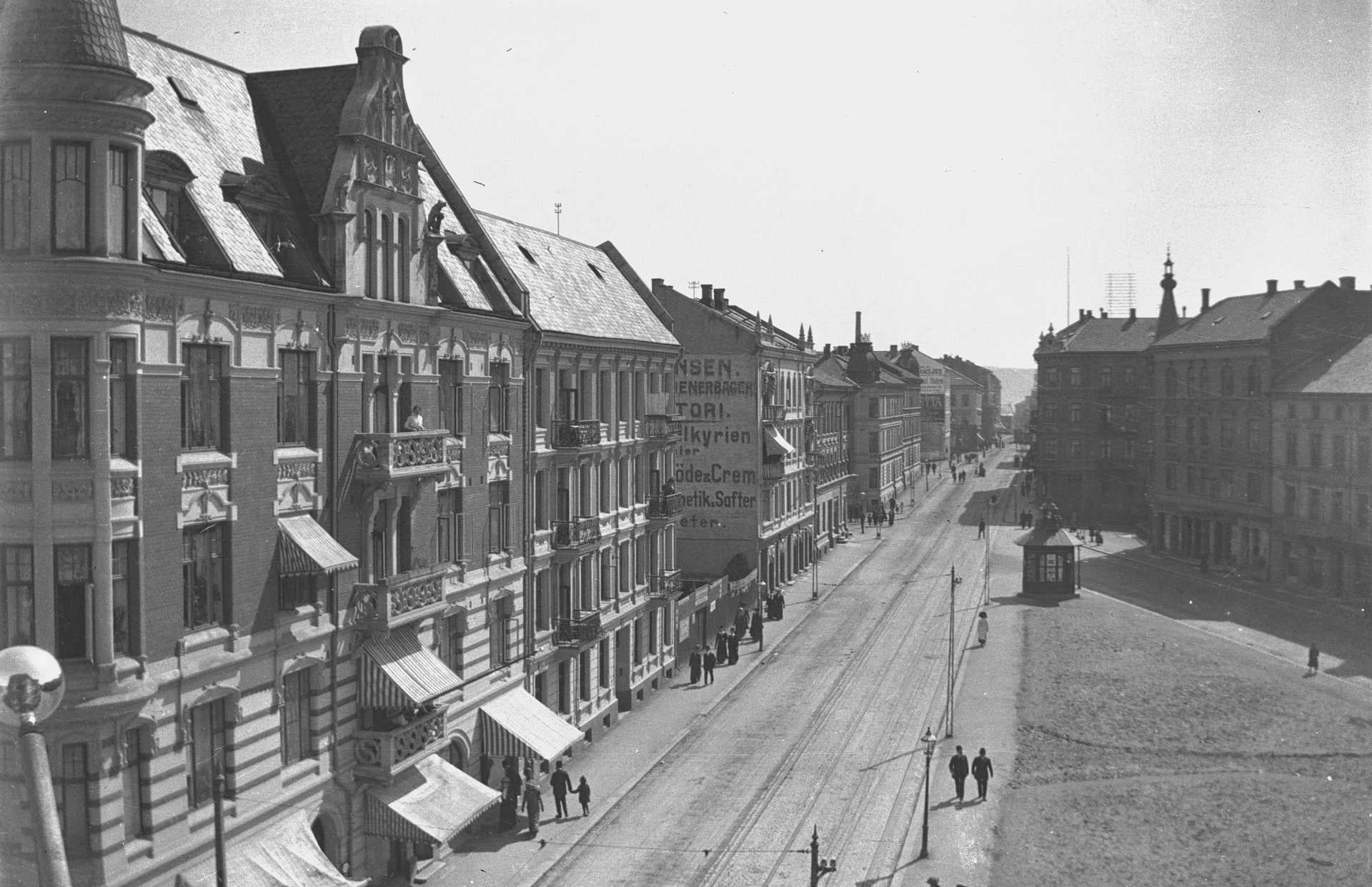
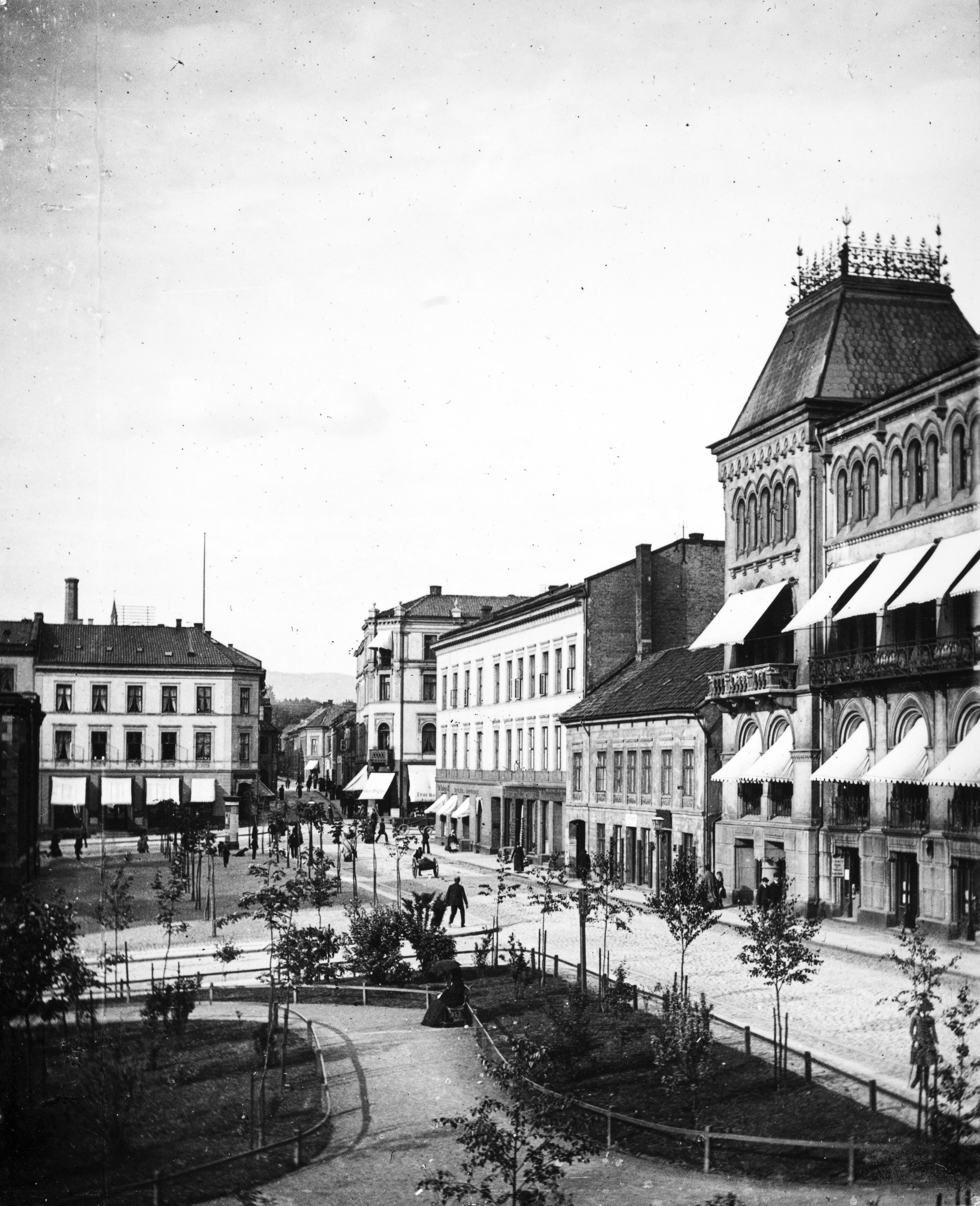
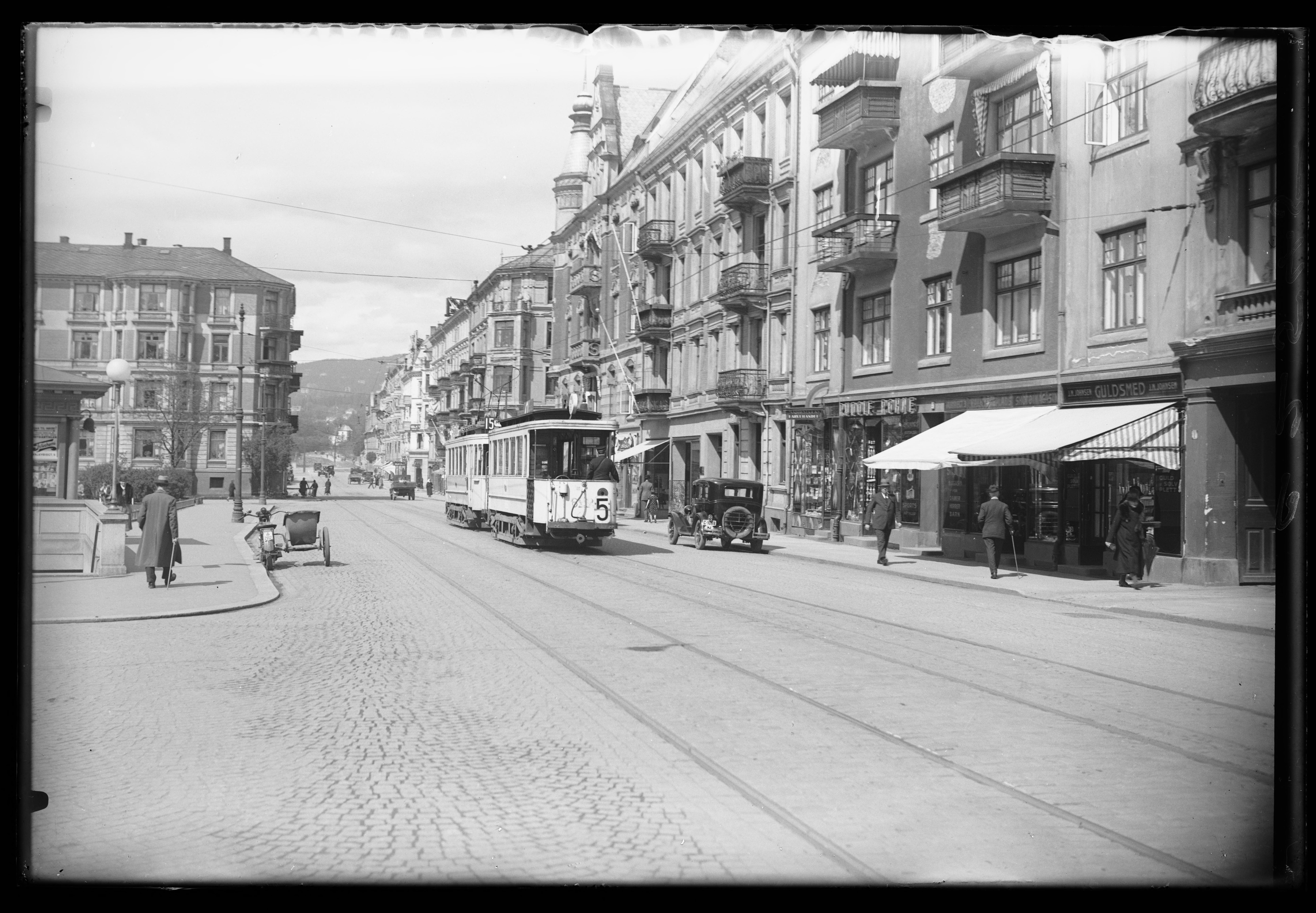
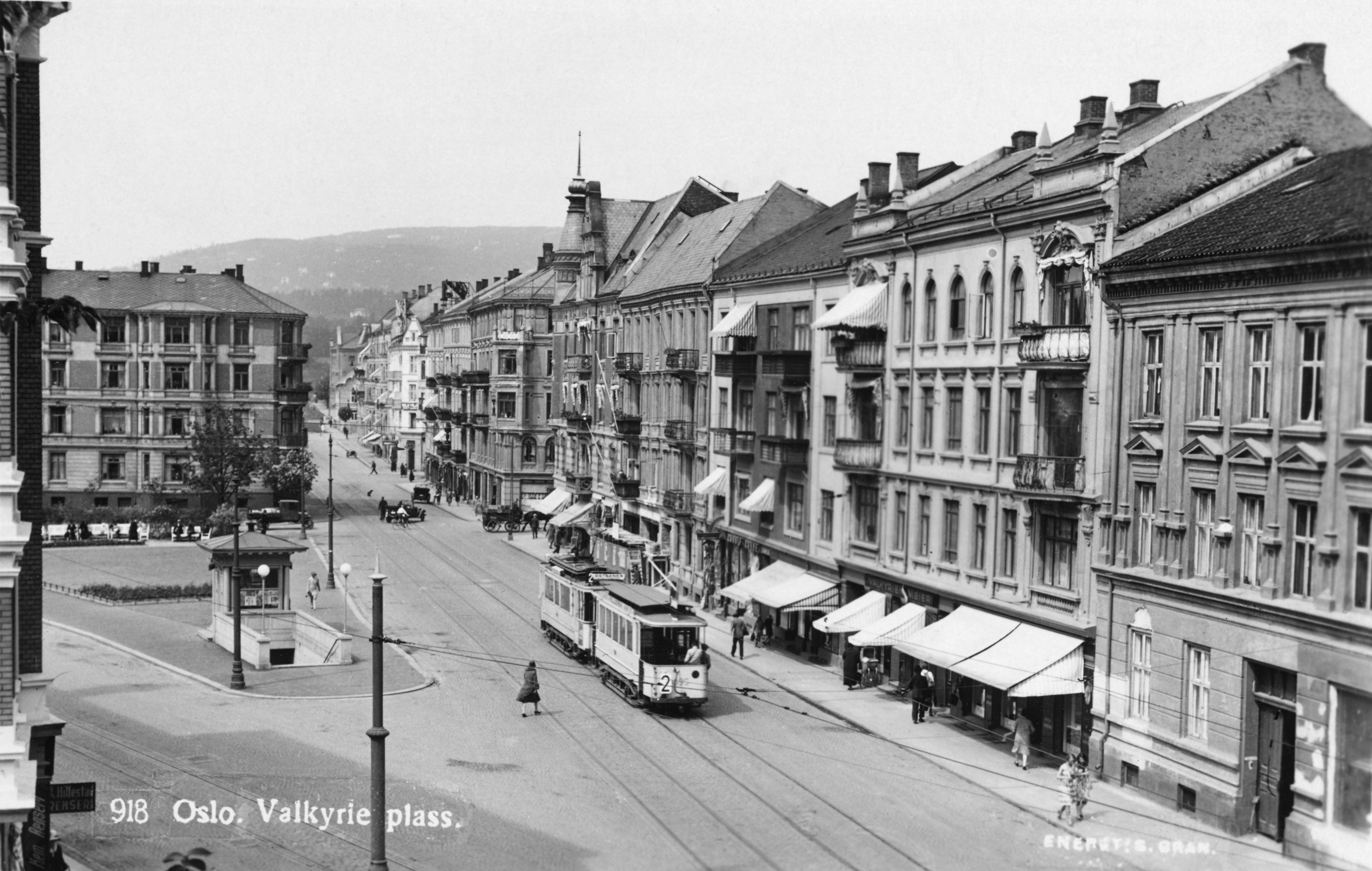
In 2014, the buildings were officially merged into one development project. In the courtyard stood a bread factory more than 100 years old, along with a tall industrial chimney and a horse stable. During the reconstruction, the historic façades, the industrial buildings and the bakery chimney were preserved.
The shopping centre in this historic block opened at the worst possible moment—during the COVID-19 pandemic in 2020. From the outside, Valkyrien may seem rather discreet. A sign by the entrance lists the shops inside.
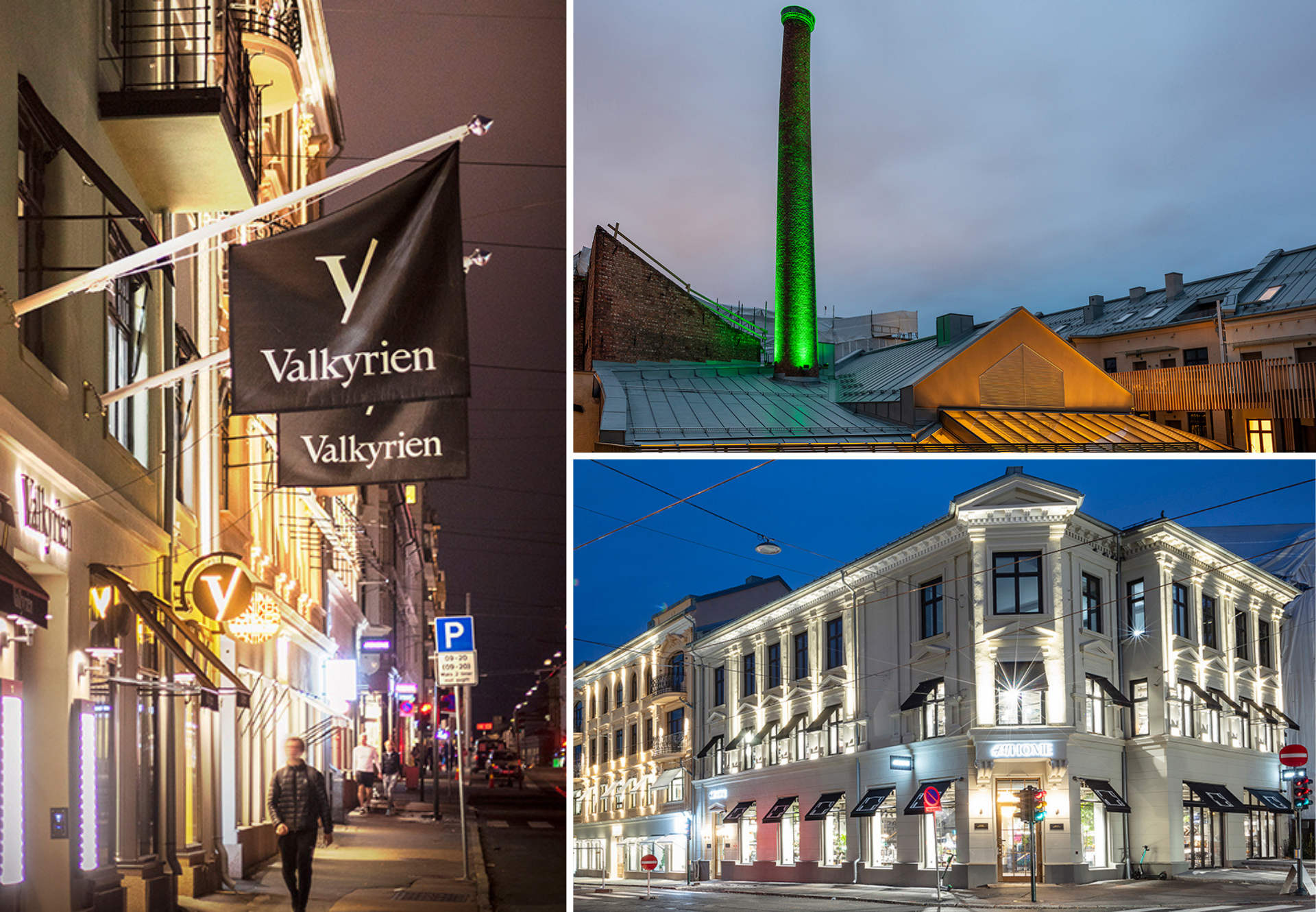
Here you can say that you are invited into one building, and then you enter another. The architecture firm Mellbye Arkitektur created an interior of modern concrete and light steel structures. From street level, escalators lead to both the upper and lower floors, where visitors encounter open retail spaces enclosed in glass. Most of the shops are clothing stores, while the lower floor contains grocery stores and a Vinmonopolet—Norway’s state-run shop for wine and spirits.
In Valkyrien, areas that traditionally would have been corridors or shared spaces are also used for displays and merchandise. The preserved old bakery building, located in the centre of the complex, serves as a visible link between the past and the present.
Projects like this often spark debate. The practice of preserving only building façades has been criticized and given nicknames such as “façadism,” “shell preservation,” or even “Disney façades.” While this approach preserves the historic street view and urban environment, critics argue that the building’s authenticity is partly lost.
As ethnologist Arne Lie Christensen explains:
“Even when these buildings were first constructed, façades were seen as the building’s festive costume, and there was not always a direct connection between the façade and the interior—although the contrast is now much greater. Today, as in the past, façades form the walls of the city’s streets and squares, and they play a major role in our experience of being in an old city.”
In 2021, the renovation project was nominated for Oslo’s Architecture Prize.
Sources
«Bogstadveien» (2022), by Finn Holden, Dreyers forlag
«Valkyrienes plass», by Bjørn Stendahl, «Kavringen» (2021) No. 99
«Livsfarlig jakt på kjærlighet», by Ingunn Røren, Aftenposten (24th Mar. 2017)
«Nytt senter: Valkyrien styrker Bogstadveien», by Ove Hansrud, RETAIL magasinet (1st July 2020)
«Bak fasaden», by Fredrik Armand Borgen, «Fremtid for fortiden» (2016) No. 2
In the 1890s, apartment buildings gradually spread up along Bogstadveien, and by the turn of the 20th century a small triangular square had formed here between Bogstadveien and Valkyriegata.
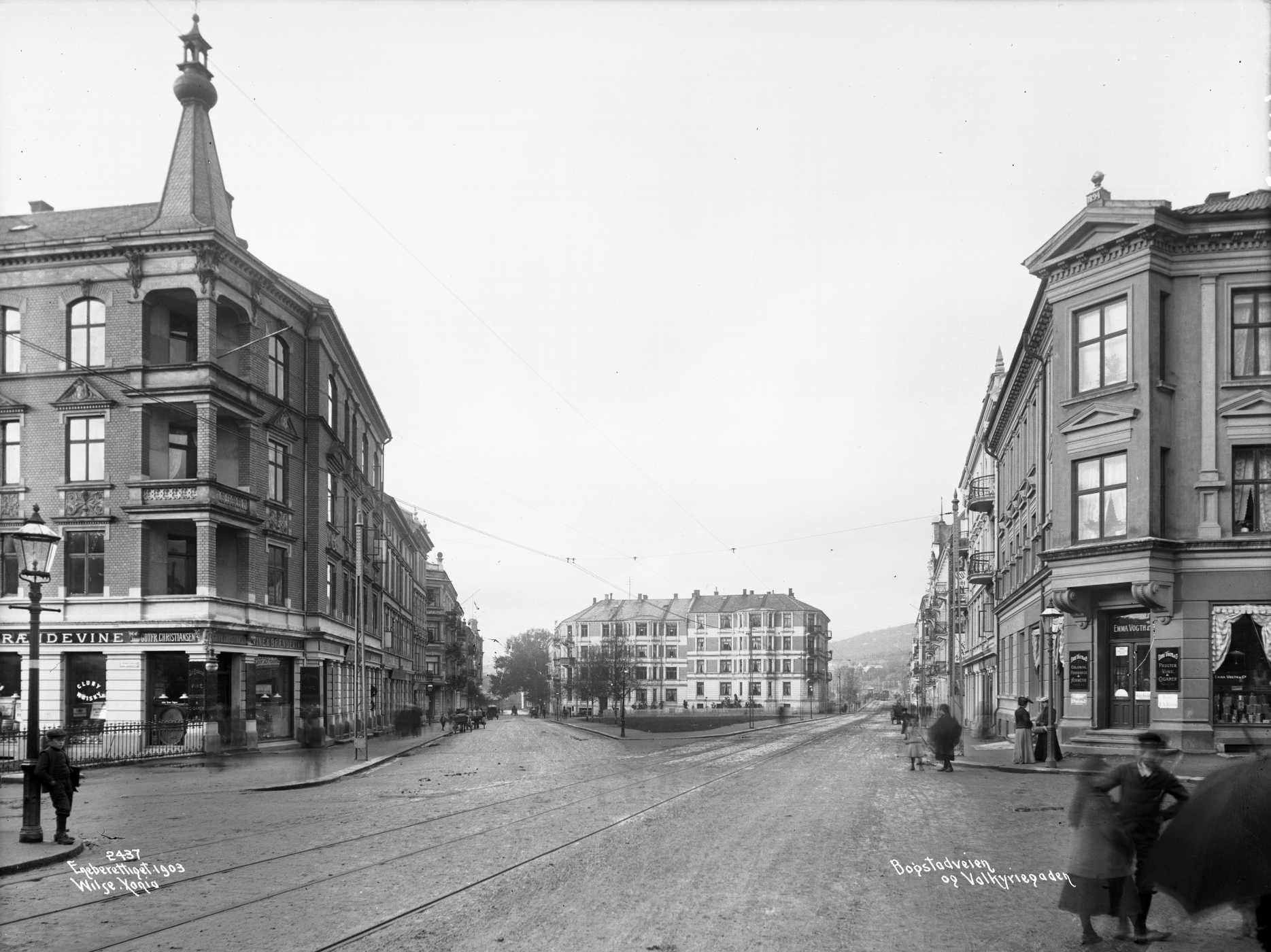
The tram line reached Majorstuen in 1894, and four years later the Holmenkollen Line – one of Oslo’s first suburban railways – was extended down to the same station. Because many passengers had to change trains at Majorstuen, people soon began asking for a direct underground connection to the city center.
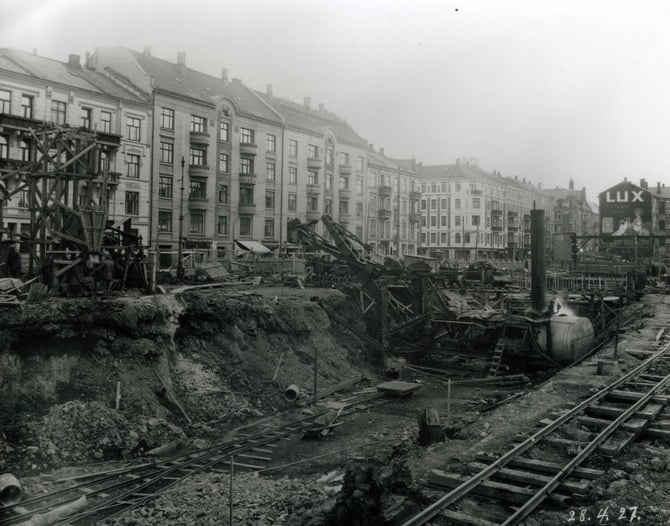
In the autumn of 1912, construction began on a 2-kilometre tunnel through the clay beneath the city. The ambitious project aimed to place the small capital of Christiania (the former name of Oslo) among the ranks of modern metropolitan cities such as London, Paris, Berlin, Budapest and New York.
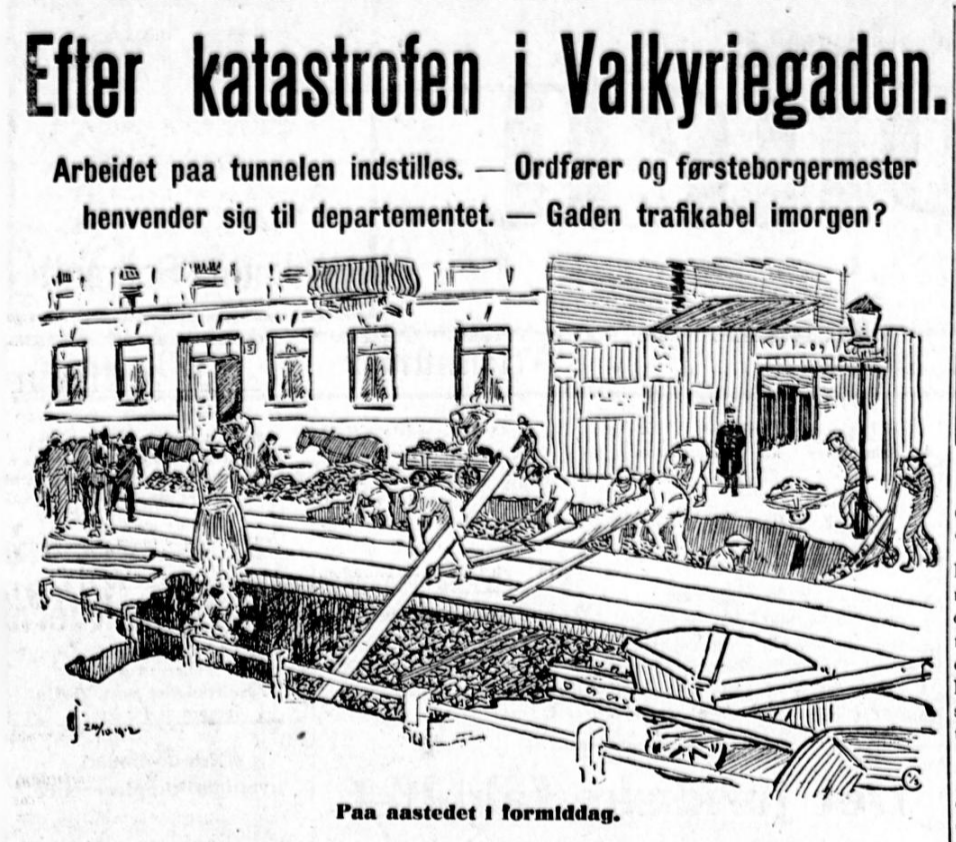
On 23 October 1912, however, a dramatic accident occurred. A loud roar echoed through the area – not from dynamite, but from 800 cubic metres of earth collapsing into a deep cavity. A tram had just passed moments earlier, and the tram tracks were left hanging “like a bridge over the gaping hole.” It was remarkable that no one was killed. The prestigious project suddenly turned into a public scandal, and construction stopped until compensation for the extensive structural damage to nearby buildings had been settled.
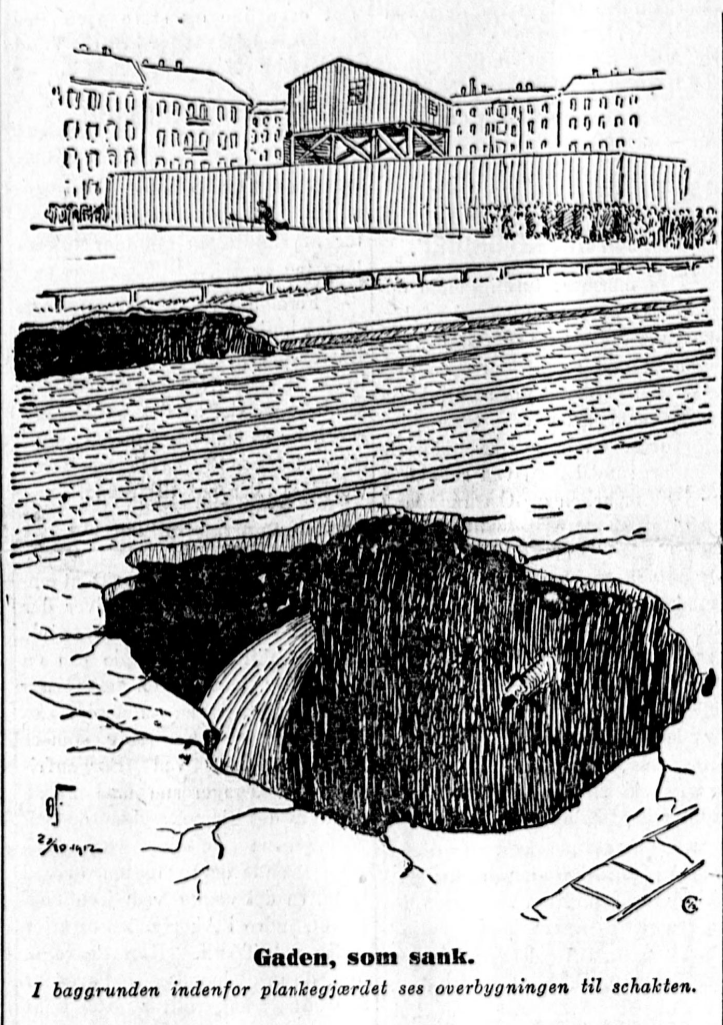
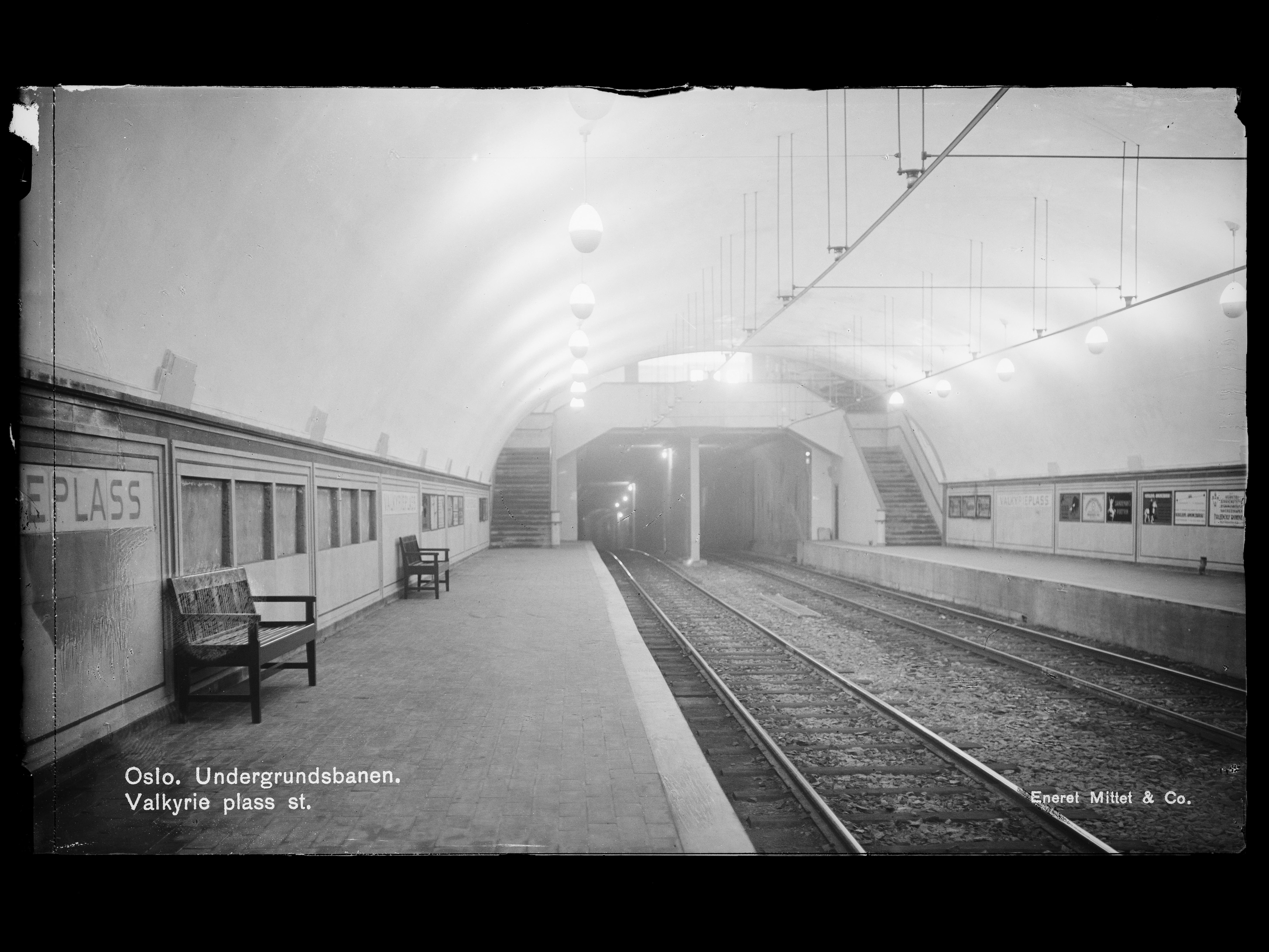
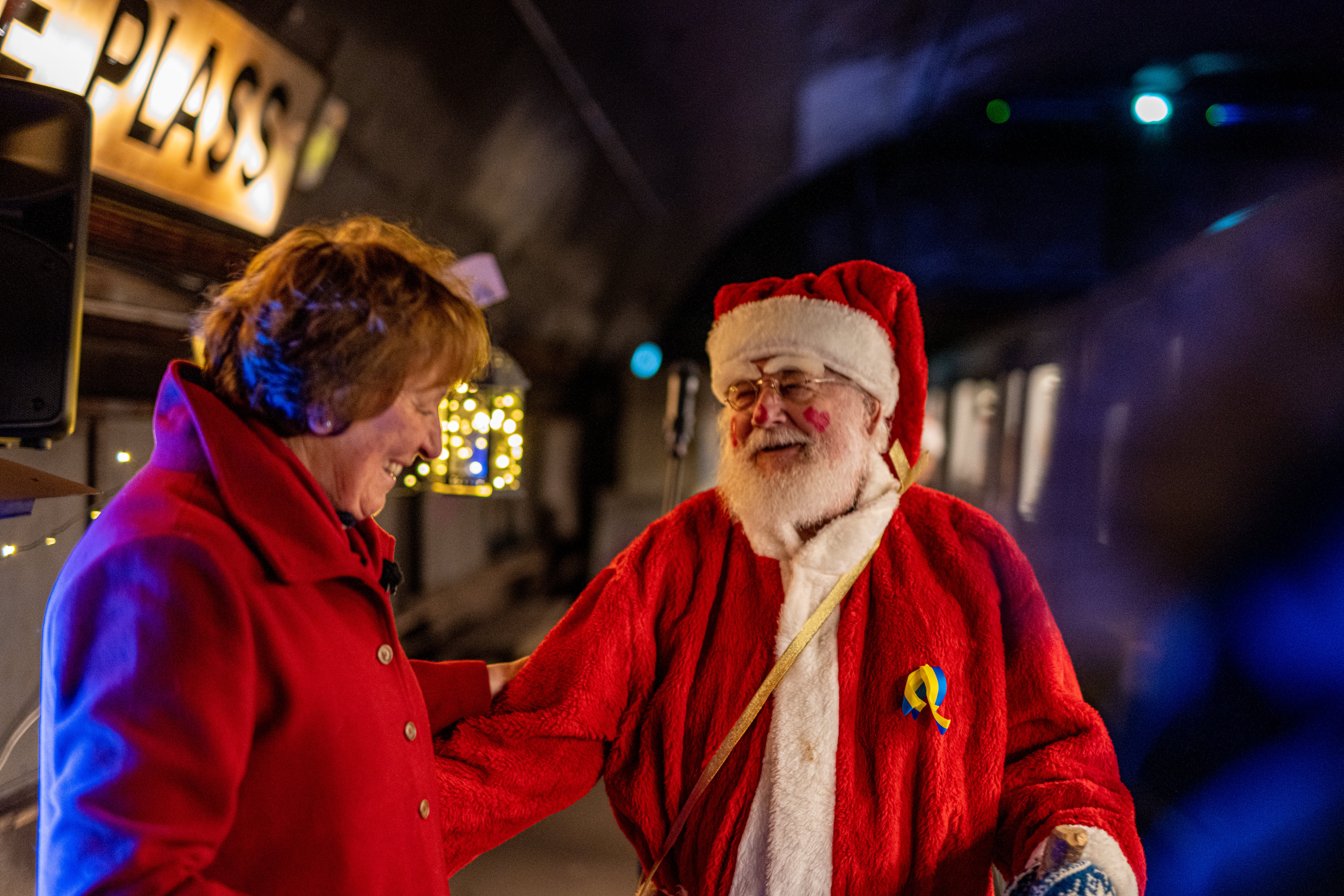
Once the excavation existed, planners decided they might as well build a station there. After 16 years of construction challenges, Valkyrie plass Station finally opened, designed in Neoclassical style by architect Kristofer Lange. The station closed in 1985 because it was too close to the nearby Majorstuen station and because its platforms could not easily be extended. Since then it has remained in darkness underground – except for Christmas decorations that have lit it up each winter since 2012. Many people became curious about the abandoned station after seeing it in the Norwegian TV series “Valkyrien” (2017).
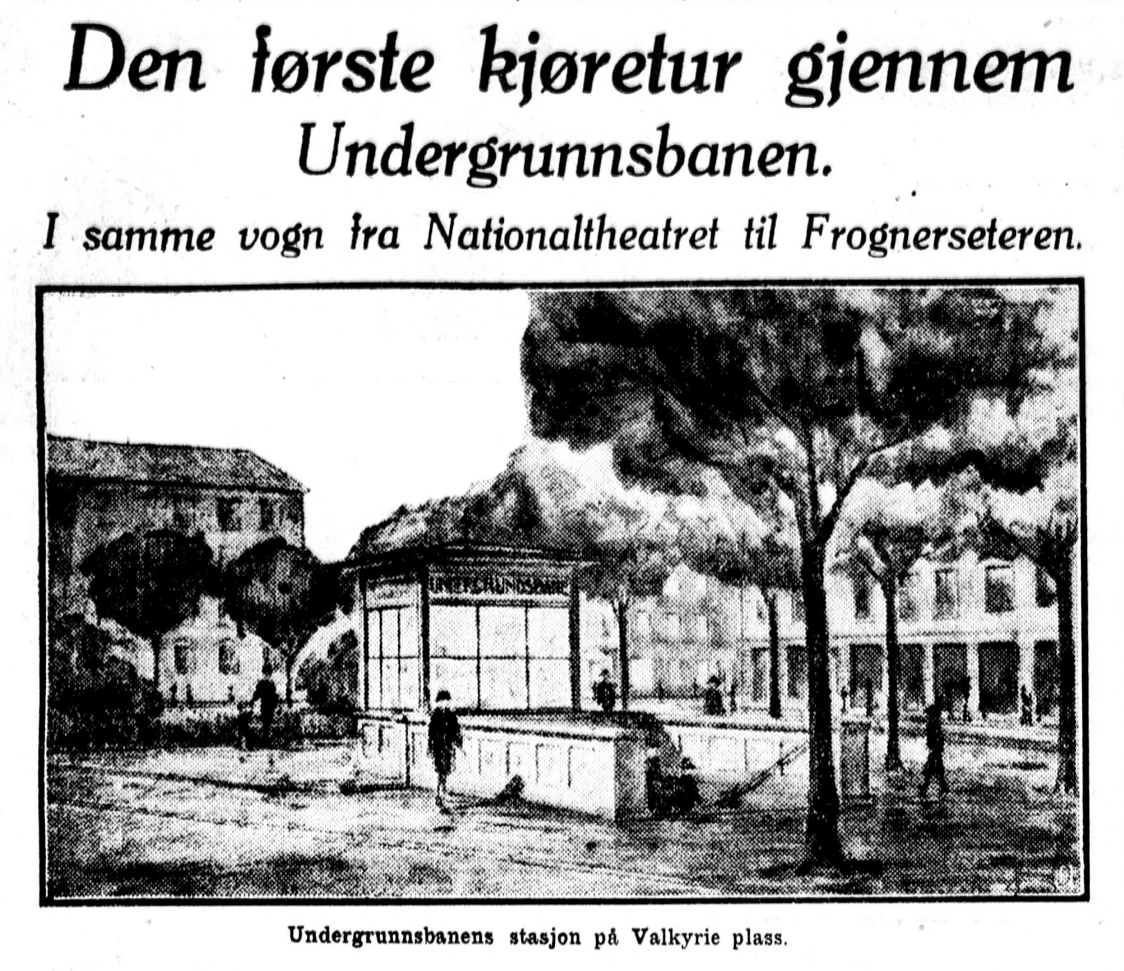
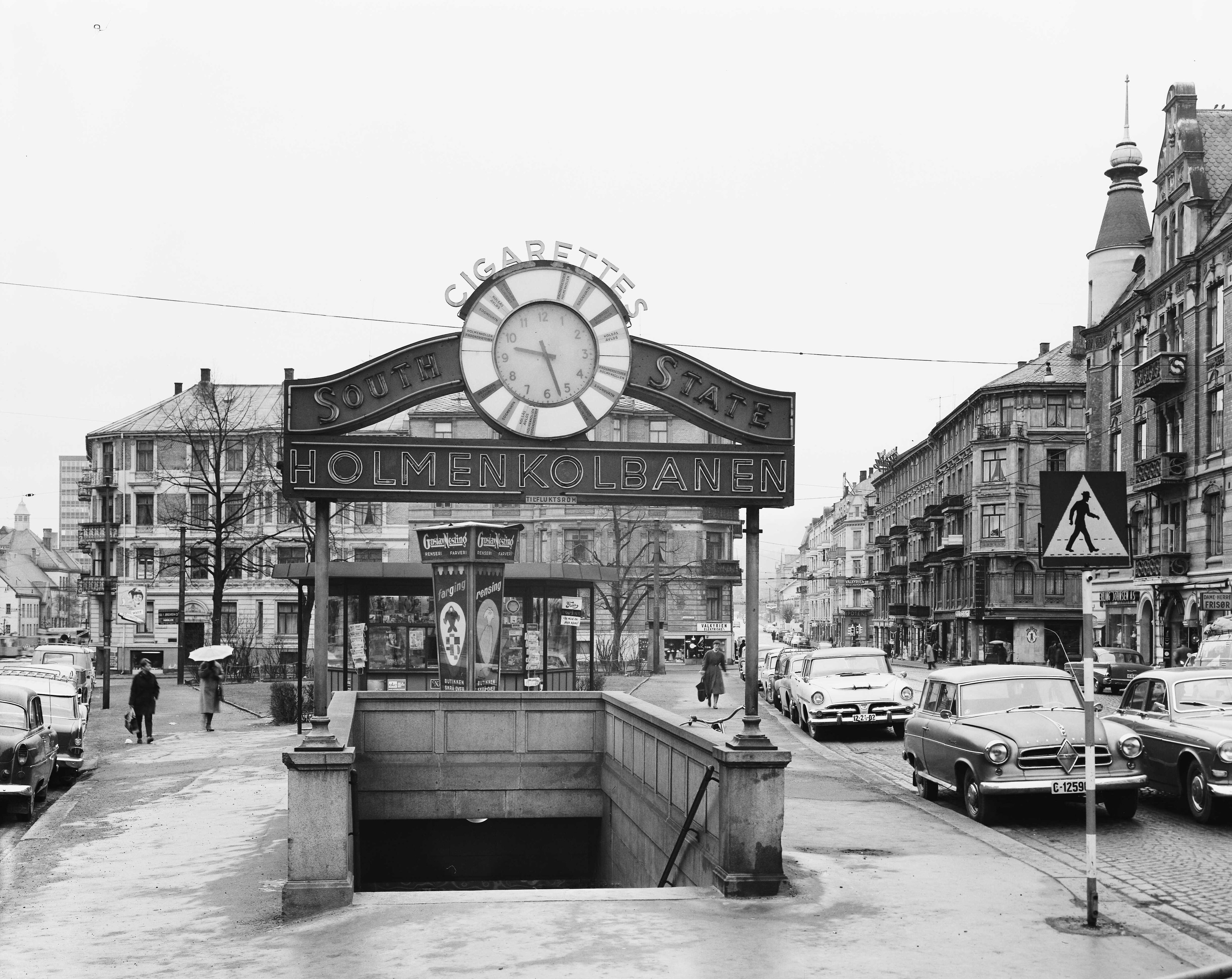
Above ground, the square has also changed over time. At one point there were no public toilets nearby, and the area became so unsanitary that locals jokingly called it “Lasaron Park” (after the Norwegian word for a tramp or drifter). Later, new lawns were planted, and the square became a popular romantic meeting place, earning the nickname “Widows’ Park.”
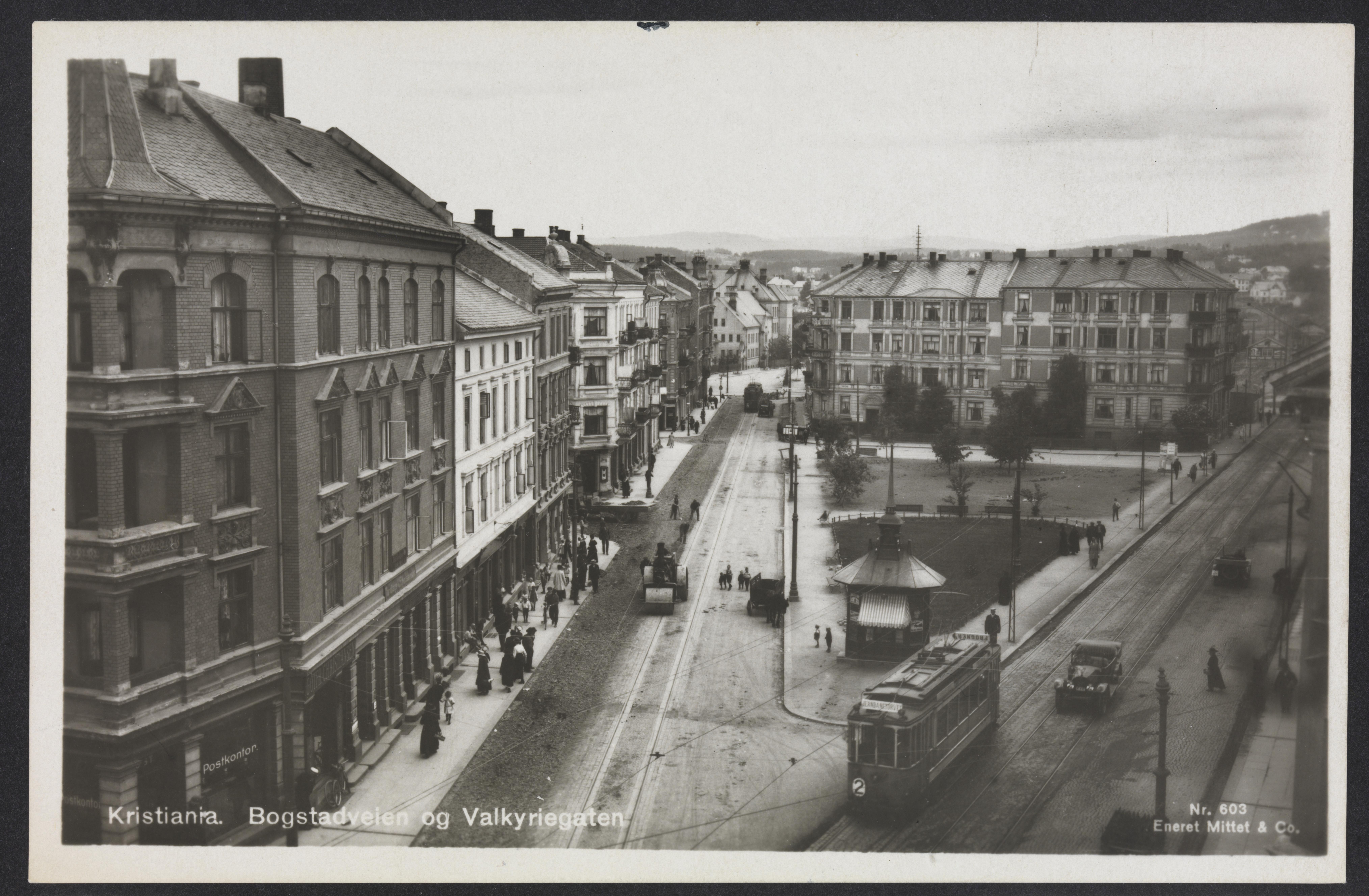
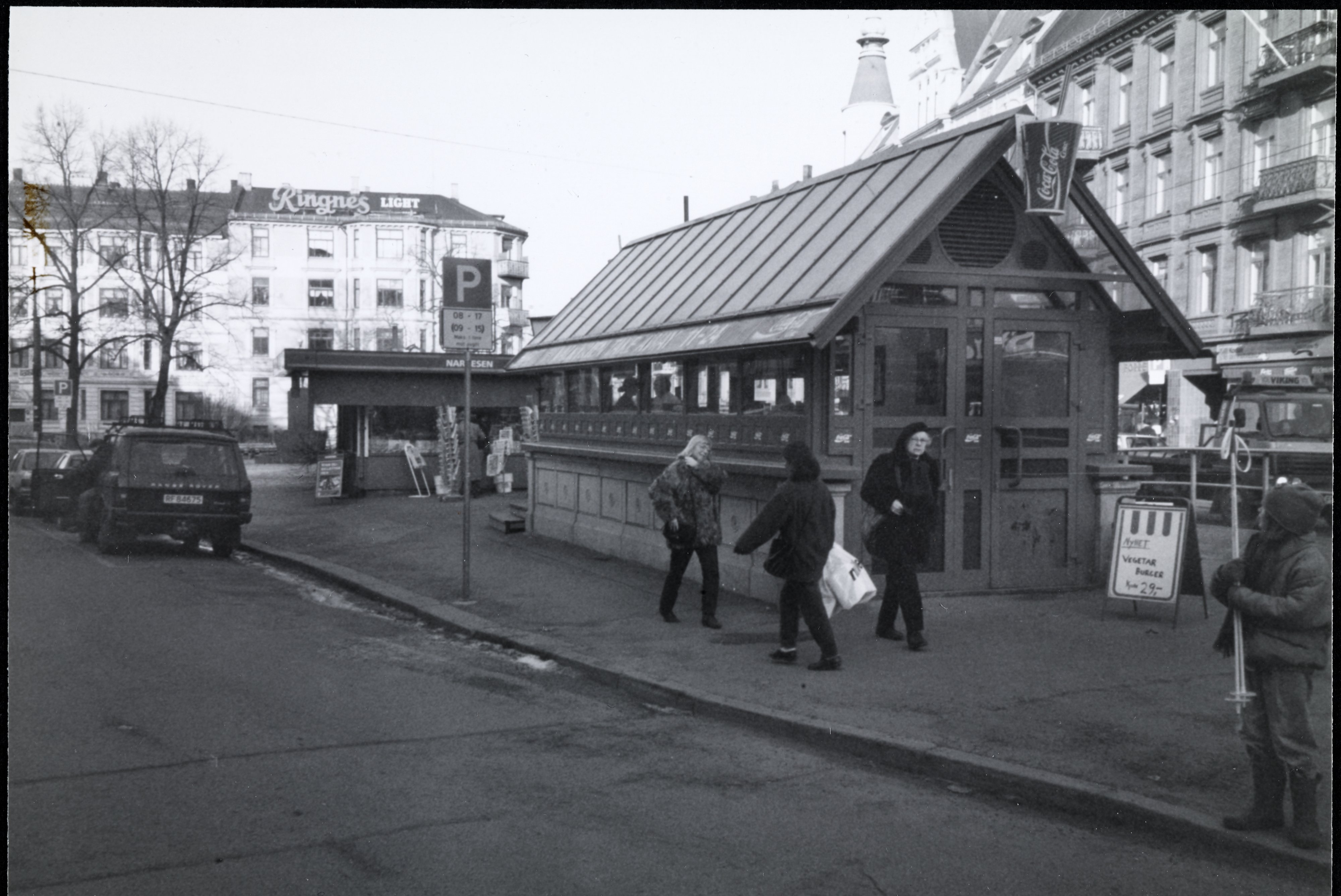
The name Valkyrie Square refers to the Valkyries of Norse mythology – the warrior maidens who serve drinks to the gods and fallen warriors in Valhalla. Over the years there have also been attempts to introduce outdoor cafés on the square. In 1992, journalist Bjørn Brøymer humorously described the small food kiosk that once stood above the station entrance:
“The fast-food stand that now occupies this fine open square in Oslo is a temple of grease and national sausages. Step inside this sanctuary of French fries and you are immediately assaulted by a smell of fat so strong it clings to your clothes.”
Today, Valkyrie Square appears as an attractive small park surrounded by beautiful historic apartment buildings. It’s easy to see why the neighbourhood is sometimes nicknamed “Little Paris.”
Sources
«Valkyrienes plass», by Bjørn Stendahl, «Kavringen» (2021) No. 99
«Bogstadveien» (2022), by Finn Holden, Dreyers forlag
«Vidundergrunden», «T-banen» (2023), by Erlend Grøner Krogstad, Cappelen Damm
«Nå er Valkyrien stasjon pyntet til jul», by Tom Vestreng, Dagsavisen (4th Dec. 2018)
Valkyrie plass, Oslo Byleksikon
«Tempel av fett», by Bjørn Brøymer, Aftenposten (23rd Oct. 1992)
«Lille Paris», by Sven Krohn, «En gammel bydels historie» (1976)
On the 9th of April 1940, Norway was invaded by Germany and remained under German occupation for more than five years. For the busy shopping street here in Bogstadveien, the occupation created several challenges.
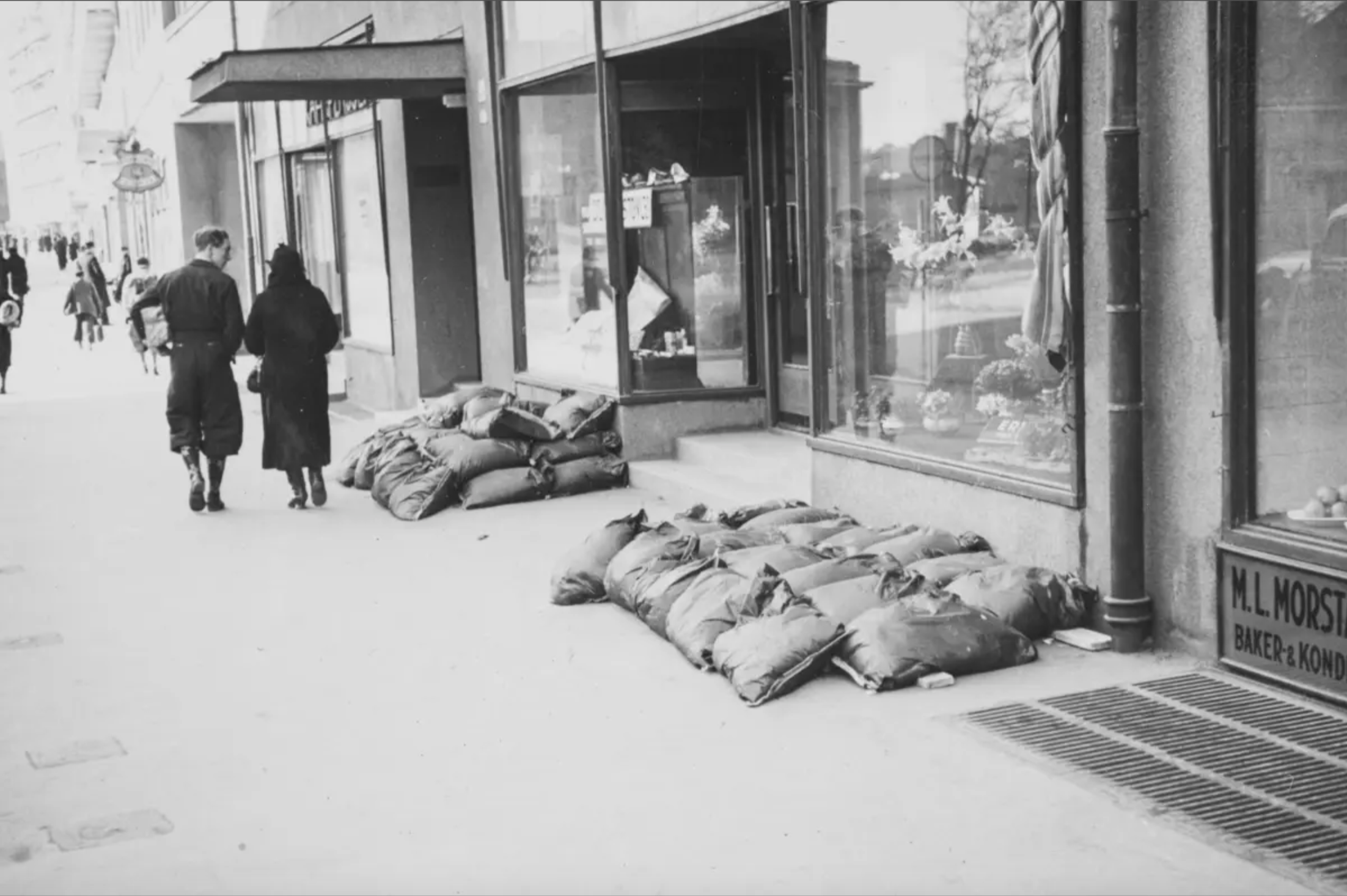
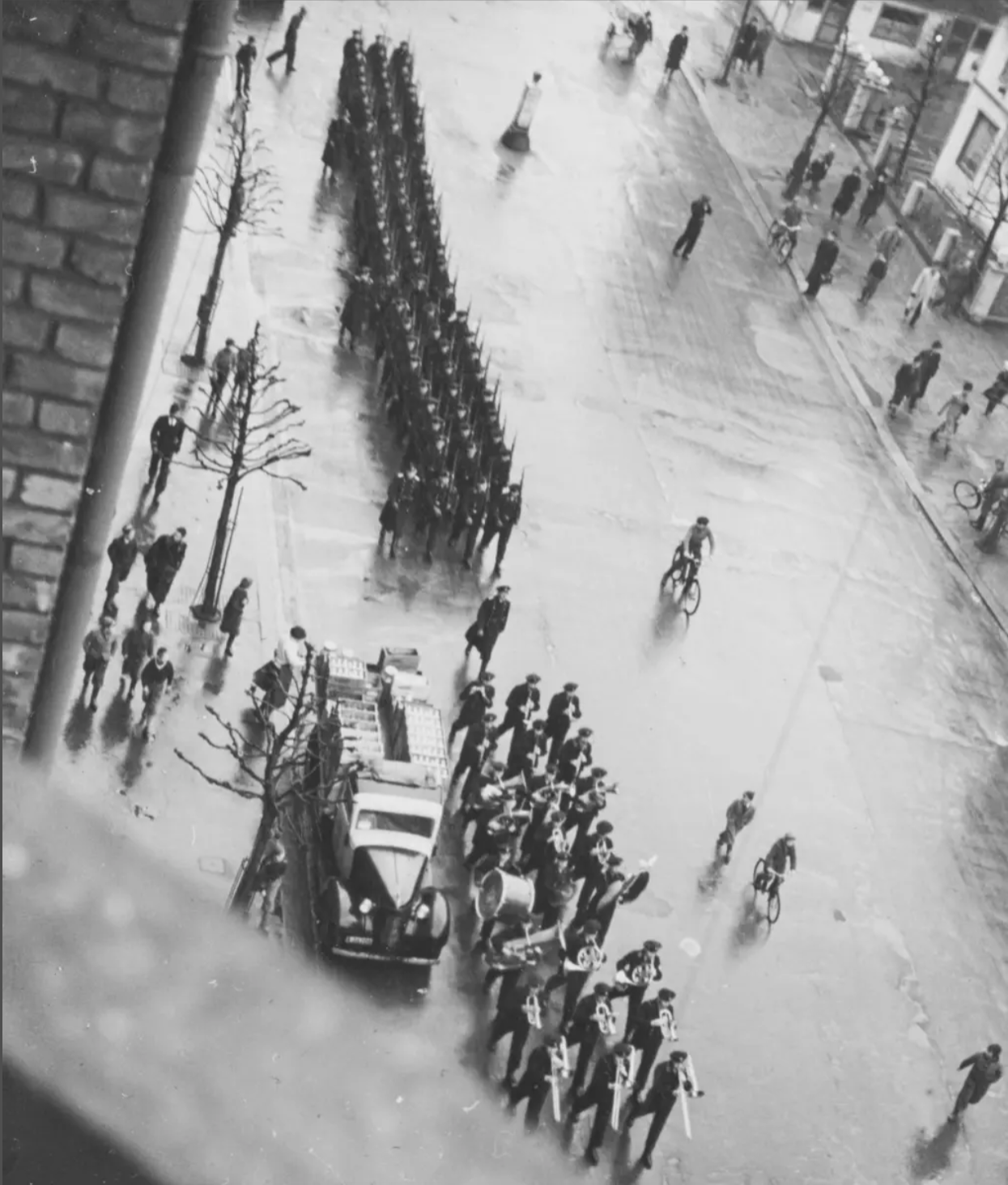
At first, goods from overseas colonies disappeared from the shops—products such as sugar, coffee, cocoa, syrup, bananas and oranges. Soon there was also a shortage of Norwegian foods, including meat, pork, eggs, fish and vegetables. Most of what did reach the stores was either rationed or replaced with substitute products.
Because goods were scarce, shops simply sold whatever they could obtain. Advertising became unnecessary, and long queues formed outside many stores. A large informal exchange market developed, where people bought items they did not need, in order to trade them for things they did.
Other essentials such as clothing and shoes were also rationed, leading to widespread repair and reuse. Shops began selling second-hand goods and offering repair services, and businesses specializing in shoe repairs and resoling opened in the area.
Fuel shortages were another challenge. As a result, the city’s tram company introduced freight trams to transport goods through Oslo.
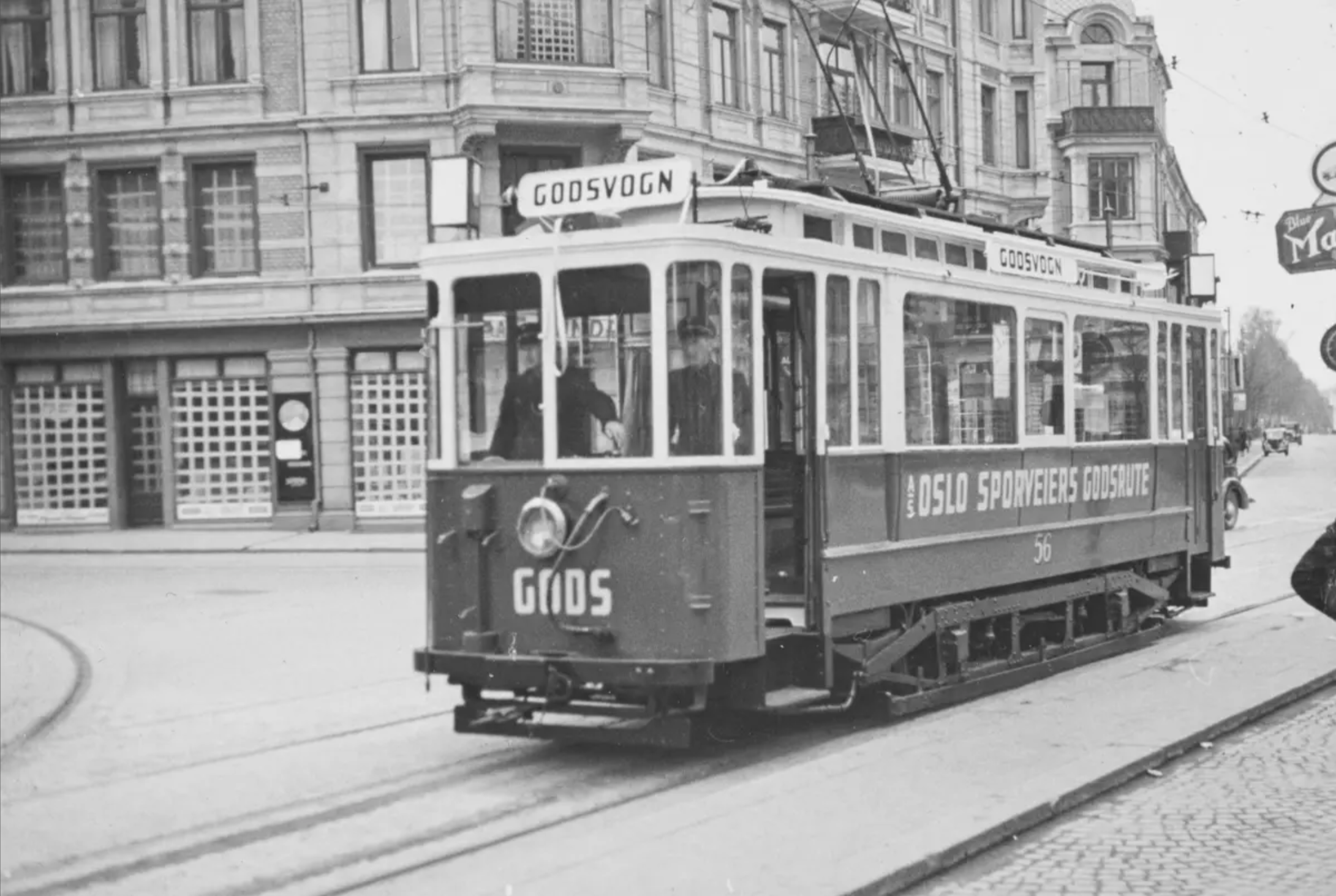
Housing conditions were also difficult. Very few new homes were built during the war, while German forces needed accommodation. Many private homes – including apartments here in Bogstadveien – were requisitioned.
Among the wartime evictions, the persecution of Jewish residents stands apart. In 2015, Stumbling Blocks (Snublesteiner) were placed outside Bogstadveien 60 in memory of seven Jewish people who were arrested by Norwegian police and deported to their deaths.
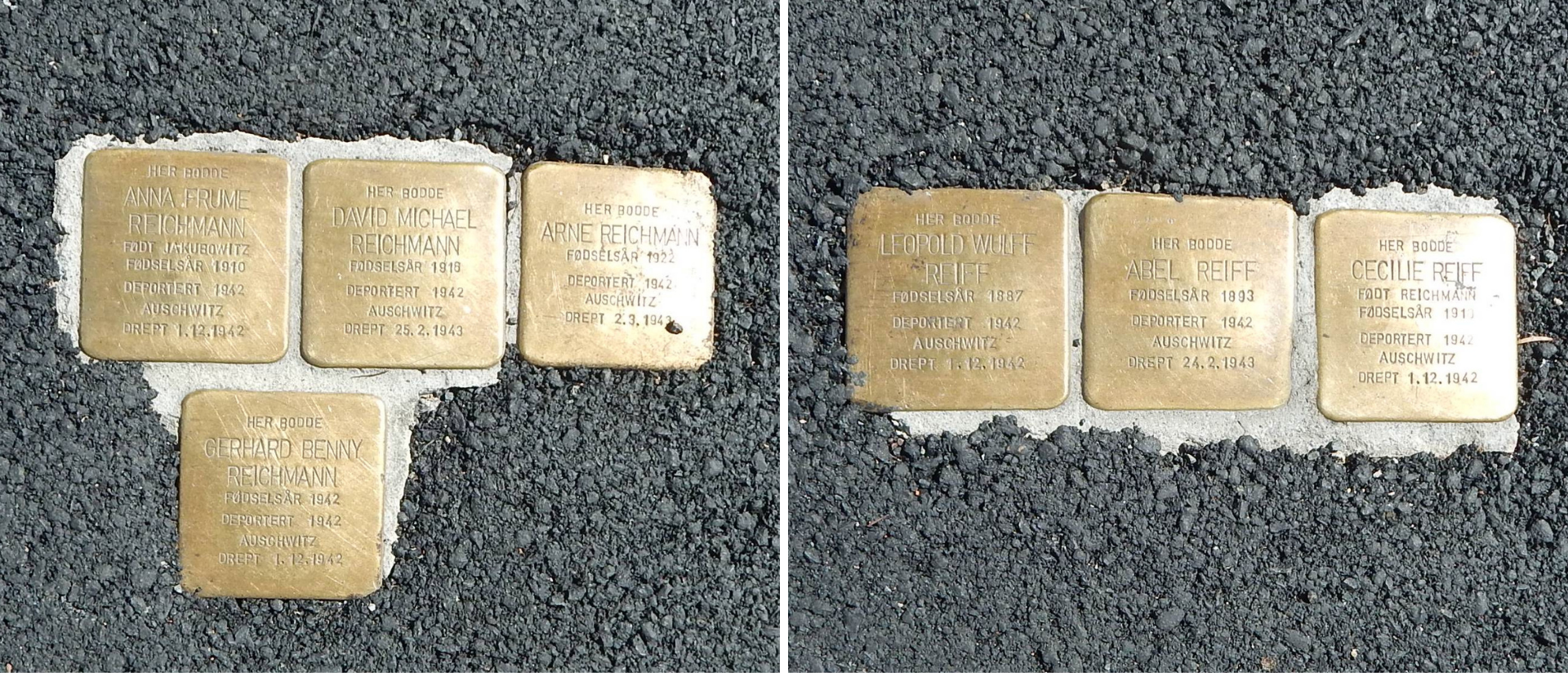
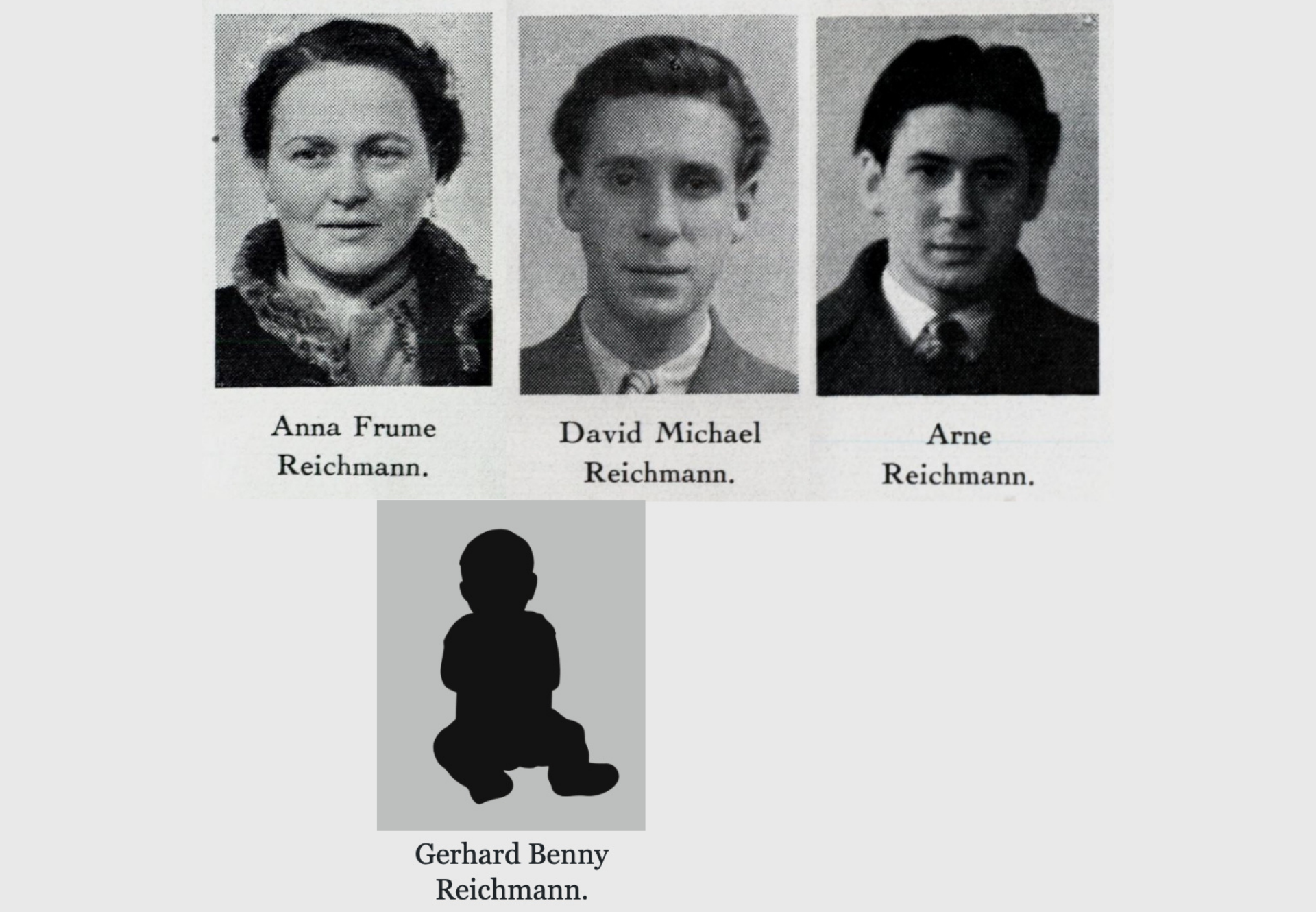
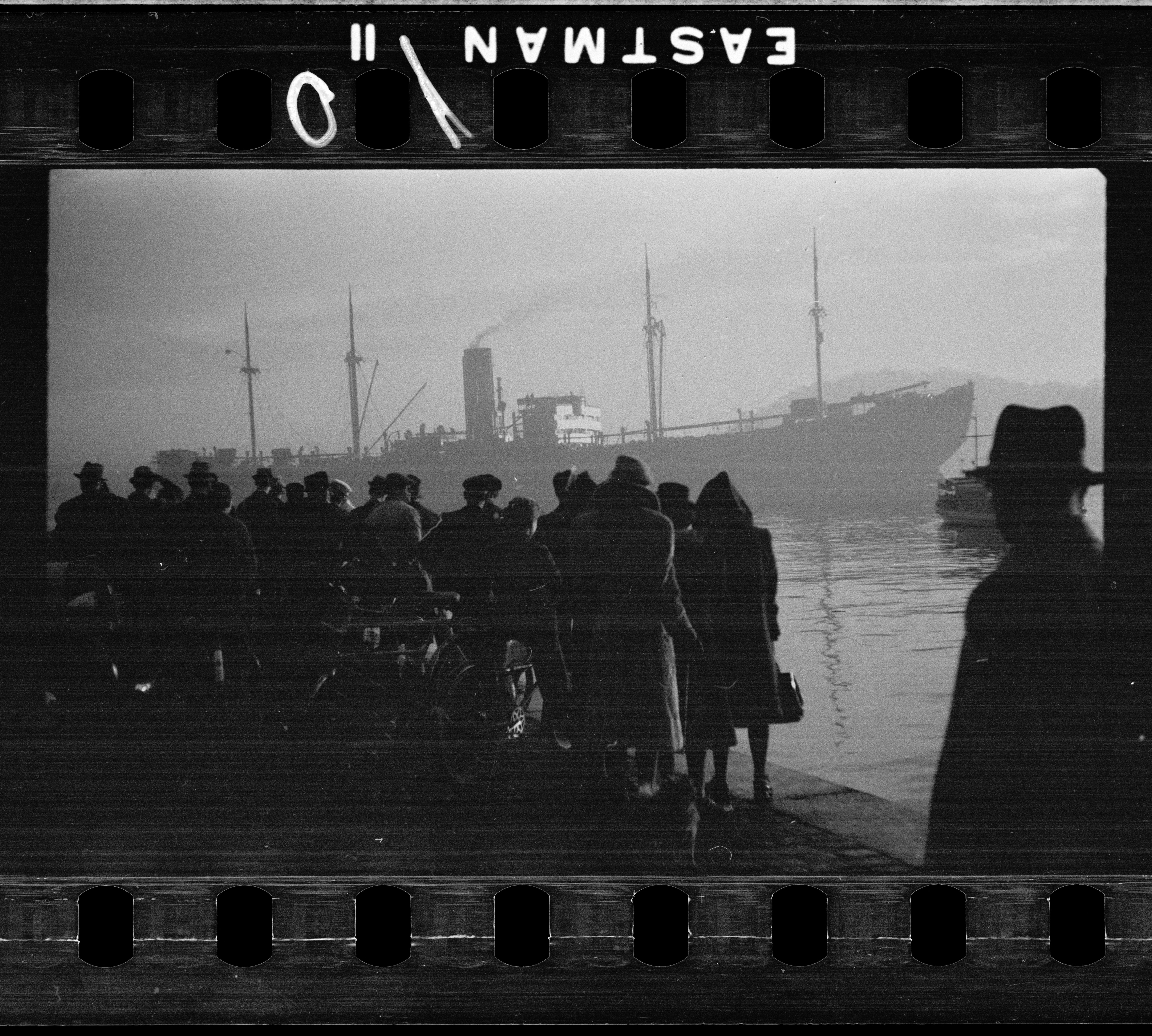
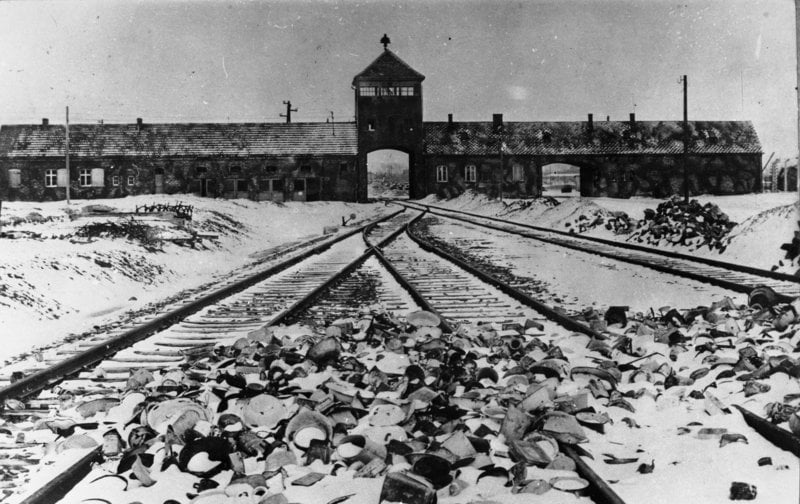
The Reichmann family lived in a second-floor apartment in this building. David Michael Reichmann (born 1916) was married to Anra Frume Reichmann (née Jacubowitz, born 1910), and they had a young son, Gerhard Benny (born 21 May 1942). David Reichmann ran a fruit and tobacco shop near Tøyen School. His brother Arne Reichmann (born 1922), who worked as an office clerk, also lived here. On the 26nd of November 1942, all four were deported on the transport ship Donau and murdered in Auschwitz.
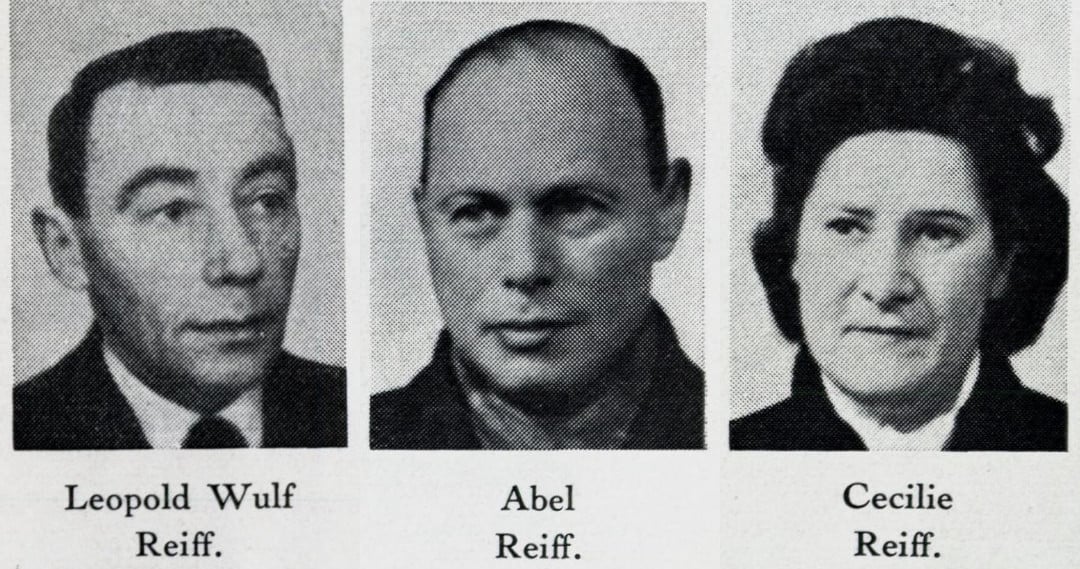
Also living in the building were the tailor Abel Reiff (born 1893), married to the Reichmann brothers’ sister Cecilie (born 1910), and Leopold Wulff Reiff (born 1887), who ran a clothing workshop in nearby Lørenskog. These three were also deported on the Donau and killed in Auschwitz.
According to Jewish tradition, a person dies twice: first in physical death, and again when their name is spoken or remembered for the last time. In the early 1990s, the German artist Gunter Demnig used this idea as the inspiration for the international memorial project “Stolpersteine” (Stumbling Blocks).
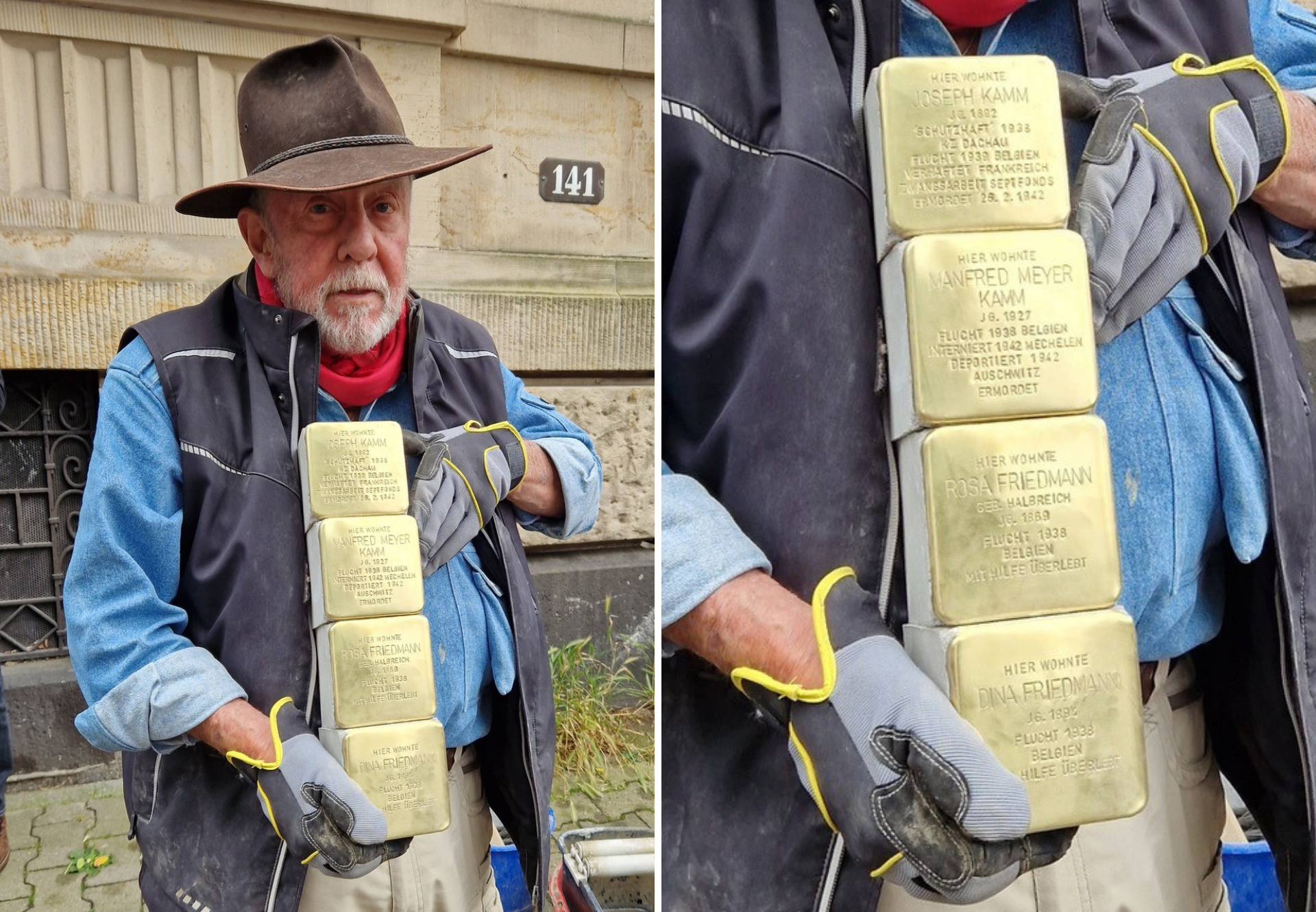
These small memorial blocks remind us that the Holocaust happened here as well, not only somewhere far away. When we “stumble” upon these plaques in the pavement, we are invited to remember that the names engraved on them once belonged to real people who lived their lives in this neighbourhood.
Do you know why the area here above Hegdehaugen is called Majorstuen?
In the 1750s, Michael Wilhelm Sundt (born 1729) leased a large estate of about 70 acres belonging to Nedre Blindern farm. Here, on the site where Majorstuhuset stands today, he built a small house. The timber building lay far from the city center, surrounded by open fields, with a stream running just behind it. Sundt was a respected man who achieved the rank of captain, and he also held the title of cavalry major. People therefore called him “the Major,” and his house became known as “Majorstua” – the Major’s house.
In 1759, the Major died at just 30 years old, but the place did not lose its popularity. It was turned into a roadside inn and tavern, a role it kept for many years. Here, weary citizens from Christiania could quench their thirst with a cold beer. Large, leafy poplar trees provided welcome shade on hot summer days.
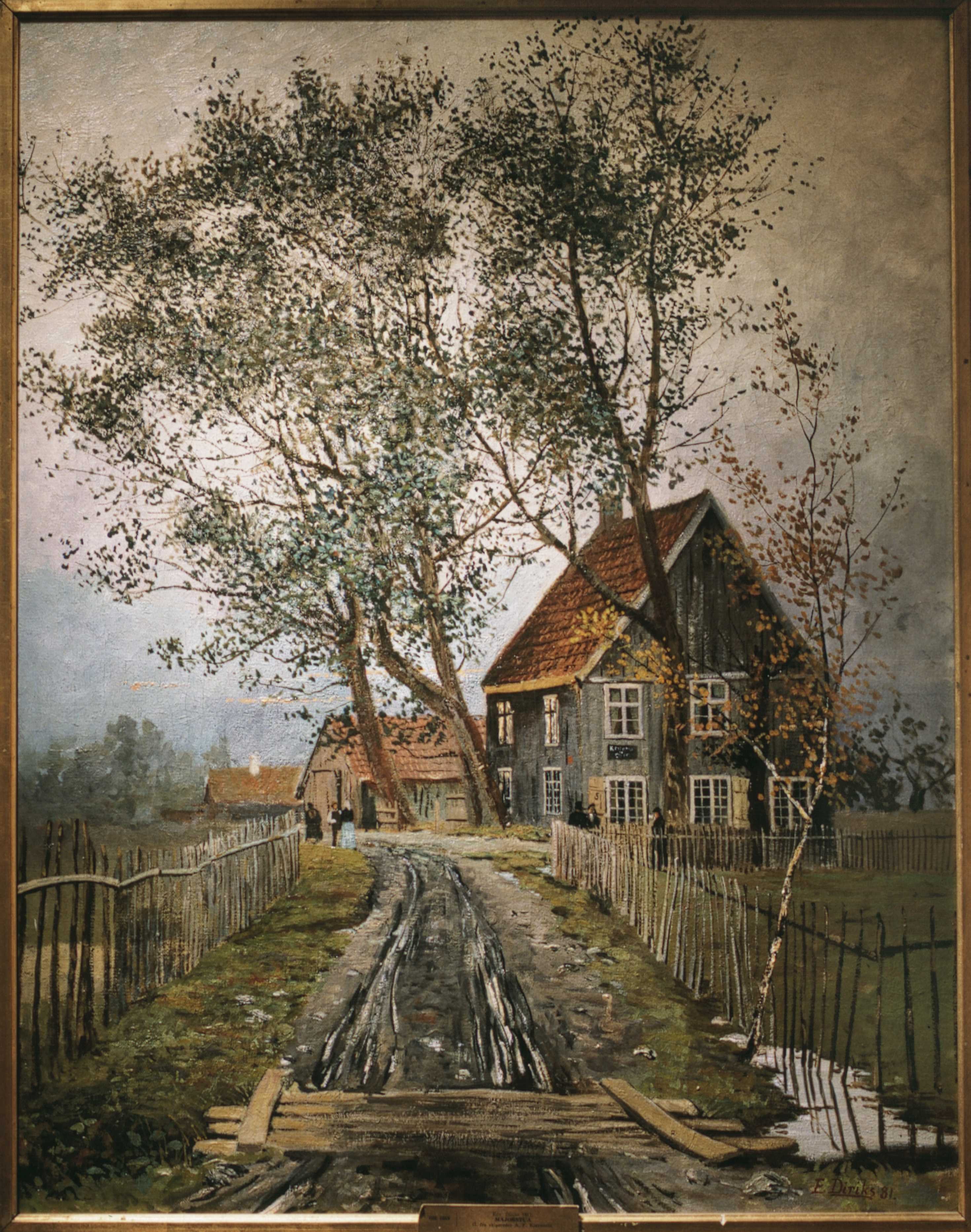
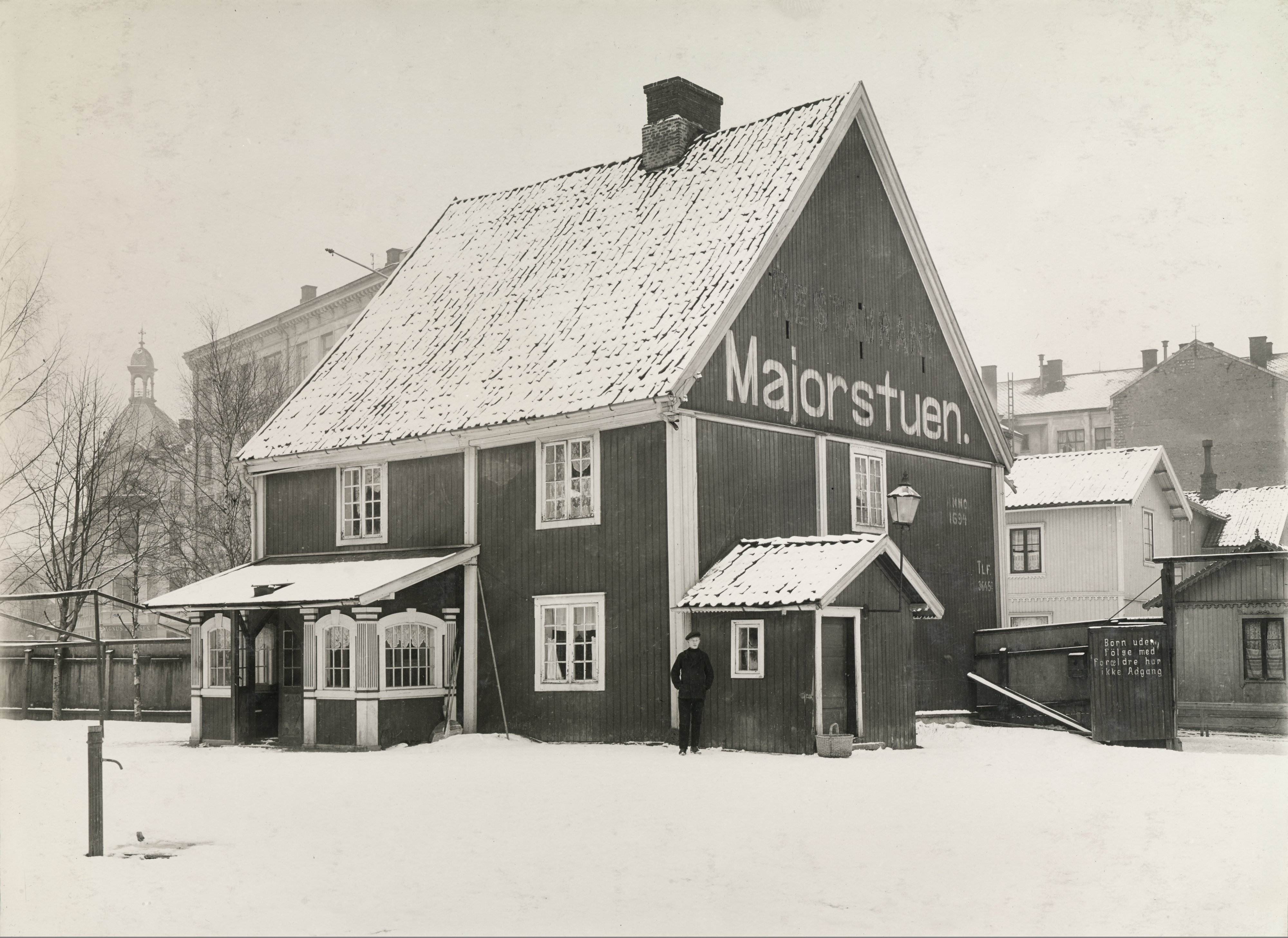
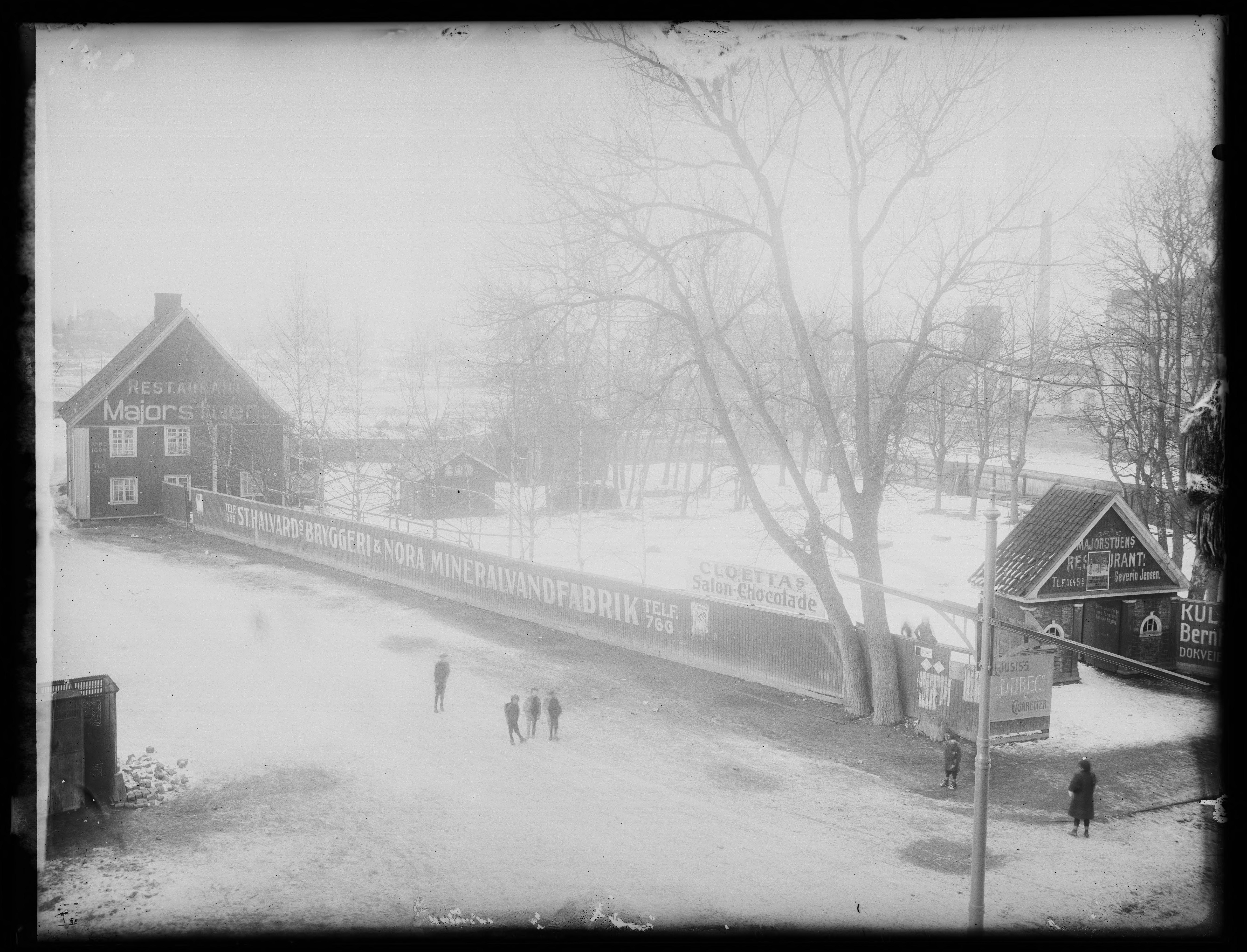
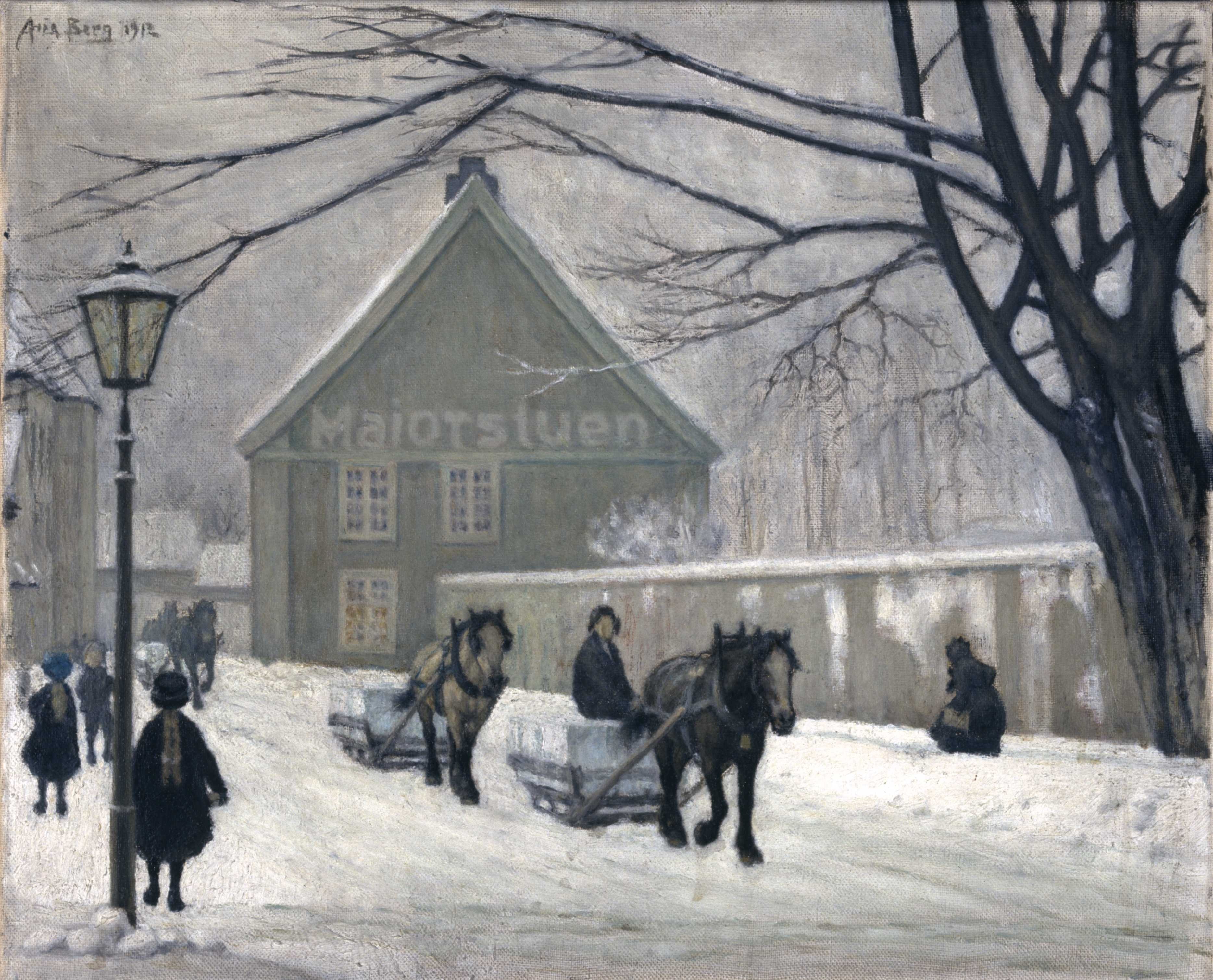
As late as 1898, the writer Thomas P. Krag remarked on how unusual the place seemed:
“How strangely Majorstuen lay there, so lonely on the wide plain, shaded by two or three tall trees. It reminded one of houses in remote places, the kind sung about in old ballads. (…) the old innkeeper (…) served beef and chops with some red wine that made our heads heavy. Later in the evening, three Russian sailors came stumbling in, smelling of crayfish and pepper, still crunching shells between their teeth and speaking in an incomprehensible language. After a while they left; but the Major eventually sat down with us, drank himself drunk on his own rough wine, and cheated us at cards. (…) When we had grown cheerful and the moon rose, we walked along the great country road, now and then singing to the moon.”
But the peaceful days did not last. When the Holmenkollen line was built in 1898, Majorstuen became a popular destination, and in 1914 the old timber house was moved to make room for an expanded station area.
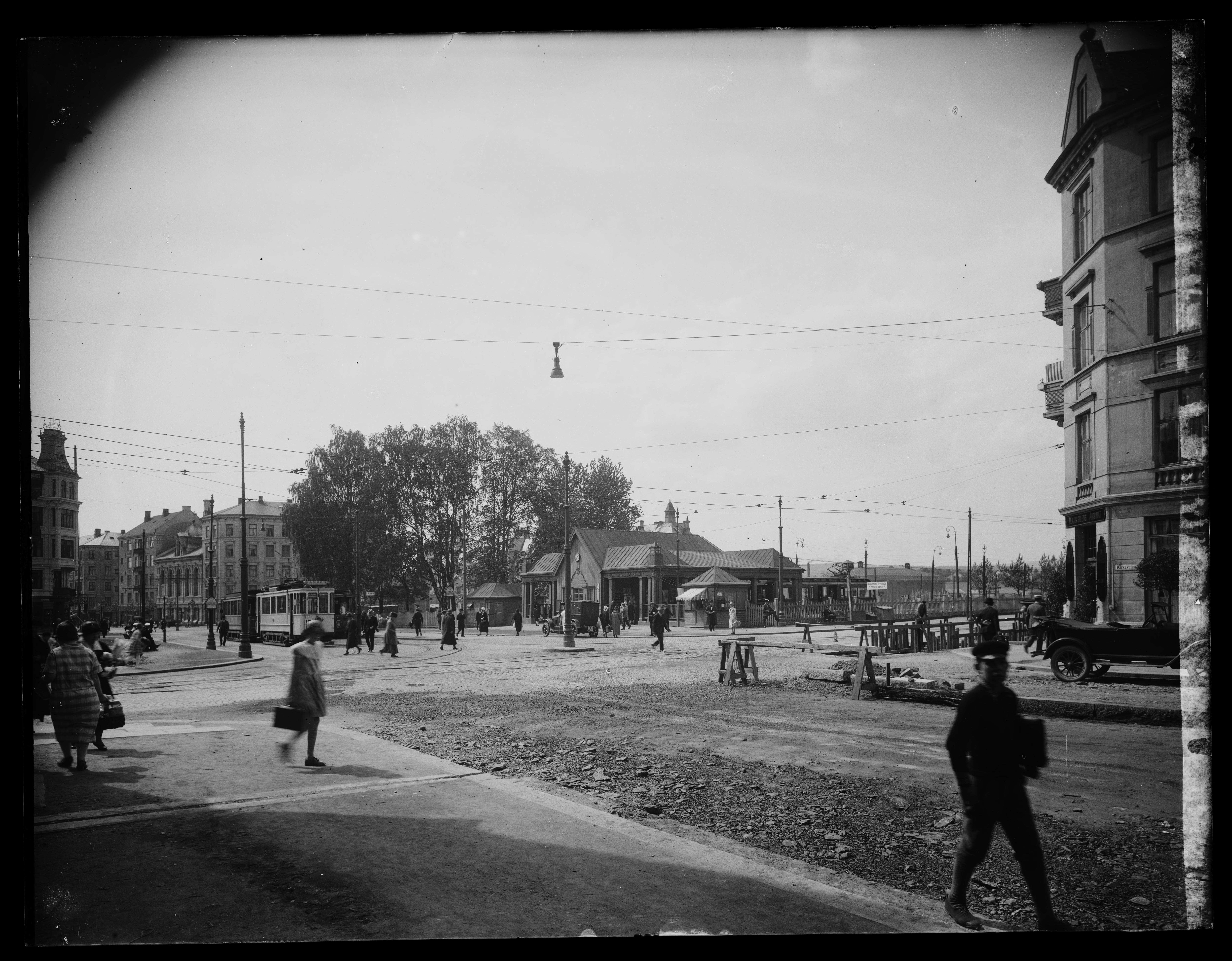
The monumental Majorstuhuset was built here between 1928 and 1932 in neoclassical style, designed by architect Kristofer Lange. Cafés and meeting places in the area are still popular today, but the quiet rural charm has been replaced by what some would call a “traffic chaos.”
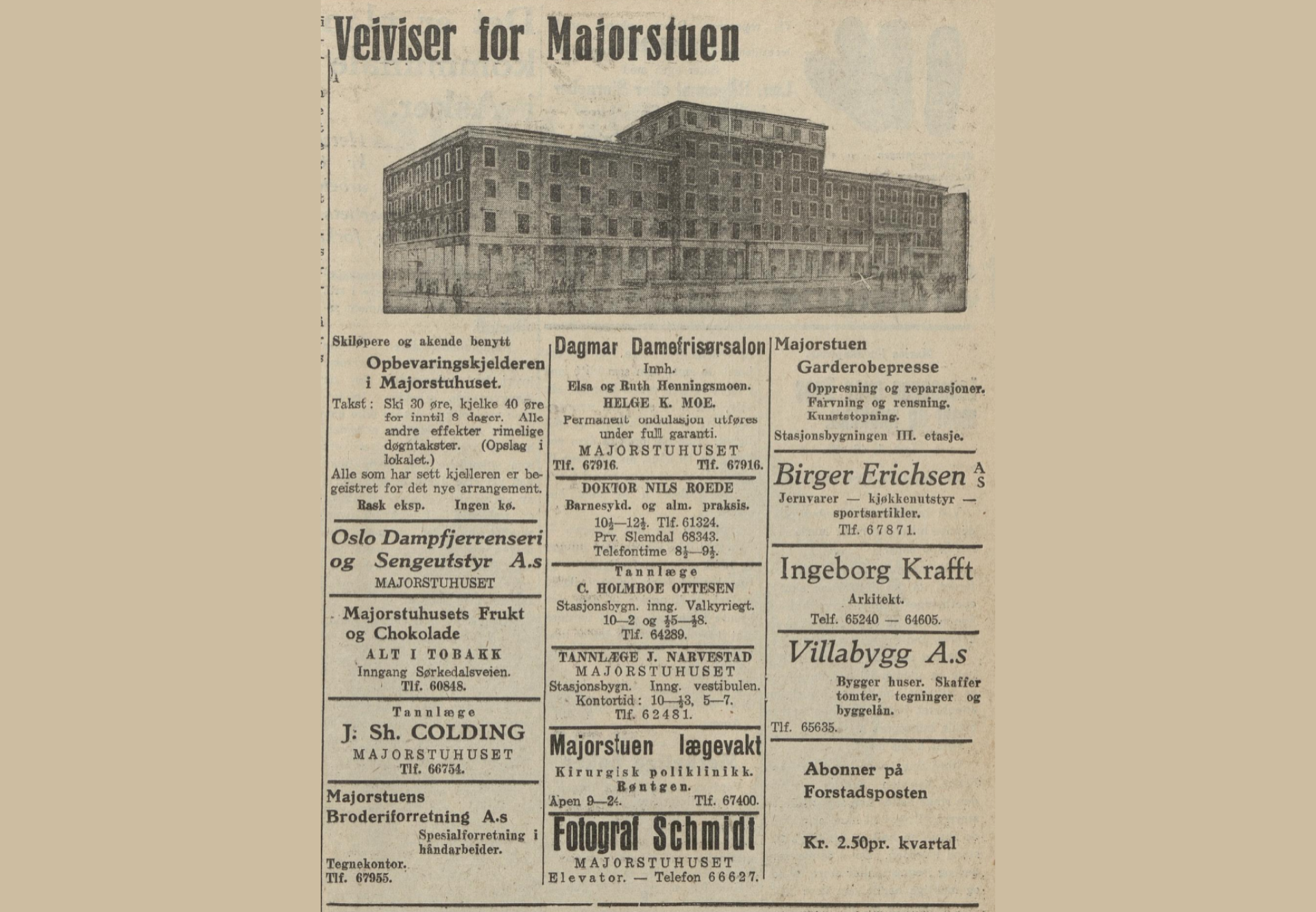
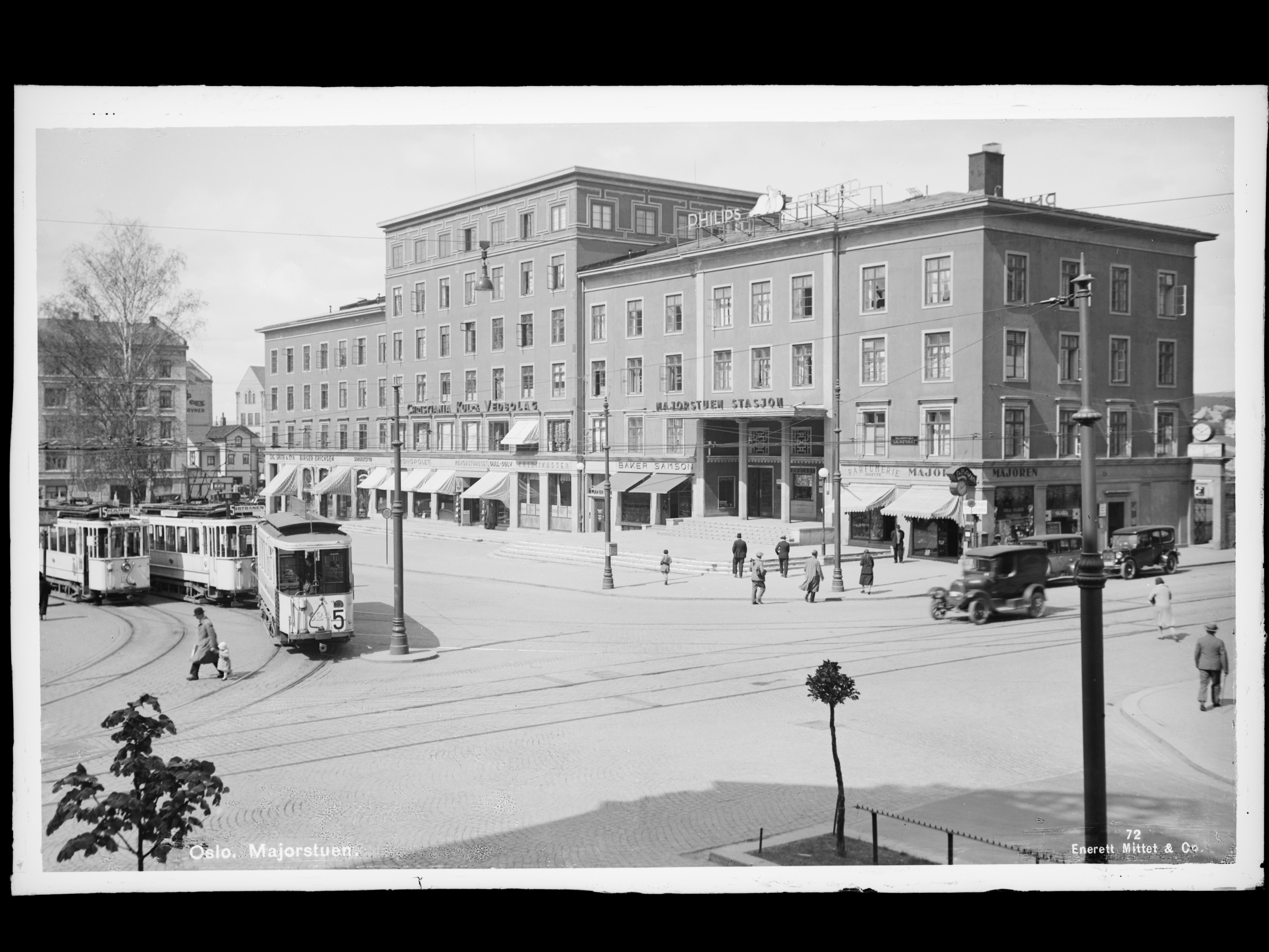
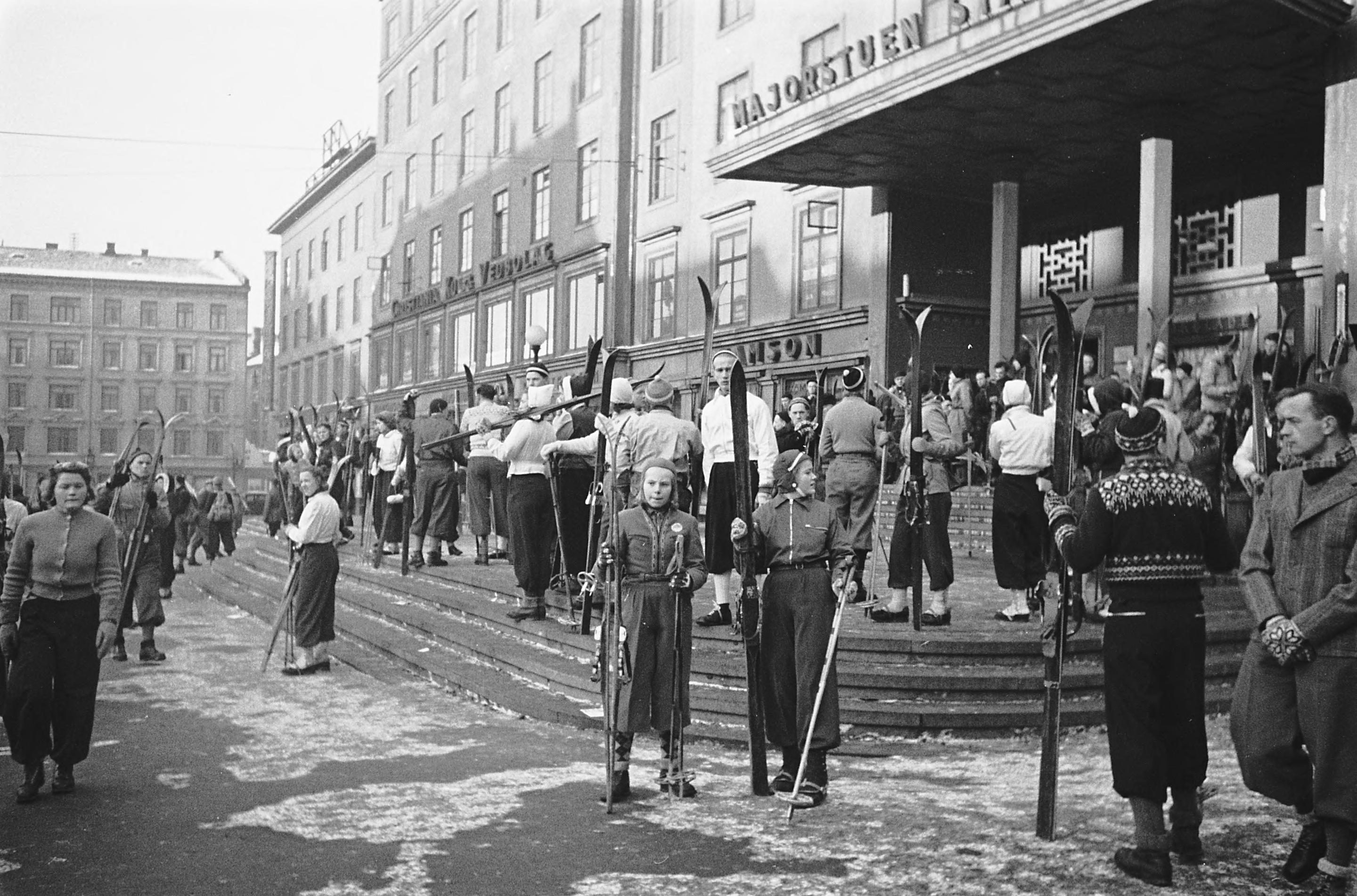
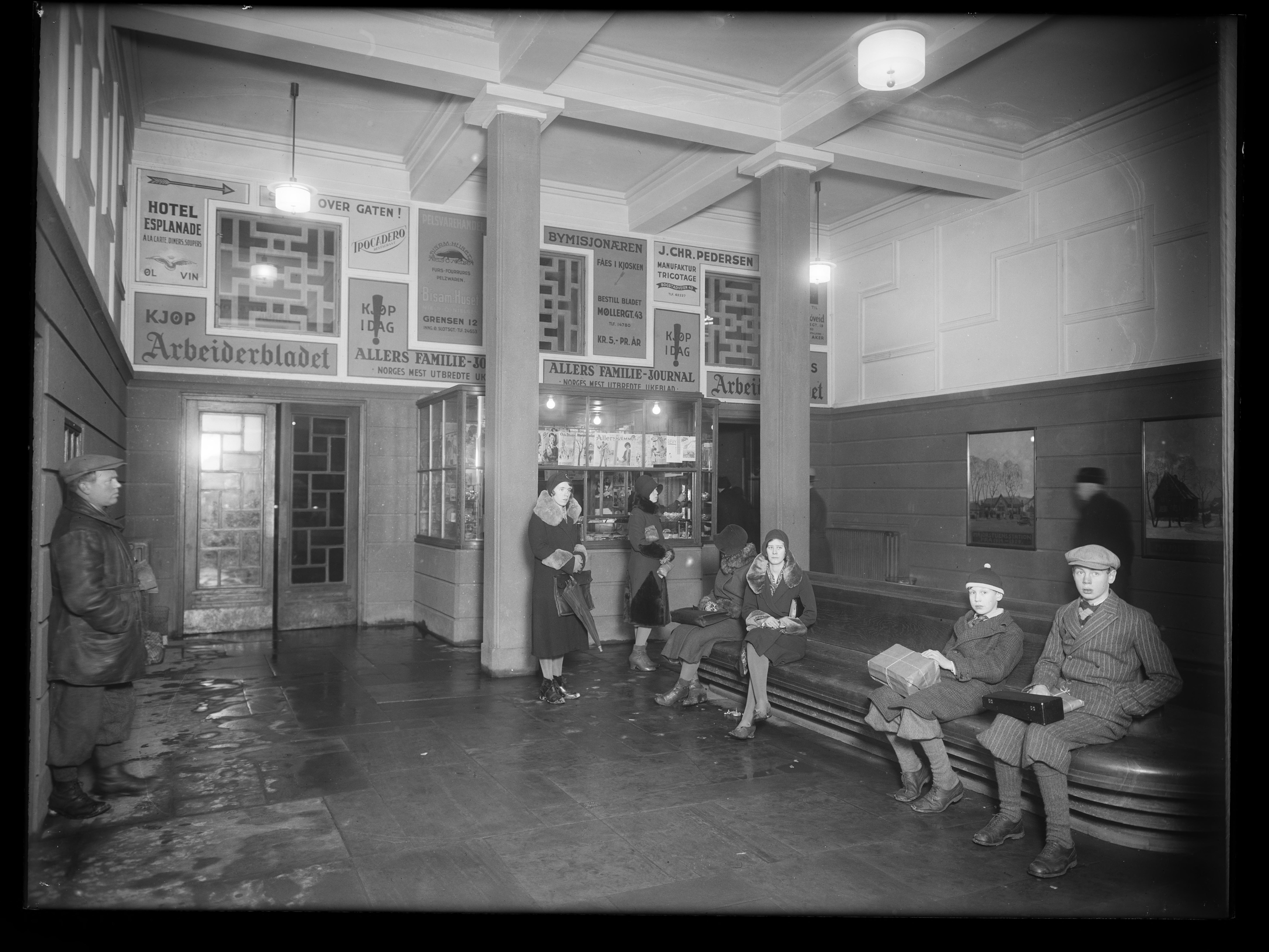
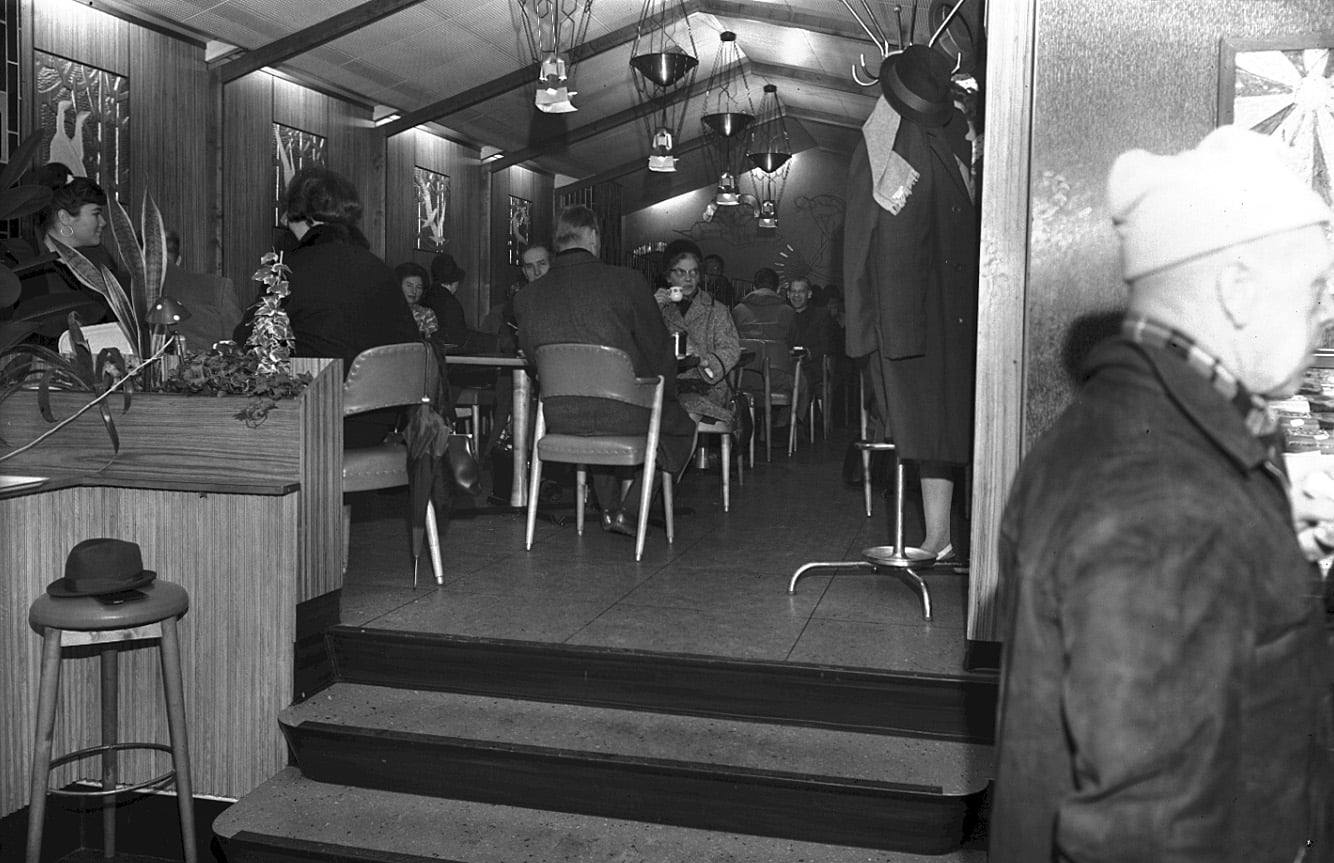
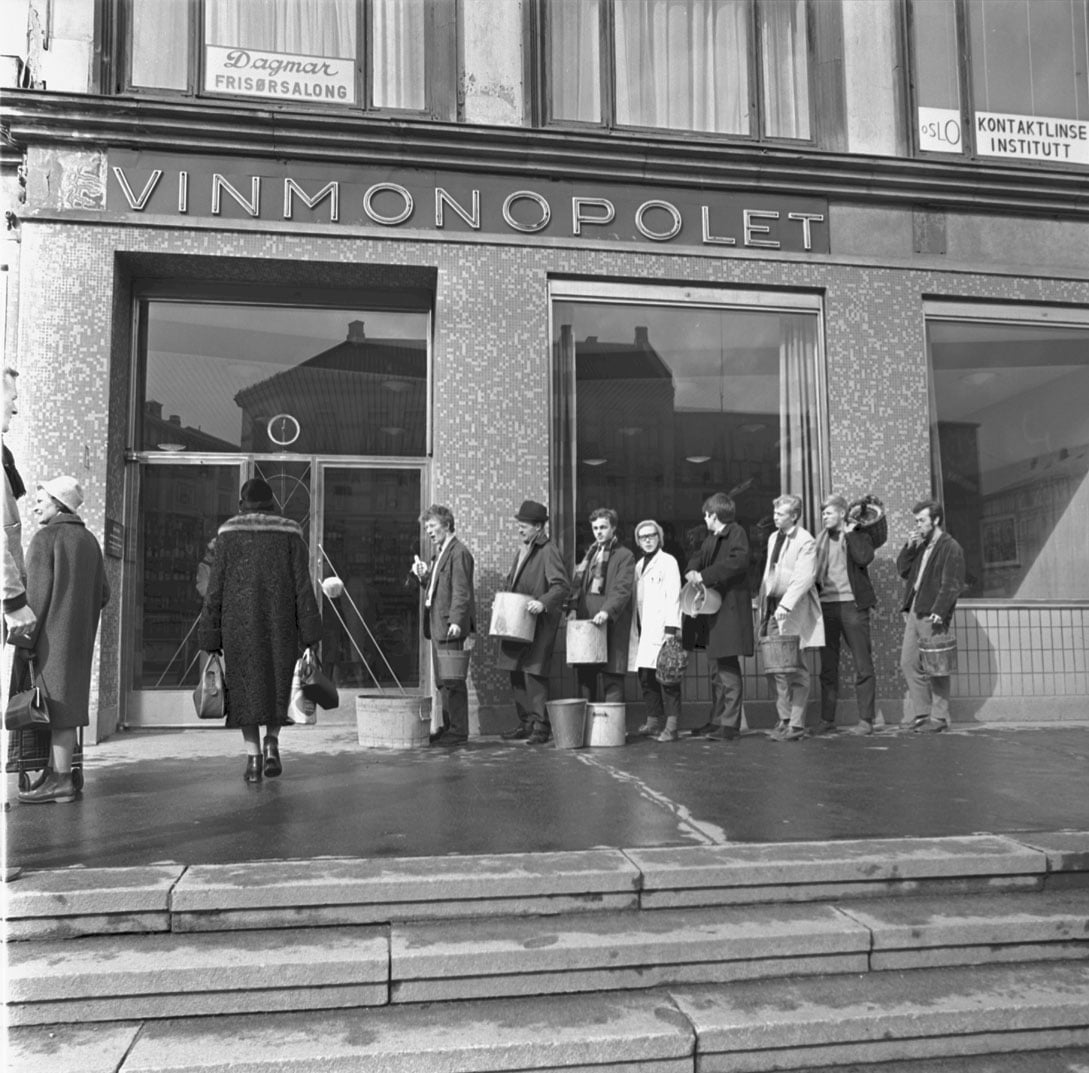
Today, Majorstuen refers to an entire urban district. From what was once a peaceful country road leading out of the city, Bogstadveien has grown into a lively main street – one that, as someone once put it, has “managed to survive the ever-increasing pulse of the capital’s bloodstream.”
Sources
«Fra «ensom Løcke» til hektisk bydel», Morgenbladet (6th Feb. 1952)
«Bogstadveien» (2022), by Finn Holden, Dreyers forlag
«Majorstua - et periferisk sentrum», by Einar Granum, Dagbladet (5th Jan. 1957)
«Historisk handlegate med høy bypuls», Aftenposten (12th Dec. 2005)
«Majorstua», «Oslo» (2000), by Beate Muri, Schibsted forl.
Majorstuhuset, Oslo Byleksikon
«Majorstuen», by Thomas P. Krag, Akers-Posten (7th Mar. 1914)